
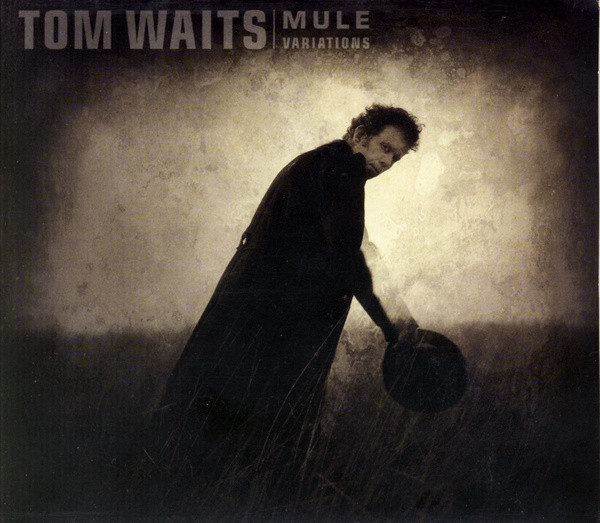
Mule Variations is a Rock album by Tom Waits, originally released in 1999. On Gatefold: 54 pressings tracked, owned by 33 collectors.
Sound DNA
- Rock
- Art Rock
- gritty
- eerie
- storytelling
About
The 13th album from Tom Waits, 1999’s <i>Mule Variations</i>, lives and breathes in the shadowy, rural gothic nightmare that was only hinted at on 1992’s <i>Bone Machine</i>. His first album for lateral-minded independent record label ANTI-, <i>Mule Variations</i> is a sepia-toned collection of vignettes full of circus performers, neighborhood eccentrics, and outlaws. Waits paints pictures with dirt roads, barns, dilapidated houses, railroads, sawmills, coal stoves, chain-link fences, and train whistles. The Grammys called it a “contemporary folk album” when they gave <i>Mule Variations</i> an award—but if so, it’s “folk” refracted through Captain Beefheart-ian ragers, industrial soundscapes, Delta blues, turntable noises, and enough percussion to fill a backwoods shed. “They’re kind of sur-rural—a combination of surreal and rural,” Waits said of these 16 tracks. “They sound like old songs. And I sound like an old guy.” <i>Mule Variations</i> also features some of the brusquest music from Waits and his co-writer, Kathleen Brennan. The album opens with a no-fi recording of Waits yelling and banging on a chest of drawers in a Mexican hotel, while “Cold Water” details the drifter’s life through a loping blues rock that sounds like it was recorded in an empty auditorium. Elsewhere on the album, Waits pushes his voice to phlegmy limits on the carnival tale “Eyeball Kid” and the blustery “Come On Up to the House” (which was later covered by Willie Nelson). “Filipino Box Spring Hog,” meanwhile, is almost a hip-hop song, thanks to its monstrous beat and abstract turntable embellishments. And “What’s He Building?” is easily the most famous spoken-word piece from a career full of them, a tale of neighborly paranoia given Lynchian life by clanks and radio noise. But despite all the sputtering machinery, <i>Mule Variations</i> is also an album of extreme tenderness and melancholy. The austere folk song “Hold On” is an instant-classic love song—an emotionally moody track that could still be described as optimistic. The spare and aching “Picture in a Frame” and “Take It With Me” are recorded so you can hear the inner-workings of Waits’ piano, while “House Where Nobody Lives” is probably the saddest song about a building ever written. <i>Mule Variations</i> would become the first Waits release to crack the Top 40, and would kick off something of a career rebirth for the songwriter; its songs later covered by the likes of Norah Jones, Aimee Mann, and Iris DeMent. Most importantly, the album would become the defining record of post-major-label Waits, a creaking symphony of dusty-trail doom and heartstring-tugging songcraft.
via Apple Music
The Clerk's got thoughts on this one. Mosh members get the full take →
Tracklist
- 1Big In Japan4:05
- 2Lowside Of The Road2:59
- 3Hold On5:33
- 4Get Behind The Mule6:52
- 5House Where Nobody Lives4:14
- 6Cold Water5:23
- 7Pony4:32
- 8What's He Building?3:20
- 9Black Market Baby5:02
- 10Eyeball Kid4:25
- 11Picture In A Frame3:39
- 12Chocolate Jesus3:55
- 13Georgia Lee4:24
- 14Filipino Box Spring Hog3:09
- 15Take It With Me4:24
- 16Come On Up To The House4:36
Credits
Performers
- Tom WaitsVOCALS GUITAR ORGAN
- Les ClaypoolBASS
- Bryan MantiaDRUMS
- Larry LaLondeGUITAR
- Ralph CarneySAXOPHONE TRUMPET BASS CLARINET
- Jacquire KingPROGRAMMED BY
- Chris GradyTRUMPET
- Larry TaylorBASS RHYTHM GUITAR GUITAR
- Joe GoreGUITAR
- Marc RibotGUITAR LEAD GUITAR
- Stephen HodgesPERCUSSION
- Charlie MusselwhiteBLUES HARP HARMONICA
- Smokey HormelGUITAR HARP
- Chris MarvinDRUMS
- John Paul HammondBLUES HARP HARMONICA
- Jeff SloanPERCUSSION
- Andrew BorgerDRUMS PERCUSSION
- Larry RhodesBASSOON
33 collectors on Gatefold own this · 54 pressings tracked on Gatefold