
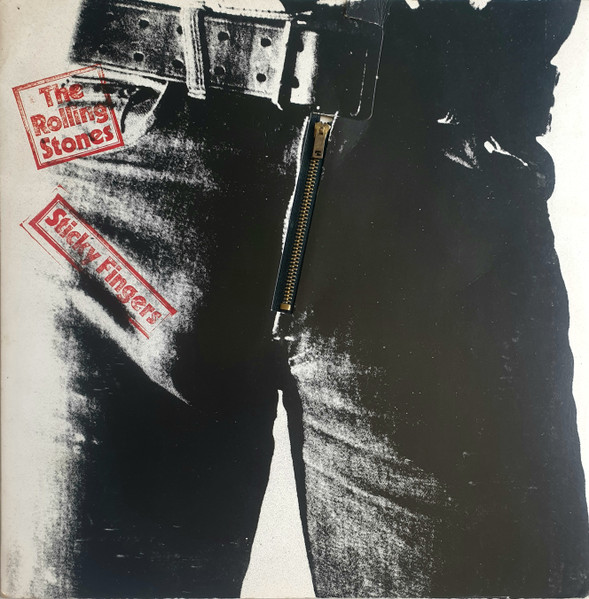
Sticky Fingers is a Rock album by The Rolling Stones, originally released in 1971. On Gatefold: 555 pressings tracked, owned by 104 collectors.
Sound DNA
- Rock
- Blues Rock
- raw
- rowdy
- southern
About
Fans will argue about it forever, but there’s a possibility that 1971’s <i>Sticky Fingers</i> is the most distilled album in The Rolling Stones’ catalog. Touring in 1969 and 1970 sharpened their playing and broadened their range, expanding it to cover country, Latin fusion, Southern soul, and whatever “Moonlight Mile” is. (Richards’ working title for the riff had been “Japanese Thing.”) Emotionally, the gradient had gotten finer, too: Like 1968’s <i>Beggars Banquet</i> and 1969’s <i>Let It Bleed</i>, <i>Sticky Fingers</i> wasn’t as concerned with getting or losing the girl so much as exploring the psychic tolls of romance (“Wild Horses,” “Dead Flowers”) and its many taboos (the sadomasochistic overtones of “Bitch,” the colonial-historical pipe bomb of “Brown Sugar”). The drugs still felt good coming in, but were a little rougher getting out (“Sister Morphine,” “Moonlight Mile”). Most of the movement still came from the hips, but you could feel the heart pumping pretty hard, too. With hindsight you can hear the constellation the band had been mapping out suddenly light up: British wit, American muscle, soul-revue horns, orchestral grandeur, and untamed lust. Reportedly, the band didn’t know the tape was even running when they improvised the simmering outro for “Can’t You Hear Me Knocking.” But it proved the band wasn’t limited by the structural confines of song, foreshadowing the groove-dominant music they made as the 1970s went on. They were bigger and more decadent now, but also more reflective and exploratory. Still, you have to wonder, a little, how it must’ve felt. Not that The Rolling Stones needed sympathy per se—they’d already made a bigger cultural impact than any other musicians of their generation save, possibly, The Beatles, who, by the time <i>Sticky Fingers</i> came out, no longer existed. Led Zeppelin was the new thing now, as were David Bowie and Black Sabbath. Whatever air of competition that had surrounded the band dissipated. <i>Sticky Fingers</i> wasn’t just age—it was change.
via Apple Music
The Clerk's got thoughts on this one. Mosh members get the full take →
Tracklist
Side A
- A1Brown Sugar
- A2Sway
- A3Wild Horses
- A4Can't You Hear Me Knocking
- A5You Gotta Move
Side B
- B1Bitch
- B2I Got The Blues
- B3Sister Morphine
- B4Dead Flowers
- B5Moonlight Mile
Credits
Performers
- Bill WymanBASS ELECTRIC PIANO BASS GUITAR
- Rocki DzidzornuCONGAS PERCUSSION
- Charlie WattsDRUMS
- Keith RichardsGUITAR VOCALS ACOUSTIC GUITAR
- Mick TaylorLEAD GUITAR RHYTHM GUITAR GUITAR
- Billy PrestonORGAN
- Jimmy MillerPERCUSSION ACOUSTIC GUITAR
- Jack NitzschePIANO
- Jim DickinsonPIANO
- Jim PricePIANO TRUMPET
- Nicky HopkinsPIANO
- Ian StewartPIANO KEYBOARDS
- Bobby KeysSAXOPHONE
- Paul BuckmasterSTRINGS
- Mick JaggerVOCALS GUITAR PERCUSSION
- Ry CooderSLIDE GUITAR GUITAR
- Rocky DijonCONGAS PERCUSSION
- Keith RichardVOCALS
104 collectors on Gatefold own this · 555 pressings tracked on Gatefold