
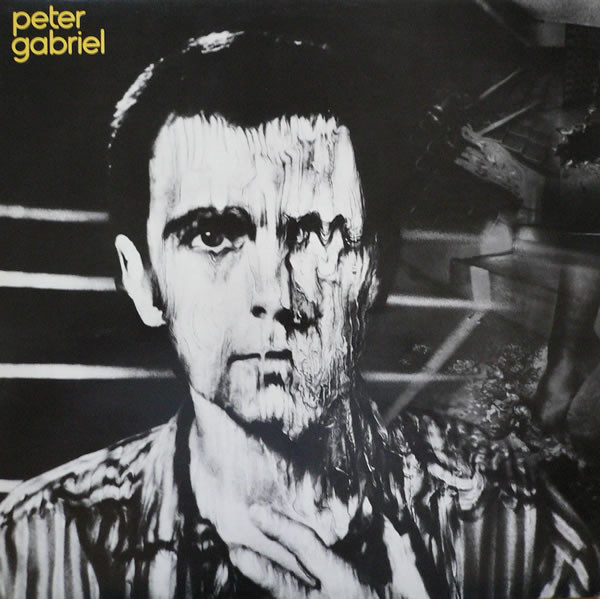
Peter Gabriel is a Rock album by Peter Gabriel, originally released in 1977. On Gatefold: 207 pressings tracked, owned by 42 collectors.
Sound DNA
- Rock
- Art Rock
- dense
- anxious
- art school
About
“I felt I wanted to write music for the 1980s, and that the place to begin was the rhythm track,” Peter Gabriel once said. “Rhythm being the spine of music, if you change the spine, the shape of the body changes as a matter of course.” Armed with a primitive drum machine, Gabriel took a sharp compositional detour for his third album, <i>Peter Gabriel 3: Melt</i>, letting his songwriting process lead with rhythm instead of chord changes. The sparse, percussion-driven album, released in 1980, became the place where his artistic ambitions finally coalesced, resulting in a peculiar and ominous piece of shadow-lurking art-rock that nonetheless spawned a pop hit. Traditional sounds were eschewed across the album. Gabriel banned the use of cymbals and hi-hats for drummers Jerry Marotta and Phil Collins, which explains such austere, atmospheric tracks as “Intruder” and “No Self Control.” But the in-studio innovations didn’t end there: Gabriel and Collins—working with producer Steve Lillywhite and engineer Hugh Padgham—also experimented with the explosive, cavernous sound that would be known as “gated reverb,” which would soon come to define the decade. <i>Melt</i> was also one of the first to use the Fairlight CMI synthesizer, a sampling keyboard whose trademark sound would take flight across the decade on records by Art of Noise, Herbie Hancock, Frankie Goes to Hollywood, and Tears for Fears. Rhythmically inspired by the soundtrack to the 1965 South African film <i>Dingaka</i>, Gabriel composed protest anthem and perennial set-closer “Biko,” a soaring tribute to activist Steve Biko that would help bring global attention to South African apartheid, and would directly inspire Steven Van Zandt’s <i>Sun City</i> project. But Gabriel’s forward-thinking musicianship on <i>Melt</i> scared record execs. The album dealt in strange, supposedly uncommercial sounds, and featured dark lyrics sung from the perspective of assassins (“Family Snapshot”), perverts (“Intruder”), and the generally alienated (“I Don’t Remember”). Sensing a commercial disaster, Gabriel’s label in the US dropped him. It was a disastrous decision: After Mercury picked up <i>Melt</i>, the album became Gabriel’s biggest-selling to that point, and spawned a legitimate hit single in “Games Without Frontiers.” Featuring background vocals from Kate Bush, the anti-war tune became a top 10 smash in the UK and Canada, and a minor chart hit in the States—officially kicking off the former prog-rocker’s journey toward becoming a heavy player in the MTV era.
via Apple Music
The Clerk's got thoughts on this one. Mosh members get the full take →
Tracklist
Side A
- A1Intruder4:50
- A2No Self Control3:50
- A3Start1:20
- A4I Don't Remember4:32
- A5Family Snapshot4:22
- A6And Through The Wire4:54
Side B
- B1Games Without Frontiers4:00
- B2Not One Of Us5:18
- B3Lead A Normal Life4:12
- B4Biko7:22
Credits
Performers
- Jerry MarottaDRUMS PERCUSSION
- David RhodesGUITAR VOCALS BACKING VOCALS
- Peter GabrielPIANO VOCALS SYNTH
- Larry FastSYNTH SYNTHESIZER BASS
- Phil CollinsDRUMS DRUM DRUM PROGRAMMING
- Morris PertPERCUSSION XYLOPHONE
- John GiblinBASS BASS GUITAR
- Robert FrippGUITAR ELECTRIC GUITAR
- Dick MorrisseySAXOPHONE
- Kate BushVOCALS BACKING VOCALS
- Dave GregoryGUITAR ELECTRIC GUITAR
- Paul WellerGUITAR
- David FergusonVOCALS BACKING VOCALS
- Hugh PadghamWHISTLE
- Steve LillywhiteWHISTLE
- Tony Levin12-STRING BASS
- Peter VogelPROGRAMMED BY
42 collectors on Gatefold own this · 207 pressings tracked on Gatefold