
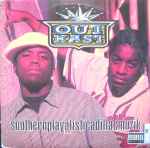
Southernplayalisticadillacmuzik is a Hip-Hop album by OutKast, originally released in 1994. On Gatefold: 10 pressings tracked.
Sound DNA
- Hip-Hop
- Southern Hip-Hop
- gritty
- swaggering
- southern
About
This is how it starts: Two teenagers in the Tri-Cities High School cafeteria figuring out how to express themselves through rap. The year is 1992. Not only is Atlanta not yet the global center of hip-hop it eventually becomes, it’s barely on the map. Or, as the venerated rap magazine <i>The Source</i> puts it in their July 1994 four-and-a-half-out-of-five-mic review (halfway between “slammin’—definite satisfaction” and “a hip-hop classic”) of <i>Southernplayalisticadillacmuzik</i>: “The South has always posed a problem for most hip-hoppers. No matter what they accomplish, we’re hard-pressed to give the South its due.” OK—at least they were honest about their prejudice. It turns out the real problem with Outkast wasn’t Outkast, but the culture into which they were received: Five years after De La Soul’s <i>3 Feet High and Rising</i> and four after A Tribe Called Quest’s <i>People’s Instinctive Travels and the Paths of Rhythm</i>, the idea of smart, emotionally intelligent, slightly left-of-center Black men was still a hard sell for a lot of hip-hop listeners, or at least exotic in a way that stuck out no matter how low-key the music itself was. Throw in the fact that tracks like “Ain’t No Thang” and “Player’s Ball” seemed as attuned to the violent, party-ready side of rap as the thoughtful, introspective one was confusing: Yeah, it made them three-dimensional human beings—but were these three-dimensional human beings gangstas or nerds? At the time, writers and listeners made a big deal about how supposedly different the album <i>sounded</i>, but the reality is that Outkast and the incredible pool of talent that made up the production team Organized Noize and house band/collective the Dungeon Family wasn’t all that different from what Dr. Dre was doing on <i>The Chronic</i>: funky, live-band-oriented hip-hop as connected to classic R&B as electro and hip-hop. Not only did they open the door for the South (starting with their friends in Goodie Mob), they set a precedent for generations of artists who fell outside the harmful-if-convenient stereotypes about how Black male hip-hop artists were supposed to present, from Pharrell to Frank Ocean on down. The easy story to tell is that Big Boi and André 3000 were some kind of odd couple, the steely hustler on one hand and the weirdo dreamer on the other. The realer story is that they both managed to capture the sometimes-bitter, sometimes-sweet realities of their daily lives while also suggesting a cosmic place beyond them. “I’m putting it down like it be hot before we all get shot,” André raps on “Crumblin’ Erb.” “Got only so much time in this bastard.” Now <i>that</i> anyone can understand.
via Apple Music
The Clerk's got thoughts on this one. Mosh members get the full take →
Tracklist
Side A
- A1Southernplayalisticadillacmuzik (Organized Extended Remix) (Dirty)5:47
- A2Southernplayalisticadillacmuzik (Album Version) (Dirty)5:18
Side B
- B1Southernplayalisticadillacmuzik (Diamond Remix) (Dirty)4:55
- B2Southernplayalisticadillacmuzik (Organized Remix) (Instrumental)5:47
Credits
Performers
- Society Of SoulBACKING VOCALS
- Preston CrumpBASS
- Edward StroudGUITAR
- Organized NoizeKEYBOARDS DRUM PROGRAMMING
- Kenneth WrightORGAN PIANO
- Jeff SparksSAXOPHONE
- Brandon "Shug" BennettBACKING VOCALS
- Debra KillingsBACKING VOCALS
- Tony HightowerBACKING VOCALS
Rare pressing on Gatefold · 10 pressings tracked on Gatefold