
Album
The Zealot Gene
2022 · Rock
3 collectors on Gatefold own this
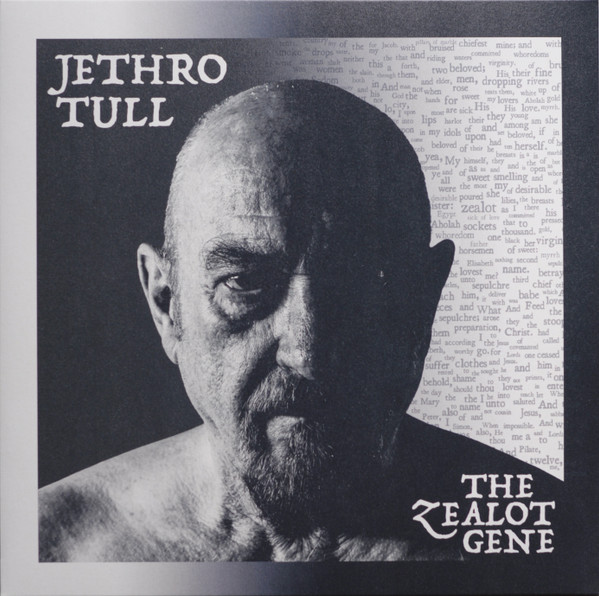
The Zealot Gene is a Rock album by Jethro Tull, originally released in 2022. On Gatefold: 14 pressings tracked, owned by 3 collectors.
About
When Ian Anderson began work on the first Jethro Tull album in over two decades, he started by writing a list of words that corresponded to strong human emotions. On the positive side, he listed love, compassion, and loyalty, among others. On the negative side, anger, rage, jealousy, etc. “I had 12 words for 12 songs, and it occurred to me that those words feature heavily in my memory of reading the Bible,” the renowned vocalist, guitarist, and flautist tells Apple Music. “So I reviewed some biblical text as a little reminder of where those words would’ve first appeared when the printing presses began to roll in Europe. It served as a useful reference point in writing the lyrics, but I never set out to illustrate the Bible as such. It’s really just taking those words and relating them to the present day.” Below, he discusses some key tracks on <i>The Zealot Gene</i>. <b>“Mrs Tibbets”</b> “One of the words that I wrote was ‘retribution,’ which was visited upon the inhabitants of Sodom and Gomorrah by the angry God, Yahweh. Lot and his wife escaped, but she turned around to look at the destruction behind her and was turned into a pillar of salt, according to biblical tales. That brought up the inevitable comparison with someone turning to face a 2,000-foot air burst above Hiroshima. So I decided to write an analogous song based on the visitation of Little Boy, dropped by the air crew captain Paul Tibbets, son of Enola Gay Tibbets.” <b>“Jacob's Tales”</b> “Apart from the Jacob in the title, it's really a song about envy and jealousy in the sense of sibling rivalry, and the idea that brothers and sisters don't always get on. And when it comes to the inevitable passing on of family assets and treasures, things can get a little difficult. The fact of taking an element from the Bible as a parallel is not very evident in any of the lyrics, but that was among the references. So, I set out to write the song, but keep it well outside any biblical context.” <b>“The Zealot Gene”</b> “It’s about the polarization of opinion-making in contemporary society, largely through social media, but also through—quite rightly in a democratic world—freedom of speech, the right to express your opinion. But these days that opinion reaches further and faster and in more forcible terms as a result of social media—and can be used in a way that is often very hurtful, very cruel, very socially divisive. And whether it's at the hands of politicians or people in the world of sport, or media, or arts entertainment, it's heavy-handed. It often is, perhaps, a result of a spontaneous outburst that finds its way onto Twitter or Facebook—and then, the next morning, after the three glasses of chardonnay have worn off, people might think, ‘Whoops, did I really say that?’” <b>“Shoshana Sleeping”</b> “This is a slightly erotic observation of the human form, but in a respectful and hands-off kind of a way. Hopefully you would get the impression in the lyrics that the person singing the song is already in some kind of a relationship with the person that he's observing sleeping. In terms of biblical references, I read some verses from the Song of Solomon. In the original text, sometimes it takes on a pretty macho and unpleasant form—the biblical format is not terribly woke. Nonetheless, there are parts of the Song of Solomon which are very moving and spiritually generous.” <b>“Sad City Sisters”</b> “It has a parallel in biblical text, but more than anything it was conjured by visions I have often witnessed on a Friday or Saturday night, mostly in the UK, when I'm walking from a concert hall back to a hotel somewhere after a show. Inevitably, you see late-night city life and the behavior of relatively young people going on a mindless bender to see how much they can consume in the way of drink and drugs wearing impossibly skimpy clothing and getting themselves into potential serious danger. As a father of a daughter—I also have one granddaughter—you tend to hope and pray that this danger won’t be part of your own family’s experience.” <b>“Where Did Saturday Go?”</b> “Again, it could be seen as a reference to waking up and not being able to remember what you did on a weekend. But there’s obviously the reference of the crucifixion of Jesus, and the Saturday following Good Friday—before Easter Sunday, the resurrection day. In this story, Saturday is very rarely mentioned. And in this 24-hour period you have to wonder what was happening in the minds of those followers of Jesus after his death but before his resurrection. But it's never discussed to any degree in the Bible, so I'm just pondering that notion of a missing day in the narrative of Jesus.” <b>“The Fisherman of Ephesus”</b> “In that particular song I do stay more closely to the biblical stories of what happened to the disciples of Jesus. I'm talking primarily about John, and he being the only one not to die a gory death. And so the song is about guilt survival, something I know from talking to veterans of Afghanistan and Iraq, who lost their buddies, and who were scarred for life as a result of surviving when others around them died. And that happens, obviously, in car crashes, plane crashes, and probably in terms of COVID mortalities. There'll be people who survived alone in a family and the rest died from COVID before vaccination. So guilt survival is applicable right across the board. And that's essentially the message of the song.”
via Apple Music
The Clerk says
The Clerk knows this whole record — the pressing quirks, the credits, the take.
Tracklist
- 1Mrs Tibbets5:53
- 2Jacob's Tales2:12
- 3Mine Is the Mountain5:40
- 4The Zealot Gene3:54
- 5Shoshana Sleeping3:40
- 6Sad City Sisters3:41
- 7Barren Beth, Wild Desert John3:38
- 8The Betrayal of Joshua Kynde4:05
- 9Where Did Saturday Go?3:52
- 10Three Loves, Three3:29
- 11In Brief Visitation3:01
- 12The Fisherman of Ephesus3:40
Sound DNA
- Rock
- Prog Rock
- earnest
- pastoral
- warm
Credits
The people behind it.
Performers
- David GoodierBASS GUITAR
- Florian OpahleGUITAR
- Ian AndersonFLUTE, VOCALS, ACOUSTIC GUITAR , MANDOLIN, TIN WHISTLE , PERCUSSION, HARMONICA FLUTE, VOCALS, ACOUSTIC GUITAR, MANDOLIN FLUTE, VOCALS, ACOUSTIC GUITAR, MANDOLIN, PERCUSSION, HARMONICA, WHISTLE
- John O'HaraKEYBOARDS, ELECTRIC ORGAN , PIANO, ACCORDION KEYBOARDS, ORGAN , PIANO, ACCORDION KEYBOARDS, PIANO, ACCORDION, ORGAN
- Scott HammondDRUMS
- Joe Parrish-JamesGUITAR
3 collectors on Gatefold own this · 14 pressings tracked on Gatefold
Start your shelf.
Track your pressings of The Zealot Gene, get the Clerk's take, and see what the record is worth — free.
Start your shelf →Free forever. Works with 10 records or 10,000.