Artist
Bishop Perry Tillis
United States · 1919 – 2004
Bishop Perry Tillis is a musician from United States, active 1919–2004.
Biography
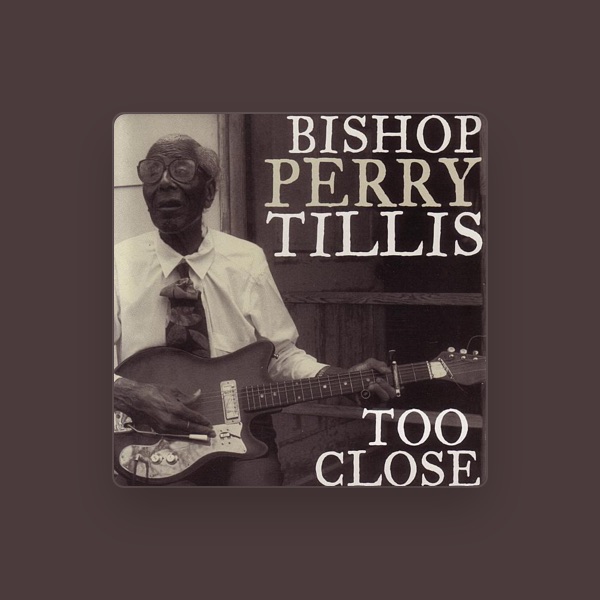
Tillis didn't have a band or a fancy rig; he had a Sears-model Silvertone and a suitcase he used for a kick drum. He spent decades working the Pentecostal circuit, playing for tips and salvation in Florida and Georgia while the rest of the world was busy with the blues boom. Most of what he did stayed in the room, unrecorded and raw, until George Mitchell tracked him down in the late '70s. He played with a slide made from a vitamin bottle and a thumb-pick style that sounded like a freight train coming through a screen door. It wasn't about polished studio takes or chart positions. Tillis was a 'holy blues' man who treated every performance like an exorcism. By the time the world heard him on those field recordings, he was already an old man with nothing left to prove and a voice that could peel paint off a church pew.
Bio from The Clerk
The Arc of Bishop Perry Tillis
The pivots — what forced Bishop Perry Tillis to reinvent.
The Traveling Evangelist Years
For nearly fifty years, Tillis existed entirely outside the industry, playing street corners and revival tents with a battery-powered amp strapped to his shoulder. He developed a singular rhythmic style where the suitcase-drum provided a steady thud while his fingers worked intricate, jagged gospel lines over the top. This wasn't professional entertainment; it was a functional tool for ministry, shaped by the harsh acoustics of outdoor spaces and the need to be heard over a crowd. You hear the ghost of those decades in every distorted note he eventually put to tape.
The George Mitchell Sessions
Everything changed in 1977 when researcher George Mitchell set up a portable recorder in an Alabama living room to capture what Tillis was doing. These sessions stripped away any pretense, leaving nothing but the buzzing Silvertone and that relentless suitcase kick. The recordings eventually surfaced on labels like Southland and Fat Possum, introducing the world to a man who played sacred music with the ferocity of a Delta bluesman. It turned a private religious practice into a public document, though Tillis himself seemed mostly indifferent to the sudden attention from the folk-blues crowd.
Influences
- Blind Willie Johnson — Tillis explicitly cited Johnson as the gold standard for the 'holy blues' style. You hear it in the way he mimics the vocal melody on the slide, transforming a standard hymn into a weeping, metallic lament. It's the same haunting bottleneck technique stripped of any secular vanity.
- The Soul Stirrers — Tillis grew up on the tight, rhythmic vocal phrasing of the pre-Sam Cooke era quartet. He translated their call-and-response vocal energy into his guitar playing, often answering his own sung lines with sharp, percussive stabs on the strings. It gave his solo performances the weight of a full gospel group.
- Arizona Dranes — Dranes brought a barrelhouse piano rhythm to Pentecostal music in the 1920s that mirrored Tillis's own aggressive tempo. He carried that same frantic, high-energy 'sanctified' beat into his guitar work, refusing to let the pace slacken. It’s that driving, rhythmic intensity that keeps his gospel from feeling like a funeral dirge.
- Blind Lemon Jefferson — Tillis acknowledged the influence of Jefferson's erratic, free-form timing on his own improvisations. While Tillis kept his message strictly religious, the jagged, unpredictable melodic runs between his sung verses are straight out of the Jefferson playbook. It's the sound of the street corner, not the conservatory.
- Sister Rosetta Tharpe — Tharpe’s early use of electric distortion to amplify the spirit was the blueprint for Tillis’s overdriven Silvertone sound. Like Tharpe, he saw no conflict between high-volume electric guitar and deep-seated faith. He took her stadium-sized energy and compressed it into a small-town Alabama porch session.
Around the web
Follow every record they touch.
Start your shelf and Gatefold tracks Bishop Perry Tillis's new pressings, tour dates, and the whole discography — automatically.
Start your shelf →Free forever. Works with 10 records or 10,000.