
Artist
Chakuza
Austria · b. 1981
Chakuza is a musician from Austria, active since 1981. Their discography on Gatefold includes 7 records.

7
Albums tracked
4
In collections
1981
Since
Biography
Handing a demo CD directly to Bushido backstage at an Austrian tour stop in 2005 changed everything for Peter Pangerl. He was producing with DJ Stickle under the name Beatlefield, cranking out gritty street rap beats from Linz before relocating straight into the pressure cooker of Berlin. Signing to ersguterjunge dropped him directly into the epicenter of German street rap, armed with a raspy baritone and a hardheaded delivery that didn't sound like the slick capital city locals. He was not a posturing gangster; he was a brooding technician caught in a hype machine that chewed people up. Then he did the one thing that got people laughing behind their hands until they heard it: he ditched the tough-guy persona entirely. Walking away from Berlin street rap to sign with Four Music, he traded synthetic brass and menace for live piano chords, acoustic guitars, and brutal emotional self-flagellation. It alienated the purists who wanted battle tapes, but it gave him longevity most of his mid-2000s labelmates never saw. He went from surviving the ersguterjunge meat grinder to building a stubborn, independent catalog on his own terms.
Bio from The Clerk
The Arc of Chakuza
The pivots — what forced Chakuza to reinvent.
The ersguterjunge Invasion
Moving from Linz to Berlin put Chakuza dead center of German rap's commercial boom under Bushido's wing. Alongside production partner DJ Stickle as Beatlefield, he laced aggressive battle tracks with cinematic menace, dropping the mixtape Suchen & Zerstören and the Bizzy Montana collab Blackout in 2006. By 2007's City Cobra and 2008's Unter der Sonne, he established himself as a charting solo force defined by heavy strings, synthesized horn stabs, and punch-to-the-gut delivery. He closed this phase out with 2010's Monster in mir, reaching the technical ceiling of street rap tropes and feeling trapped by label expectations.
Sequels and Nostalgia
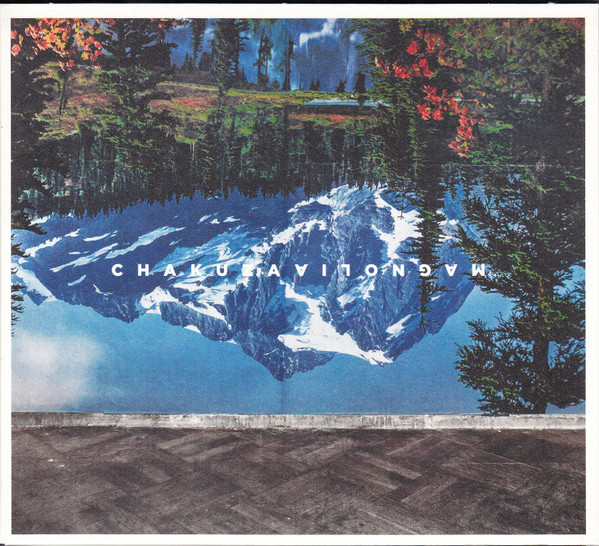
After closing his major-label indie-folk rap arc, Chakuza stepped into an independent phase that systematically looked back at where he started. He reunited with Bizzy Montana for 2017's Blackout 2, reviving the punchy back-and-forth energy of their mid-2000s tape era. He kept excavating the back catalog with 2018's Suchen und zerstören 3 and 2019's Magnolia X, giving old concepts new coats of paint. This was a palate-clearing run where he proved he could still jump into the pocket of raw boom-bap whenever he chose to.
The Rapid-Fire Independent Grind
Entering the 2020s, he abandoned the traditional multi-year album cycle in favor of torrential, prolific output. Releases like 2020's Heavy Rain and City Cobra 2.0 alongside 2022's Fenster zur Welt were knocked out fast, blurring the lines between reflective singer-songwriter rap and aggressive production. By the time he hit 2023's LIEBE & KI and 2025's Träume Drama Drums and Hoss Mi, he was operating entirely outside mainstream gatekeepers, cutting tracks with veteran Austrian peers on pure working-class momentum.
Influences
- Bushido — Bushido signed Beatlefield to ersguterjunge in 2005 after getting their demo in Linz, serving as Chakuza's industry mentor and label boss. You hear it across City Cobra, where the cinematic strings, martial drum programming, and dark orchestral hooks match Bushido's mid-2000s blueprint directly. Without Bushido's platform, Chakuza's gravelly Linz style never would have reached mainstream German rap ears.
- Texta — As the pioneering elder statesmen of the Linz hip-hop scene from the 1990s onward, Texta established Upper Austria as a legitimate base for rap lyricism before Chakuza ever picked up a mic. Their heavy focus on regional identity and boom-bap discipline was the sonic air Chakuza grew up breathing in Upper Austria. The lineage came full circle in 2025 when Chakuza teamed up directly with Texta's core producer, Flip, for the album Hoss Mi.
- Kool Savas — Before the German rap mainstream adopted moody production, Kool Savas set the baseline for technical battle cadences and punchline-driven German lyricism. Early Chakuza releases like Suchen & Zerstören reflect that obsessive emphasis on multisyllabic rhyming and hard consonant aggression. Savas proved you could rap in German with American-style flow mechanics, a standard Beatlefield adapted to their own darker tempos.
- Eminem — Chakuza routinely pointed to early Eminem as a primary lyrical inspiration for processing internal rage and depression through rapid-fire rhyming. You can hear that frantic, unvarnished angst driving cuts like Unter der Sonne, where cathartic personal venting replaces generic street boasts. The shift from outward hostility to bleeding on the track directly parallels the late-90s Detroit playbook.
- Curse — Curse broke ground in the early 2000s by proving a German rapper could focus on painful introspection, adult heartbreak, and raw vulnerability without losing respect. That confessional framing was the direct upstream antecedent to Chakuza abandoning street rap for Magnolia. Where others treated emotional rap as commercial soft rock, Curse treated it with intense, diary-entry gravity, which Chakuza mirrored note for note.
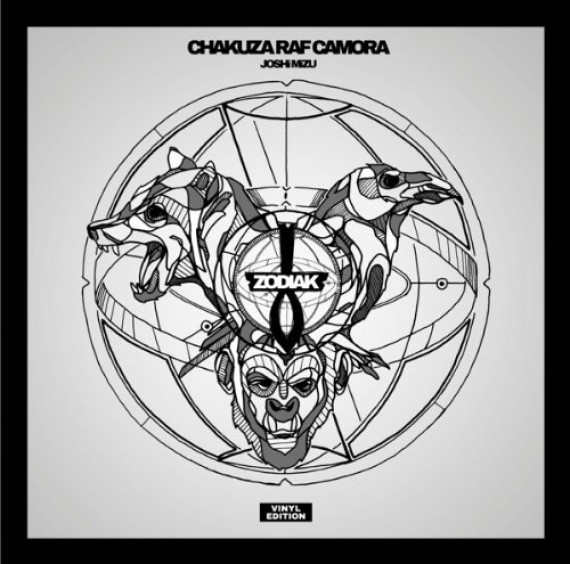
Discography
Their records — most-collected first.





Around the web
Follow every record they touch.
Start your shelf and Gatefold tracks Chakuza's new pressings, tour dates, and the whole discography — automatically.
Start your shelf →Free forever. Works with 10 records or 10,000.