Artist
Crossfaith
Crossfaith is a music group. Their discography on Gatefold includes 7 records.

7
Albums tracked
0
In collections
—
Since
Biography
Crossfaith is a Japanese electronicore/alternative metal band from Osaka that was formed in 2006. The band consists of vocalist Kenta Koie, guitarist Kazuki Takemura, bassist Hiroki Ikegawa, drummer Tatsuya Amano and keyboardist/programmer Terufumi Tamano. They released their third full-length album Apocalyze in Japan on 4th September 2013 through Search And Destroy Records. It was also released in North America by The End a day earlier. The album was produced by Machine (Lamb of God
The Arc of Crossfaith
The pivots — what forced Crossfaith to reinvent.
The Tragic Hero Infiltration
After cutting their teeth on the independent circuit with 2009's mini-album 'The Artificial Theory for the Dramatic Beauty', the band went for global ears by tapping Andrew Wade to mix and master 2011's 'The Dream, The Space'. Wade gave them the razor-sharp Florida metalcore bite that Tragic Hero Records jumped on for North American distribution. It proved five kids from Osaka could throw down post-hardcore riffs without sounding like a third-rate American knockoff. The electronic elements were still decorative synths, but the rhythm section was already playing at warp speed.
The Bass-Drop Breakthrough
Signing with Search and Destroy led straight to the 2012 'ZION' EP and their worldwide calling card 'Monolith'. The band dropped the Euro-trance gloss and went straight for filthy dubstep and drum-and-bass sub frequencies, dragging British rock crowds into the pit by the throat. When they followed it up by tracking 2013's 'APOCALYZE' at the Machine Shop in New York, the sound solidified into an aggressive hybrid that cracked the US Billboard charts. You hear it right in the transitions where a guitar drop-tune snaps instantly into an electronic wobble.
The Industrial Turn
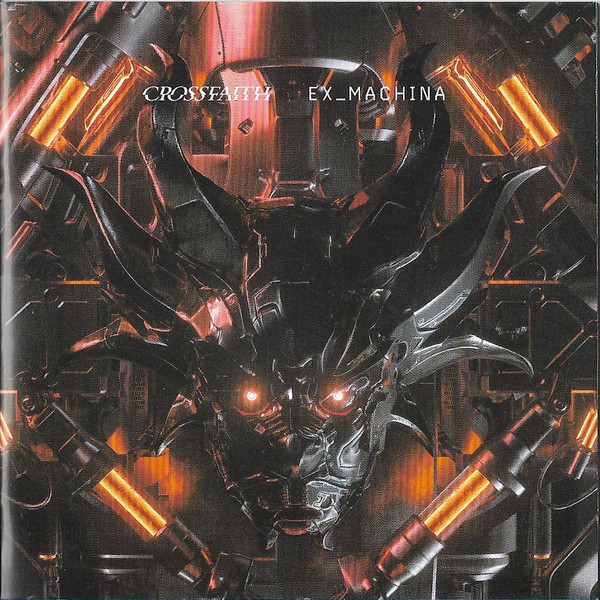
By 2018's 'EX_MACHINA', the band hooked up with producer Drew Fulk to strip away the slick pop hooks in favor of aggressive digital hardcore and industrial grime. Bringing in wildcards like Ho99o9 and Rou Reynolds signaled a deliberate pivot away from standard metalcore conventions into something far darker. You could hear the change immediately in the jagged synth lines and blown-out bass distortion. The companion 2020 'SPECIES' EP doubled down on that hostile posture, ditching radio ambition for pure teeth.
Influences
- The Prodigy — Crossfaith built their entire crossover ethos around Liam Howlett's rave-punk collision, famously cutting a hyper-speed cover of 'Omen' that became a live staple. You hear it in the filthy, breakbeat-driven mid-tempo drops on 'ZION' that treat electronic synths like punk riffs. Koie has cited them in countless interviews as the gold standard for blending dance floor electronics with raw rock aggression.
- Slipknot — Koie and Takemura started out playing in a nu-metal cover band learning Iowa-era brutality inside out. The percussive chaos and aggressive down-tuned riffs of tracks like 'Chaos Attractor' stem directly from Paul Gray's low end and Joey Jordison's breakneck snare work. They took Slipknot's masked carnival menace and translated it into a cyber-metal sweatbox.
- Linkin Park — The precise integration of Terufumi Tamano's scratching and electronics directly mirrors Joe Hahn's role on 'Hybrid Theory'. Instead of layering keys after the fact, Crossfaith wrote their heaviest breakdowns around Tamano's electronic loops. Takemura has specifically pointed to early 2000s rap-rock production as the manual for making heavy guitars share sonic space with samplers.
- Static-X — Wayne Static's self-described 'evil disco' laid the structural blueprint for Crossfaith's four-on-the-floor industrial bounce. Listen to the relentless kick-drum pulses driving the title track of 'APOCALYZE' and you hear the direct lineage of 'Wisconsin Death Trip'. They took that mechanical industrial groove and supercharged it with Japanese hardcore speed.
- Korn — The band cut their teeth playing Korn songs in Osaka rehearsal rooms before ever writing their own material. The elastic, clicky low-end slap that defined Hiroki Ikegawa's early bass work on 'The Dream, The Space' was lifted straight from Fieldy's scooped-mid playbook. It gave their early breakdowns a physical, rattling punch beneath the digital noise.
Discography
Their records — most-collected first.


Around the web
Follow every record they touch.
Start your shelf and Gatefold tracks Crossfaith's new pressings, tour dates, and the whole discography — automatically.
Start your shelf →Free forever. Works with 10 records or 10,000.