Artist
Doctor Who
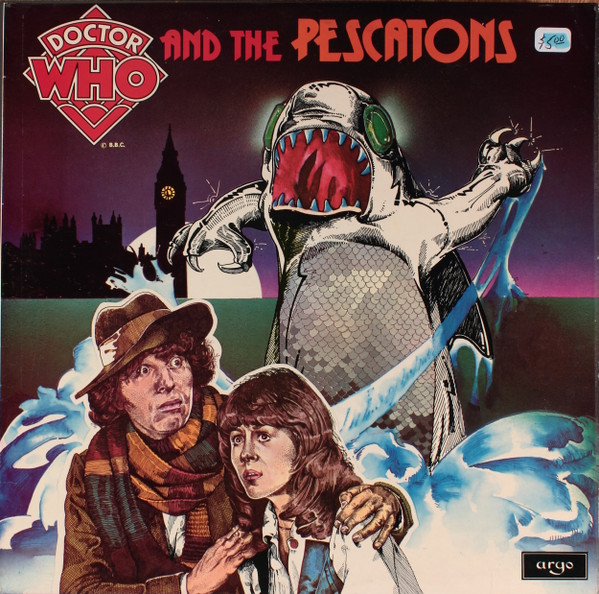
Doctor Who is a music group. Their discography on Gatefold includes 5 records.

5
Albums tracked
5
In collections
—
Since
Biography
Doctor Who is a British science-fiction television programme broadcast by the BBC since 1963. The programme depicts the adventures of a Time Lord called the Doctor, exploring the universe in a time-travelling space ship called the TARDIS. The TARDIS exterior appears as a blue British police box, which was a common sight in Britain in 1963 when the series first aired. There have been many composers throughout the show's run. Notable composers are: Murray Gold (2005-2017)
The Arc of Doctor Who
The pivots — what forced Doctor Who to reinvent.
The Lost Episode Archival Resurrections
When missing 1960s television tapes were junked by the network, home-recorded off-air magnetic tapes became the only surviving audio relics. Audio engineers cleaned the ambient noise and paired the restored sound with new narration for releases like 'The Faceless Ones' in 2002. The result turned lost television into tense audio drama driven by vintage dialogue and analog effects. It established the catalog as a haven for reconstructed mid-century British radio craft.
Boutique Sound Design and Vinyl Exclusives
Starting in 2020 with 'The Underwater Menace' and stretching through 'Dead Air' and 'The Tenth Planet', the catalog moved into dedicated high-spec audio pressings. Modern engineers balanced 1960s stock library music by the likes of Tristram Cary against direct studio dialogue. The productions lean into the raw, unpolished grit of early television soundstages rather than smoothing it away with modern digital cleanup. It highlights the stark, atmospheric tape work that mainstream television usually buries in the mix.
Influences
- Pierre Schaeffer — Schaeffer established the entire discipline of musique concrète at the RTF in Paris by cutting, looping, and manipulating raw magnetic tape. The original Radiophonic Workshop engineers applied his exact splicing techniques to the earliest recordings. You hear it in the metallic clangs and tape-reversed transients scattered across every archival soundtrack.
- Karlheinz Stockhausen — Stockhausen's early electronic compositions like Gesang der Jünglinge proved that sine waves and sine-wave generators could carry emotional dread. Delia Derbyshire and the BBC tape manipulation crew cited his studio methods when constructing the sound beds for the franchise. The low-end oscillator drones across 'The Tenth Planet' audio track owe everything to his early WDR studio experiments.
- Ron Grainer — Grainer penned the original rhythmic motif and manuscript score that kickstarted the entire audio identity of the project in 1963. His written bassline and swooping melodies provided the blueprint before the Radiophonic Workshop chopped it into tape pieces. Without his compositional framework, the abstract noise experiments never would have coalesced into recognizable, structured pieces.
- Edgard Varèse — Varèse pioneered the concept of 'organized sound' and proved that dissonant percussion and sirens belonged in modern composition. His 1958 Poème électronique established the industrial, unsettling sonic vocabulary used across mid-century sci-fi serials. You hear that same abrasive dissonance whenever alien landscapes are scored throughout the vintage soundscapes.
- Daphne Oram — Oram co-founded the BBC Radiophonic Workshop in 1958 and pioneered the Oramics technique of drawing sound directly onto 35mm film strips. Her relentless campaigning forced the BBC to take electronic sound creation seriously as an in-house art form. Every piece of tape-manipulated audio in this catalog exists because she built the room it was cut in.
Discography
Their records — most-collected first.


Around the web
Follow every record they touch.
Start your shelf and Gatefold tracks Doctor Who's new pressings, tour dates, and the whole discography — automatically.
Start your shelf →Free forever. Works with 10 records or 10,000.