
Biography
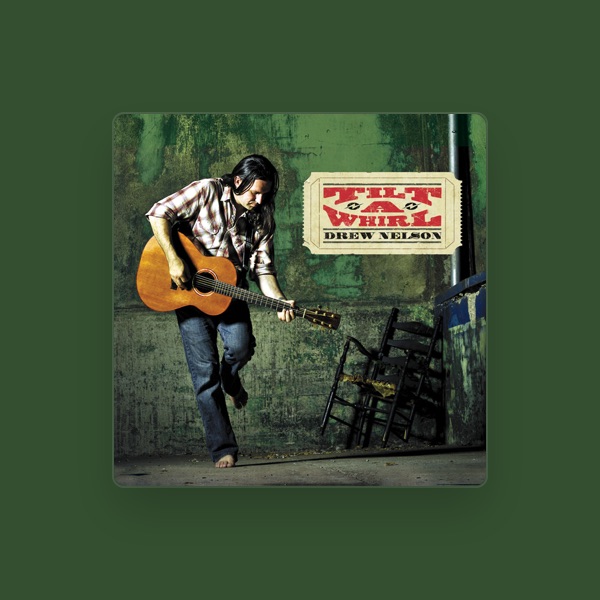
The Red House Records era started with Drew Nelson living out of a truck and hauling his gear across the Michigan state line. He wasn’t some polished Nashville import; he was a guy who’d spent years in the dirt, doing everything from construction to high-rise window washing. When he finally got into the studio with producer Michael Roth for Tilt-A-Whirl, you could hear the fatigue and the grit in the tracks. It’s folk music, sure, but it’s built on a foundation of heavy labor and actual callouses. He doesn't do the shiny, over-compressed Americana that’s clogging up the bins lately. His stuff stays lean. There’s a certain weight to the way he structures a song that feels more like a short story writer than a pop tunesmith. He’s the kind of writer who will spend a whole verse talking about the way the light hits a rusted-out chassis just to set the mood for a breakup. It’s dusty, honest, and completely allergic to corporate polish.
Bio from The Clerk
The Arc of Drew Nelson
The pivots — what forced Drew Nelson to reinvent.
The Working Man's Blueprint
Before the label deals, Nelson was a Grand Rapids fixture playing bars and figuring out how to translate a blue-collar life into a lyric sheet. He wasn't chasing a radio format; he was documenting a specific Midwestern exhaustion. You hear it on the early self-released material where the production is sparse because the songs had to do the heavy lifting. It’s the sound of a guy who knows exactly how much a day's work costs in physical toll.
The Red House Validation
Signing with Red House Records for 2006’s Immigrant Son gave him access to better rooms and ears like Michael Roth. This wasn't a pivot into pop, but rather a thickening of the sound that allowed his fingerstyle playing to breathe. The arrangements got smarter without losing the dirt under the fingernails. This is where he stopped being just a regional storyteller and started sounding like a heavy-hitter in the national folk scene.
Influences
- Greg Brown — Nelson frequently cites the Iowa songwriter as a structural North Star for his own work. You hear it in the low-register vocal delivery and the way he lets a narrative ramble before hitting the emotional gut punch. He’s even shared stages with Brown, keeping that specific Midwestern folk lineage alive.
- Gordon Lightfoot — The Canadian legend's influence is baked into Nelson’s sense of melody and his penchant for long-form storytelling. He’s covered 'The Wreck of the Edmund Fitzgerald' live, proving his debt to that specific brand of maritime and historical songwriting. It shows up in his own lyrics about the Great Lakes and the people who live around them.
- Guy Clark — Nelson’s obsession with craft and the 'literary' song comes straight from the Clark school of writing. He’s mentioned Clark in interviews regarding the necessity of getting the details right—the gear, the tools, the specific names of things. You hear it in the way Nelson treats objects in his songs as characters.
- Leo Kottke — The intricate fingerstyle guitar work on Nelson’s records isn’t just for show; it’s a direct nod to Kottke’s polyphonic approach. Nelson has studied the technical side of the instrument to ensure his solo performances don’t need a backing band to feel full. The syncopation in his thumb-work is a dead giveaway.
- Bob Dylan — Like every guy who picked up a guitar in the wake of the 60s, Nelson admits the early Dylan records were his entry point into the idea of the 'protest' or 'documentary' song. He moves away from the abstract and leans into the gritty realism Dylan mastered on records like The Lonesome Death of Hattie Carroll. It’s about the truth of the reportage.
Related artists
Frequent collaborators
Around the web
Follow every record they touch.
Start your shelf and Gatefold tracks Drew Nelson's new pressings, tour dates, and the whole discography — automatically.
Start your shelf →Free forever. Works with 10 records or 10,000.