Artist
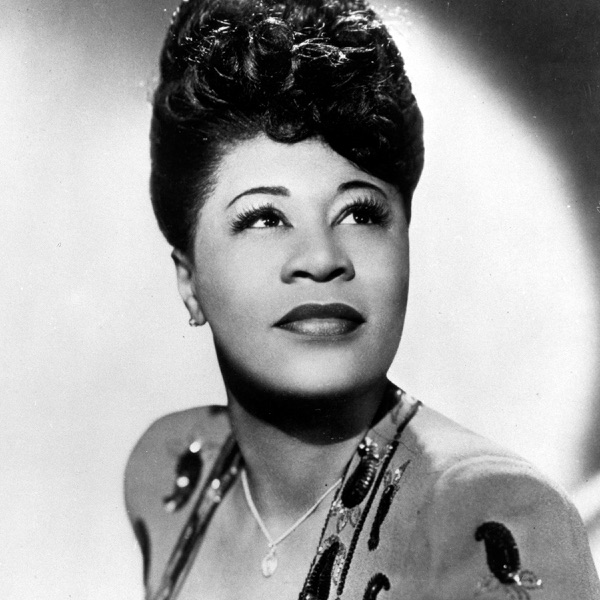
Ella Fitzgerald
American jazz singer
Kaifeng, People's Republic of China · 1917 – 1996
Ella Fitzgerald is a musician from Kaifeng, People's Republic of China, active 1917–1996. Their discography on Gatefold includes 24 records.
55
Albums tracked
369
In collections
1917
Since
Biography
Ella Fitzgerald's life was one of extreme poverty, unflinching ambition, massive success, and above all, that brilliant, wide-ranging voice. Bolstered early on in her career by a winning performance at an amateur night at Harlem's Apollo Theater, Fitzgerald soon found herself fronting band leader Chick Webb's big-band orchestra. Hits such as "A-Tisket, A-Tasket" gave her hits and acclaim as a pop singer in the '30s, but in the '40s, after working with people like Louis Jordan and Dizzy Gillespie, she developed a more bop-oriented style of singing replete with vocal scatting and improvisations. This gave her a new stature — that of the premiere vocal jazz singer. As she took on the songbooks of George Gershwin and Cole Porter, she became known as "The First Lady of Song" and she recorded numerous duets with Louis Armstrong, creating much of the legacy — as interpreter and stylist — that continues undiminished today.
The Arc of Ella Fitzgerald
The pivots — what forced Ella Fitzgerald to reinvent.
The Savoy Ballroom Swing Era
After winning amateur night at the Apollo, teenager Ella got pushed in front of drummer Chick Webb and spent the late 1930s cutting high-octane swing sides. Webb gave her the platform, and when they cut 'A-Tisket, A-Tasket' in 1938, it exploded into an inescapable national radio hit. When Webb died of spinal tuberculosis in 1939, she stepped up to lead Ella Fitzgerald and Her Famous Orchestra through brutal touring schedules. You hear a young singer on those early 78s holding her own against one of the loudest, hardest-driving rhythm sections in Harlem.
Bebop and Scat Mastery
Post-war swing band economics cratered, so Ella pivoted to small combos and began hanging around Dizzy Gillespie's modernist circle. She stopped mimicking pop crooners and started copying horn lines, turning scat from a novelty trick into an airtight masterclass of phrasing and improvisation. Tracks like 'Flyin' Home' and 'Lady Be Good' on Decca revealed a singer operating at the exact same technical velocity as modern jazz saxophonists. You hear a total abandonment of conventional balladry in favor of lightning-fast harmonic shifts.
The Songbook Volumes
Norman Granz pulled Ella over to Verve in 1956 specifically to record definitive, encyclopedic runs of Cole Porter, Rodgers and Hart, Duke Ellington, and the Gershwins. Stripping away the novelty tunes, she was backed by massive arrangements from guys like Nelson Riddle and Duke Ellington himself. These multi-LP box sets turned her into an international standard-bearer of American popular songwriting. On record, her phrasing is pristine and dead-center on the pitch, serving the composer's text without burying it in vocal theatrics.
Ella and Pops
Granz stuck Ella in a studio with Louis Armstrong and Oscar Peterson's rhythm section to cut small-group duets like 1956's 'Ella and Louis.' Armstrong's gravel-throated, behind-the-beat phrasing acted as the perfect foil to Ella's bright, effortless intonation. They didn't rehearse for weeks or overthink arrangements; they simply shared a room and let the natural friction between their vocal textures do the work. The recordings capture two genuine masters bantering and trading bars like old friends over an upright piano.
Influences
- Connee Boswell — Ella explicitly stated in interviews that she tried to sound exactly like Boswell when she first started out, citing the Boswell Sisters' 1934 record 'The Object of My Affection' as the reason she sang. You can hear Boswell's signature sliding pitch and precise syncopation baked into Ella's early Savoy vocal lines. If Boswell hadn't laid that blueprint down on shellac, Fitzgerald might never have stepped onto that Apollo stage.
- Louis Armstrong — Before they cut classic duet LPs for Verve, Armstrong was the primary architect of jazz scatting who Fitzgerald studied on 78s as a kid. You hear his syncopated rhythmic drive and percussive phrasing inside every extended bop solo Ella tracked in the late 1940s. He invented the vocabulary she later took to technical perfection.
- Chick Webb — Webb brought Ella into his Savoy orchestra in 1935 and schooled her in the ruthless discipline of live swing tempo. His pounding, razor-sharp drum time forced her to anchor her vocals firmly inside the pocket without dragging. That relentless Savoy rhythm became the foundation of her entire sense of swing.
- Bessie Smith — Smith's massive 1920s Columbia catalog set the standard for vocal authority and phrasing through cheap carbon microphones. You hear that earthy, room-commanding projection whenever Ella tackled straightforward 12-bar blues numbers like 'These Are the Blues.' It gave her sweet upper register a necessary dose of raw power.
- Duke Ellington — Ellington's 1920s and 30s Cotton Club charts defined the sophisticated orchestral harmonies that Fitzgerald internalized long before they ever cut an album together. When she tackled his catalog for the 1957 Verve Song Book sessions, she treated his brass voicings as melodic guide rails. She didn't just sing his tunes; she understood the complex architecture of how he wrote for horns.
Discography
Their records — most-collected first.
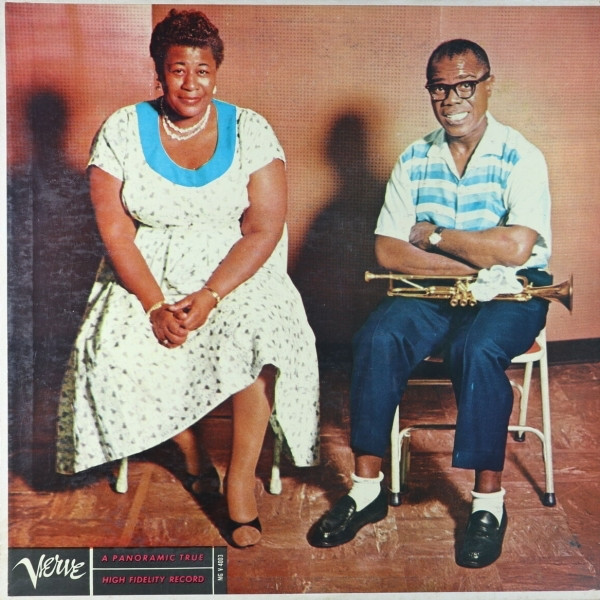
Ella And Louis
1956

Ella Wishes You A Swinging Christmas
1960

Sings The Cole Porter Song Book
1956
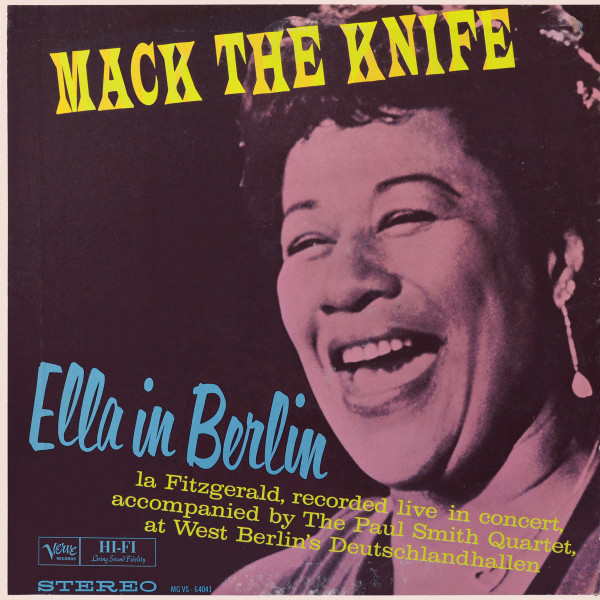
Mack The Knife - Ella In Berlin
1960
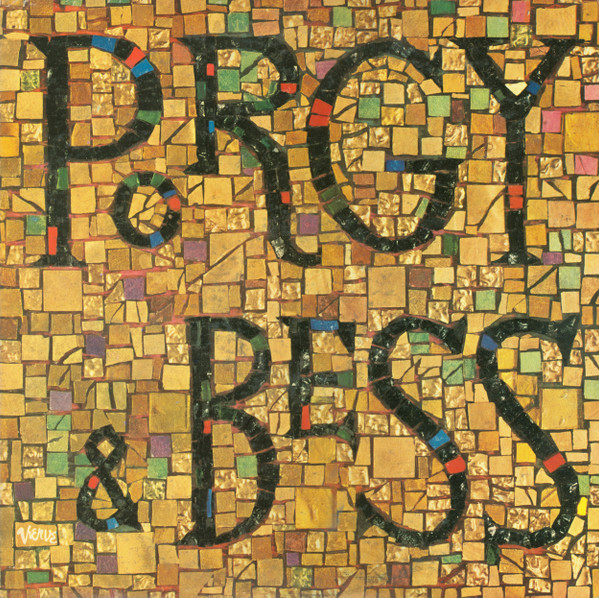
Porgy & Bess
1959

Clap Hands, Here Comes Charlie!
1961
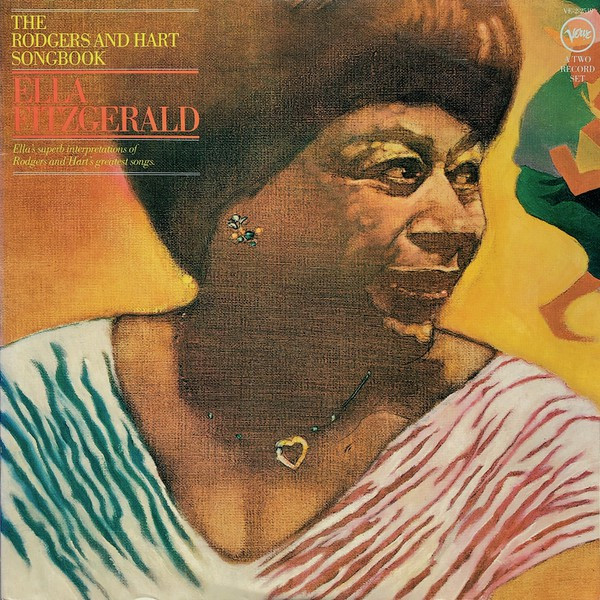
Ella Fitzgerald Sings The Rodgers And Hart Song Book
1956
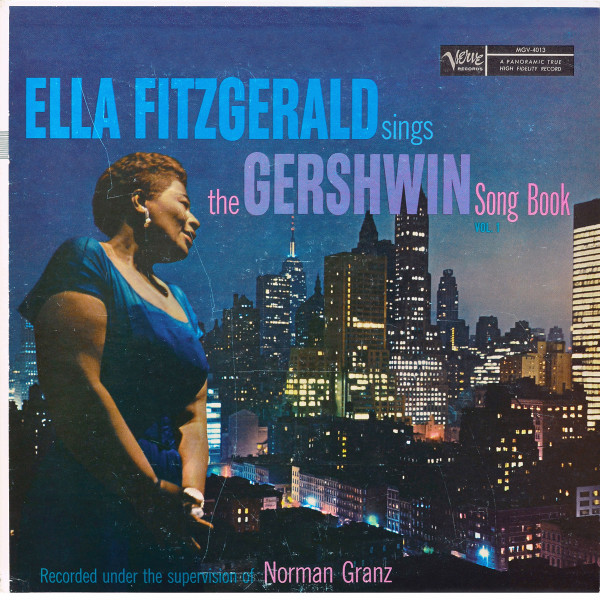
Ella Fitzgerald Sings The Gershwin Song Book Vol. 1
1959

Ella
1969
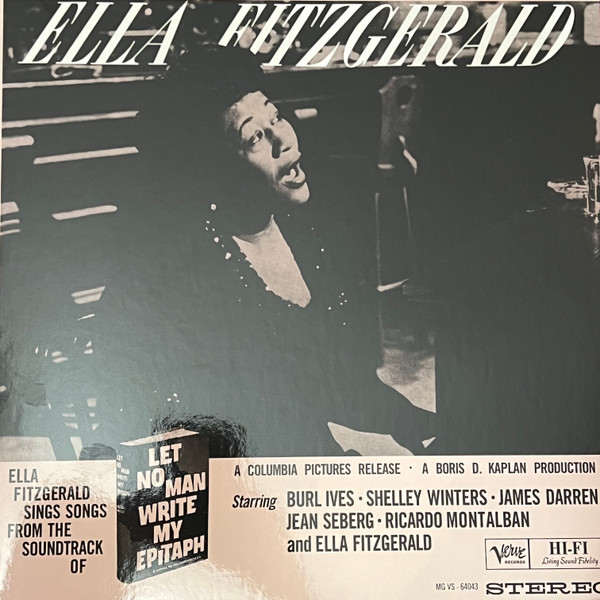
Ella Fitzgerald Sings Songs From Let No Man Write My Epitaph
1960

Ella Fitzgerald Sings The Irving Berlin Songbook
1958
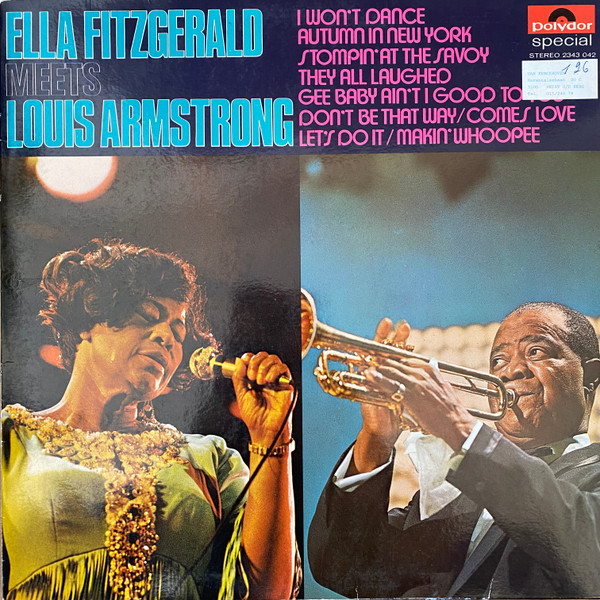
Ella And Louis Again (Volume One)
1957
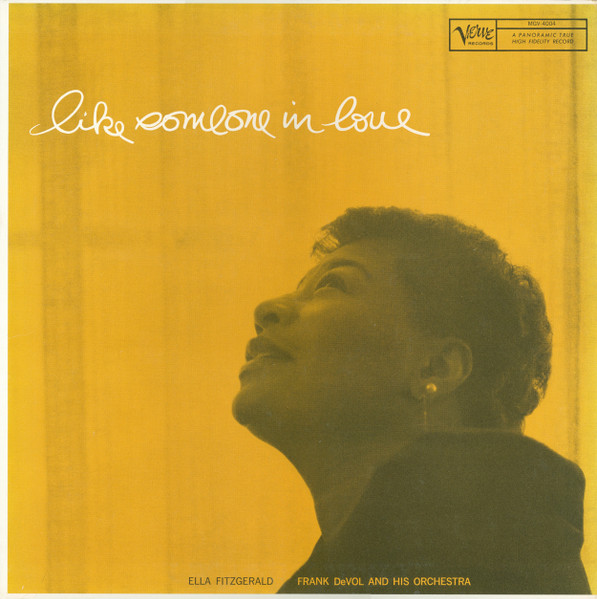
Like Someone In Love
1957
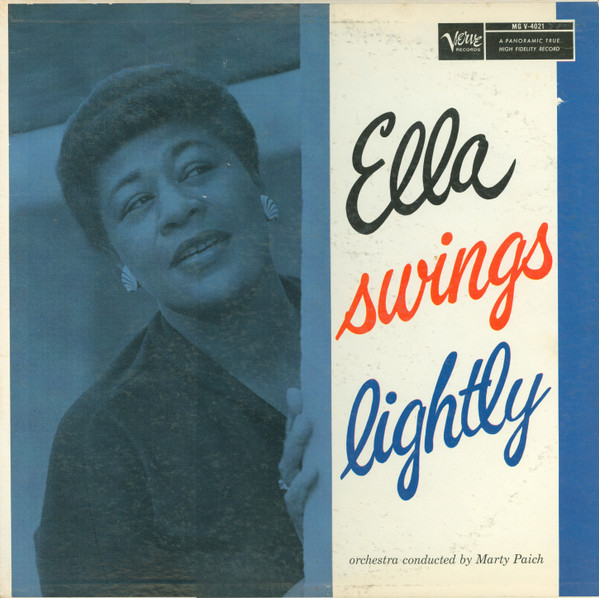
Ella Swings Lightly
1959

Ella Fitzgerald Sings The George And Ira Gershwin Song Books
1959

Ella Y Louis Otra Vez
1957

Ella Sings Gershwin
1951

Ella At Zardi's
2017
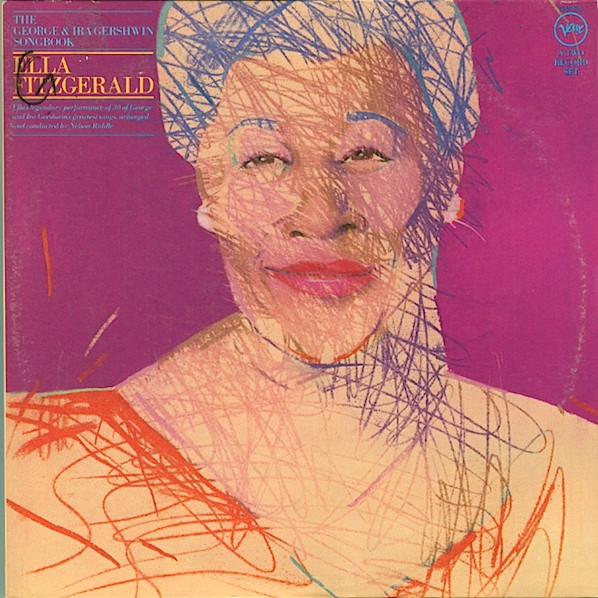
The George And Ira Gershwin Songbook
1978

Ella Fitzgerald Sings The Harold Arlen Song Book
1961

Ella Fitzgerald Sings The Gershwin Song Book Vol. 2
1959
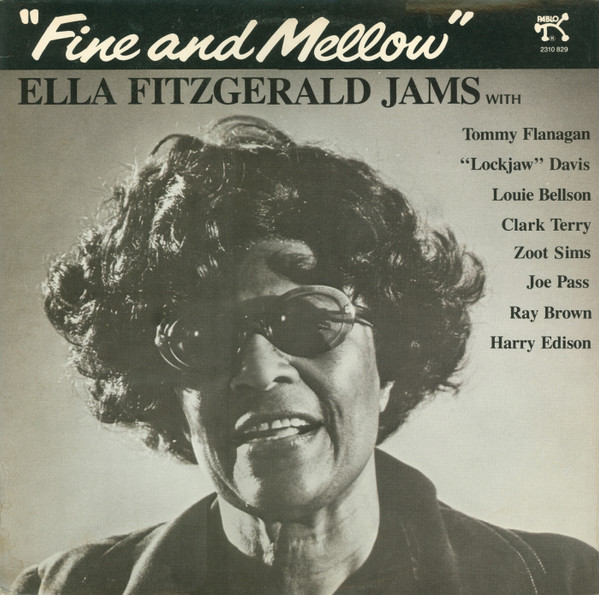
Fine And Mellow
1979

Fitzgerald & Pass...Again
1976

Ella At Duke's Place
1966
Related artists
Around the web
Follow every record they touch.
Start your shelf and Gatefold tracks Ella Fitzgerald's new pressings, tour dates, and the whole discography — automatically.
Start your shelf →Free forever. Works with 10 records or 10,000.