
Artist
高中正義
guitarist
Japan · b. 1953
高中正義 is a musician from Japan, active since 1953. Their discography on Gatefold includes 10 records. They also recorded with サディスティック・ミカ・バンド.

11
Albums tracked
12
In collections
1953
Since
Biography
Masayoshi Takanaka (高中 正義, Takanaka Masayoshi) is a Japanese guitarist, composer, and producer. He was born in 1953 in the Shinagawa ward in Tokyo, Japan. Takanaka's music was influential in the city pop genre of the late 1970s and '80s.
The Arc of 高中正義
The pivots — what forced 高中正義 to reinvent.
The Sadistic Mika Band Foundation
Takanaka was recruited by Kazuhiko Kato to provide the grit in Japan’s most exportable rock export, leading to a massive support slot for Roxy Music. Recording at Abbey Road with producer Chris Thomas gave him a crash course in high-end studio polish and British glam dynamics. You hear this DNA in his early solo work, where he keeps a rock edge even as the tempos settle into a groove. This wasn't fusion yet; it was a guitar player learning how to command a room filled with egos.
The Kitty Records Island Run
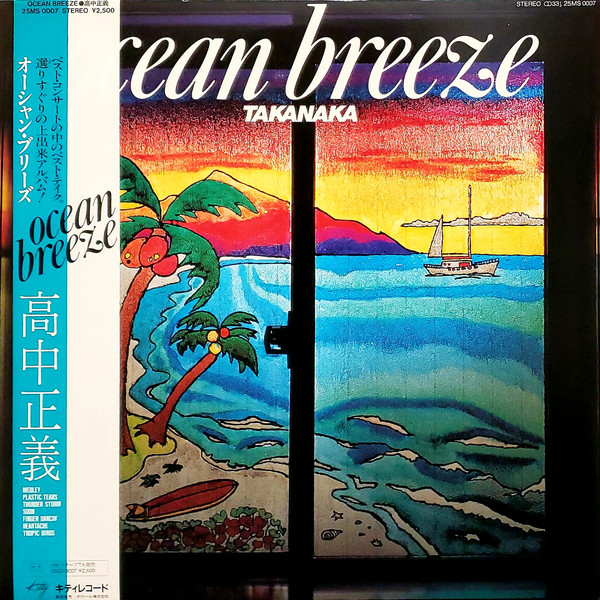
Between 1976 and 1979, Takanaka moved to Kitty Records and ditched the rock-band grit for a hyper-clean, breezy fusion sound that defined the 'City Pop' adjacent instrumental movement. He started flying to Los Angeles to record with the best session guys in the world, including members of Santana and Tower of Power. This era peaked with Jolly Jive and Blue Lagoon, tracks that turned his melodic sensibilities into a national phenomenon in Japan. Every note is drenched in sunshine and expensive reverb, but the rhythmic complexity under the hood is pure Santana-grade percussion.
The Goblin Concept Phase
By 1981, Takanaka got tired of the beach and decided to score an Italian children’s book, resulting in the massive double-album The Rainbow Goblins. He moved away from the loose Brazilian vibes and into structured, prog-adjacent storytelling with dense arrangements and more synth-heavy layering. Recording this at the legendary Hit Factory in New York, he embraced a cinematic scale that proved he wasn't just a guy who played fast over bossa nova beats. It was a massive commercial risk that became one of the biggest guitar albums in Japanese history.
The Digital 80s Pivot
As the mid-80s hit, Takanaka swapped the lush organic textures for the gated snares and digital synths of the era, culminating in his move to EMI. Albums like Traumatic and Jungle Jane feature programmed drums and an almost aggressive embrace of FM synthesis. He started collaborating with Western icons like Little Richard, trying to find a middle ground between his legacy fusion and the frantic energy of 80s pop. While some of the production hasn't aged as well as the 70s analog sessions, his lead playing remained untouchable.
Influences
- Carlos Santana — Takanaka has explicitly cited Santana as his primary motivation for picking up the guitar, specifically after hearing 'Soul Sacrifice.' You hear it in the heavy use of Latin percussion and the way he sustains long, singing notes over a minor-key vamp. It’s the blueprint for his entire lead philosophy.
- The Ventures — Like every Japanese kid in the 60s, Takanaka was obsessed with the surf-rock boom the Ventures brought to the country. That clean, wet reverb and the focus on the guitar as the 'vocal' melody is the literal foundation of his 70s solo output. He even recorded a full tribute album to the style later in his career.
- Wes Montgomery — Takanaka’s use of octaves during his cleaner melodic passages is a direct lift from Montgomery’s thumb-picking technique. It’s how he makes a jazz-fusion record feel warm and accessible rather than cold and mathematical. He softens the attack just like Wes did to keep the melody front and center.
- Jeff Beck — The influence shows up in Takanaka's technical fearlessness and his willingness to use the whammy bar for vocal-like inflections. He followed Beck’s transition from rock to jazz-fusion closely, adopting that same 'lead-player-as-frontman' mentality. The sharp, staccato bursts on his heavier tracks are pure Blow by Blow era Beck.
- Sly & The Family Stone — The funk rhythms that underpin his best work, like 'An Insatiable High,' come from his deep dive into American psychedelic soul. He wasn't just playing jazz; he wanted that heavy, syncopated pocket that Larry Graham popularized. It’s what keeps his music from floating away into light-jazz territory.
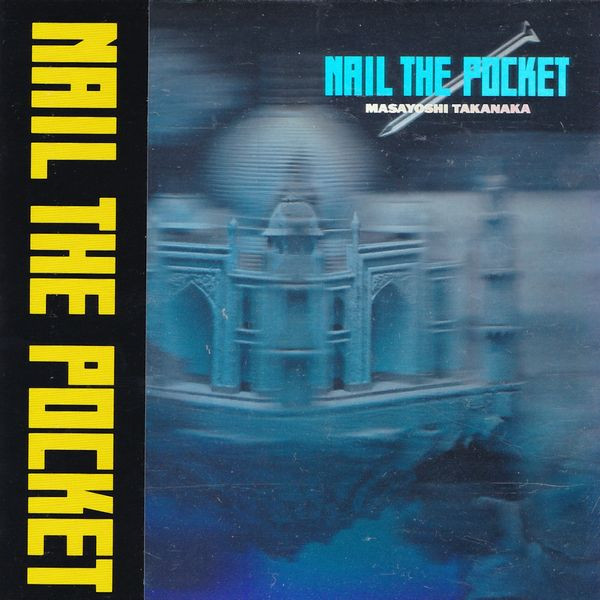
高中正義 — solo
Their records — most-collected first.




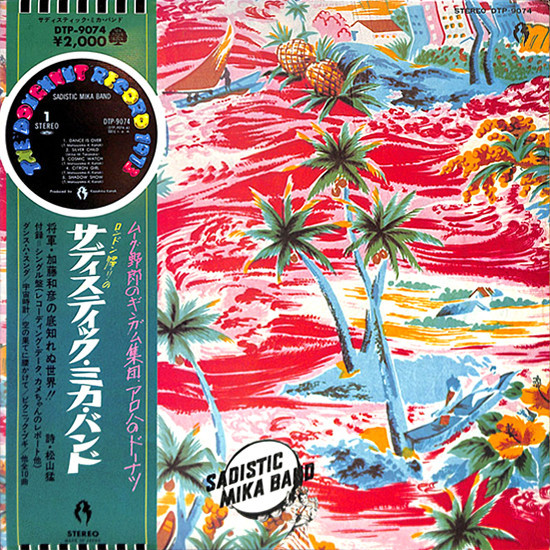
サディスティック・ミカ・バンド
A project 高中正義 was part of.
Around the web
Follow every record they touch.
Start your shelf and Gatefold tracks 高中正義's new pressings, tour dates, and the whole discography — automatically.
Start your shelf →Free forever. Works with 10 records or 10,000.