
Artist
Françoise Hardy
9th arrondissement of Paris, France · 1944 – 2024
Françoise Hardy is a musician from 9th arrondissement of Paris, France, active 1944–2024. Their discography on Gatefold includes 24 records.

61
Albums tracked
114
In collections
1944
Since
Biography
Françoise Hardy (born Françoise Madeleine Hardy; on 17 January 1944 - 11 June 2024) was a French former singer and songwriter mainly known for singing melancholic sentimental ballads. Hardy signed her first contract with the record label Vogue in November 1961. In April 1962, shortly after finishing school, her first album, "Oh oh Chéri", appeared, with the title song written by Johnny Hallyday's writing duo. The flip side of the record, "Tous les garçons et les filles" became a huge success, which sold 2 million copies.
The Arc of Françoise Hardy
The pivots — what forced Françoise Hardy to reinvent.
The London-Pye Sessions
Seeking a tougher sound than the thin French studios could offer, Hardy decamped to Pye Studios in London to work with engineer Bob Auger. This move brought a British Invasion backbone to her folk-tinged melodies, resulting in tracks like 'Je n’attends plus personne' that featured a young Jimmy Page on session guitar. You can hear the difference in the punch of the drums and the grit in the guitar tone compared to the sugary fluff her peers were cutting in Paris. It was the moment she transitioned from a teenage phenomenon to a legit songwriter with international muscle.
The Brazilian Pivot
The 1971 album 'La Question' happened because Hardy became obsessed with Brazilian musician Tuca after hearing her play at a dinner party. They stripped everything back, ditching the orchestral bloat for intricate acoustic guitar arrangements and a heavy, humid atmosphere. It was a commercial flop at the time because it lacked a catchy hook, but it’s the record that actually matters to the lifers. The tracks are quiet, tense, and rely entirely on the chemistry between Tuca’s nylon strings and Hardy’s hushed, smoky vocals.
The Berger Reinvention
After the minimalist experiments of the early seventies, Hardy teamed up with Michel Berger to reclaim her spot on the radio without losing her soul. The 'Message personnel' sessions in 1973 were high-drama affairs, with Berger pushing for a lush, cinematic pop sound that felt expensive and adult. This wasn't teen-pop anymore; it was the birth of her 'chanteuse' era where the arrangements got bigger and the lyrics got more bruised. It saved her career from becoming a niche folk footnote and proved she could handle a massive, polished production if the song was strong enough.
Influences
- The Everly Brothers — Hardy constantly cited their harmonies and melodic simplicity as her primary motivation for picking up the guitar. You hear it in the clean, descending vocal lines of her early self-penned tracks. They provided the blueprint for her melancholic take on rock and roll.
- Brenda Lee — Hardy’s first obsession was Lee’s 'I'm Sorry,' which she studied to understand how a ballad could carry massive emotional weight. Even when Hardy was doing fast Yé-yé tracks, she kept that Brenda Lee-style vulnerability tucked just under the surface. It's the reason her pop songs feel more lived-in than her contemporaries.
- Chas McDevitt — She was obsessed with the skiffle sound coming out of the UK and even covered McDevitt’s 'Freight Train' early on. That skiffle influence is what kept her early sixties work from becoming too theatrical or cabaret-focused. It gave her a rhythmic foundation that was more DIY than the French conservatory style.
- Cliff Richard — Hardy would literally wait by the radio to hear Richard’s early rock tracks and eventually recorded at the same studios in London to capture that specific British pop energy. You hear his influence in her mid-sixties transition toward a more structured, beat-driven sound. He was her gateway into the world of professional studio craft.
- Georges Brassens — As a kid in Paris, she soaked up the literate, guitar-heavy style of the classic French chansonniers like Brassens. This is where her lyrical discipline comes from—she focused on the words more than the image because that’s how the French masters did it. It’s why her songs still work even when you strip away the sixties production.
Discography
Their records — most-collected first.
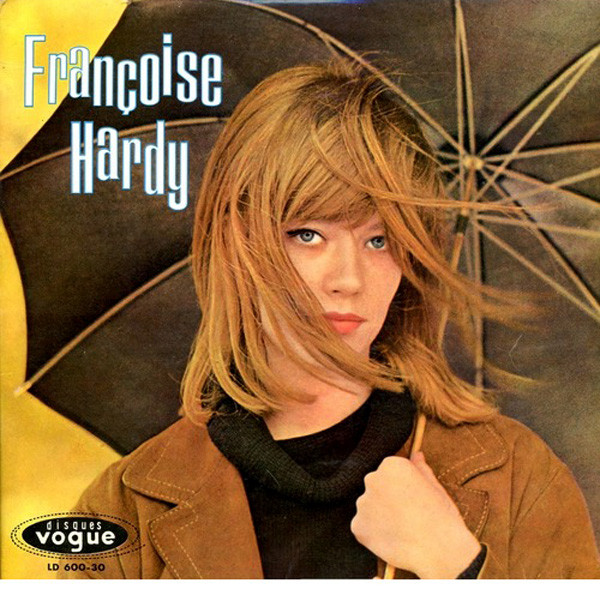
Françoise Hardy
1962

Françoise Hardy
1965
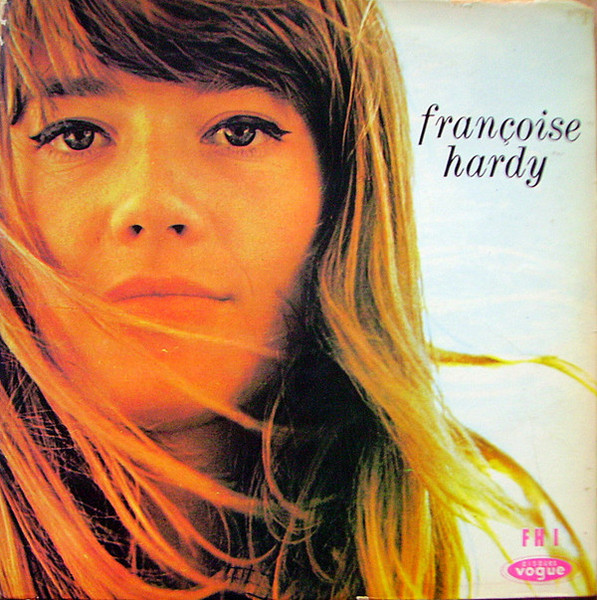
Françoise Hardy
1963
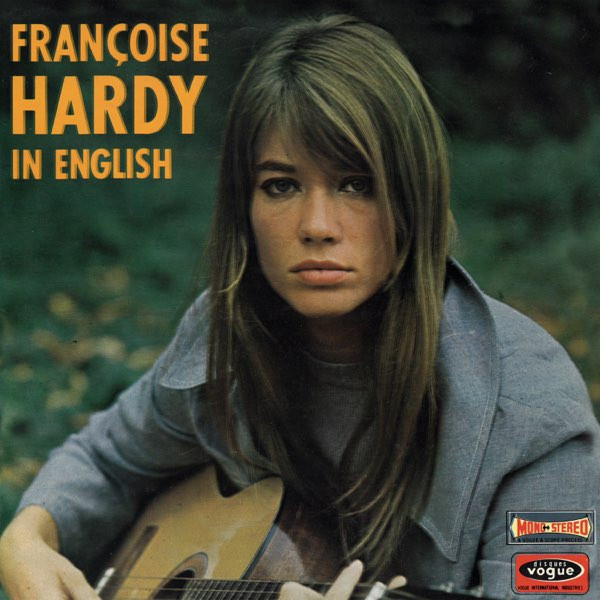
In English
1966

Oh Oh Chéri
1962

Françoise
1966

Françoise Hardy
1964
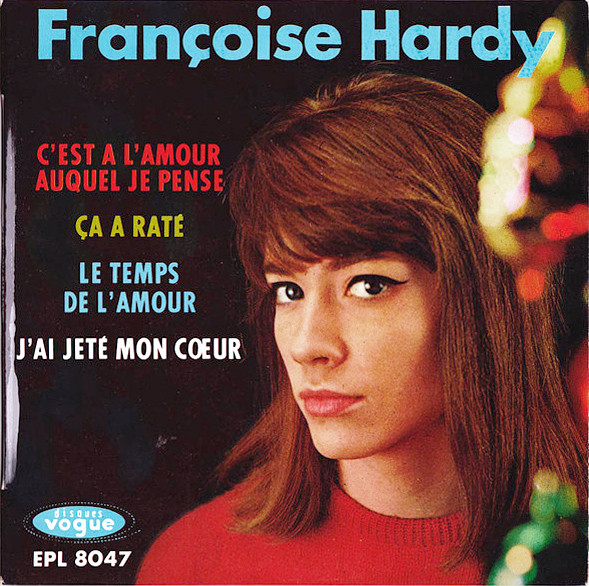
C’est A L’amour Auquel Je Pense
1962

Message Personnel
1973
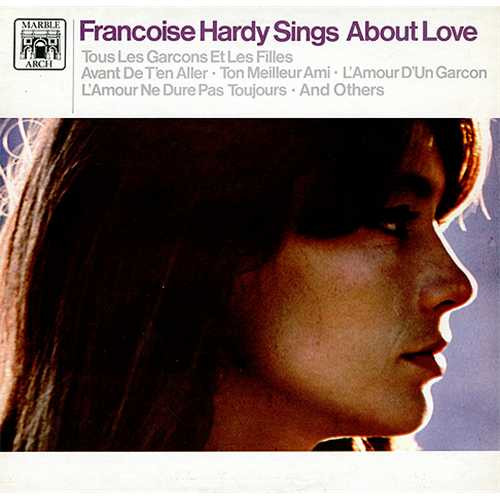
Francoise Hardy Sings About Love
1968

A Quoi Ca Sert / Ouverts Ou Fermés
1968
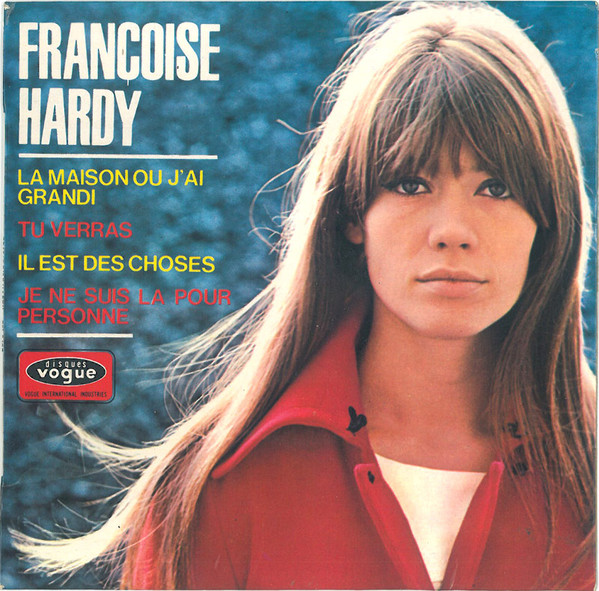
La Maison Où J'ai Grandi
1966

Dis Lui Non
1965

Le Premier Bonheur Du Jour
1963

L'amour Fou
2012

Françoise Hardy
1972

Les Grands Succès De Françoise Hardy - Greatest Hits
1970

Etonnez-Moi, Benoit
1969

Comment Te Dire Adieu
1968

Le Sais-tu?
1963

Quelques Titres Que Je Connais D'elle (Vol. 1)
2024

La Pluie Sans Parapluie
2010
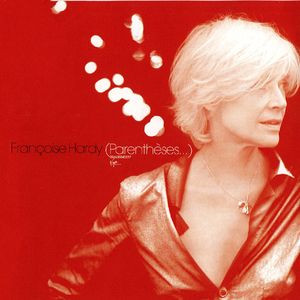
(Parenthèses…)
2006

Tant De Belles Choses
2004
Related artists
Around the web
Follow every record they touch.
Start your shelf and Gatefold tracks Françoise Hardy's new pressings, tour dates, and the whole discography — automatically.
Start your shelf →Free forever. Works with 10 records or 10,000.