
Artist
Serge Gainsbourg
4th arrondissement of Paris, France · 1928 – 1991
Serge Gainsbourg is a musician from 4th arrondissement of Paris, France, active 1928–1991. Their discography on Gatefold includes 24 records.

41
Albums tracked
93
In collections
1928
Since
Biography
Serge Gainsbourg (April 2, 1928 – March 2, 1991) was a French poet-songwriter, singer, actor, novelist, painter and director. Gainsbourg's varied style and individuality made him difficult to categorize. Although famous in France for many years, he did not achieve his first No. 1 album until 1979, when he released Aux Armes et caetera more than twenty years after his music career had begun. But since the 1980s, his legacy has been firmly established.
The Arc of Serge Gainsbourg
The pivots — what forced Serge Gainsbourg to reinvent.
The Left Bank Jazz Nihilist (1958–1964)
Gainsbourg started out deep in the Parisian cabaret grind, armed with an acoustic guitar and a piano, heavily influenced by Boris Vian's cynical wit. Albums like 'Du chant à la une !…' and 'Confidentiel' were lean, acoustic, jazz-leaning chanson cuts tracked for small rooms and literary crowds. You hear upright bass, brushed snares, and a deadpan delivery spitting dark observations about subway ticket punchers and ugly hangovers. It was clever as hell, but it didn't sell records, forcing him to look across the English Channel for a way out.
The London Orchestral High-Water Mark (1968–1971)
Realizing the French pop scene was eating up British rock, he moved his sessions to London and paired up with arranger Jean-Claude Vannier. This collision peaked on 'Histoire de Melody Nelson' in 1971, tracked at Marble Arch Studios with British session rhythm sections locked under Vannier's cinematic, terrifying string arrangements. Gainsbourg barely sang at all, murmuring a dark narrative over Dave Richmond's heavily picked, flatwound Fender bass. It was twenty-eight minutes of symphonic funk perfection that stiffed commercially on release before becoming the blueprint for every art-pop crate-digger decades later.
The Kingston Reggae Provocation (1979–1981)
After surviving a massive heart attack and burning through conceptual rock records, Gainsbourg flew straight to Dynamic Sounds Studios in Kingston, Jamaica, in 1979. He hired Sly and Robbie on the rhythm section and brought in the I-Threes on backing vocals to cut 'Aux armes et cætera'. Reworking the French national anthem into a sluggish roots-reggae groove caused literal riots and death threats from French military veterans. He leaned directly into the controversy, taking Sly and Robbie on tour and following it up with 'Mauvaises nouvelles des étoiles' in 1981.
The 80s Gainsbarre Decadence (1984–1987)
By the mid-eighties, Gainsbourg fully leaned into his public alter-ego, 'Gainsbarre'—a self-destructive, drunken media provocateur. He decamped to Power Station in New York to cut 'Love on the Beat' and 'You’re Under Arrest', ditching live grooves for icy LinnDrum programming, slap bass, and neon synth funk. His voice had decayed into a raspy, gravelly talk-singing cadence over sterile, high-sheen 1980s studio production. It was divisive, overtly provocative, and fully stripped of the subtlety of his seventies work, but it kept him on television screens right until the end.
Influences
- Boris Vian — Gainsbourg saw Vian perform at the Milord l'Arsouille cabaret in the mid-fifties and credited that specific performance with convincing him to abandon painting for songwriting. Vian's pitch-black humor and cynical wordplay are the direct ancestors of Gainsbourg's early tracks like 'Le Poinçonneur des Lilas'. Vian gave him permission to be ugly, sharp, and totally unsentimental.
- Frédéric Chopin — His classical piano training under his father was rooted deeply in Chopin, and Gainsbourg regularly borrowed melodies directly from the 19th-century composer's work. The melody for his 1969 hit 'Jane B.' is a straight lift from Chopin's 'Prelude No. 4 in E Minor, Op. 28'. He used classical romanticism as a harmonic scaffold for dirty pop lyrics.
- Babatunde Olatunji — Gainsbourg lifted entire rhythmic foundations, melodies, and vocal chants from Olatunji's 1959 record 'Drums of Passion' for his 1964 album 'Gainsbourg Percussions'. Tracks like 'Marabout' and 'Joanna' were direct, uncredited adaptations of Olatunji's West African polyrhythms before rights issues forced legal settlements. It was his first major experiment with building French pop entirely around imported rhythmic blueprints.
- Charles Trenet — Trenet proved in the late 1930s that French chanson could incorporate American swing timing and internal rhyme schemes without losing its linguistic identity. You hear Trenet's brisk, bouncy lyrical cadences all over Gainsbourg's early swing-era tracks like 'Ce mortel ennui'. Gainsbourg took Trenet's swing rhythm and swapped the sunny optimism for nicotine and spite.
- Cole Porter — Gainsbourg grew up playing Porter's American songbook standards in Parisian hotel bars and cabarets to earn a living in the fifties. Porter's sophisticated internal rhymes, sexual double entendres, and dry, sophisticated songwriting style directly shaped Gainsbourg's approach to lyric writing. Porter showed him that a pop song could be high-society poetry and filthy at the exact same time.
Discography
Their records — most-collected first.
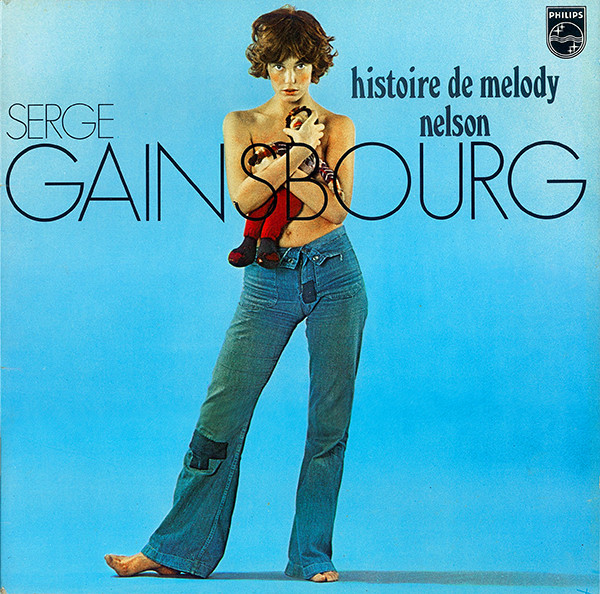
Histoire De Melody Nelson
1971
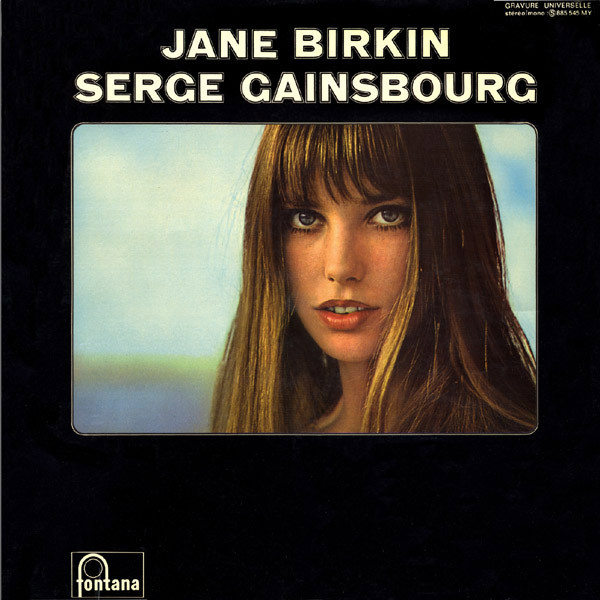
Jane Birkin
1969

Initials B.B.
1968

Le Pacha (Original Music From The Movie)
2018
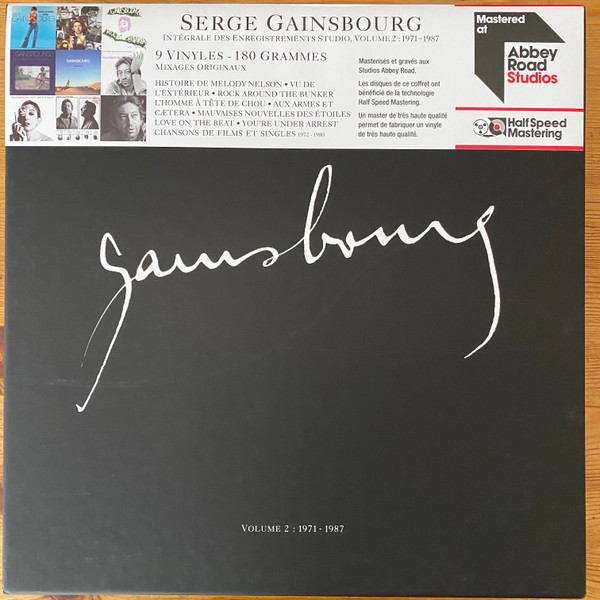
Intégrale Des Enregistrements Studio, Volume 2 : 1971-1987
2021
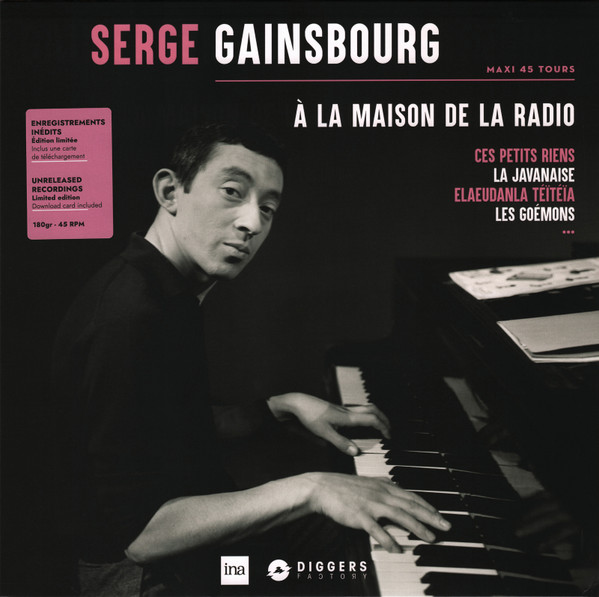
À La Maison De La Radio
2020
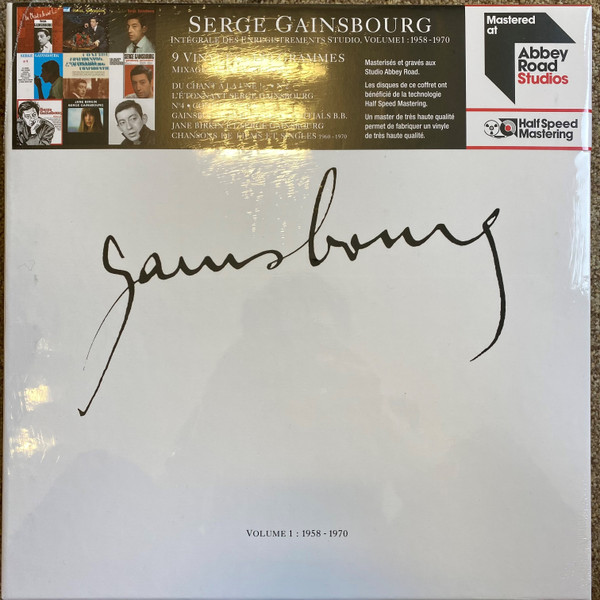
Intégrale Des Enregistrements Studio, Volume 1 : 1958-1970
2020

Premiers Tubes
2017

Initials SG
2002

Gainsbourg Percussions
1964

N°4
1962

Du Chant À La Une !…
1958

Initiales BO
2021
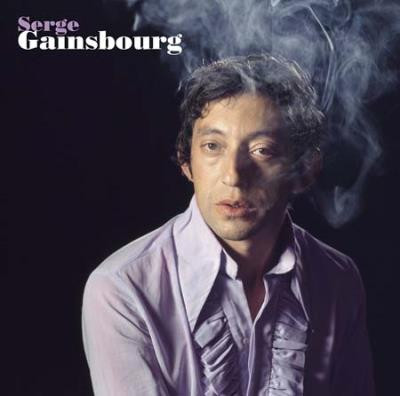
Serge Gainsbourg
2018

1 2 3 4
2014

Du Jazz Dans Le Ravin
2010
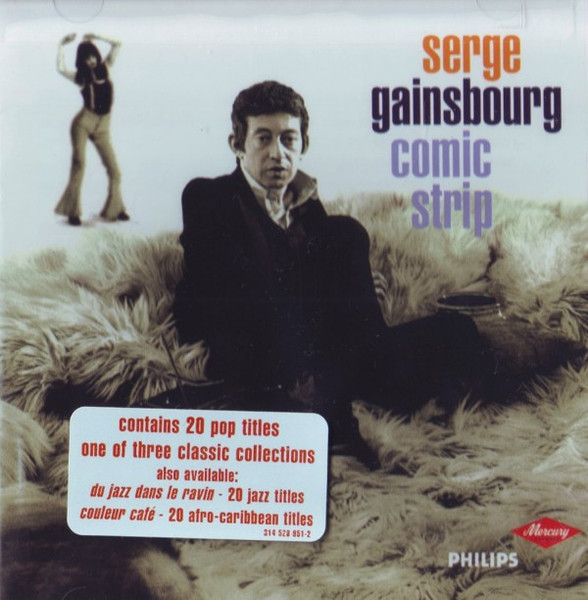
Comic Strip
1996

Couleur Café
1996
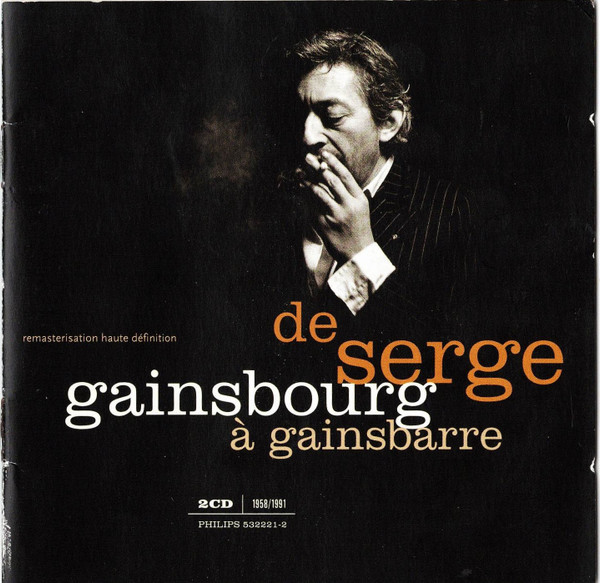
De Serge Gainsbourg À Gainsbarre
1996
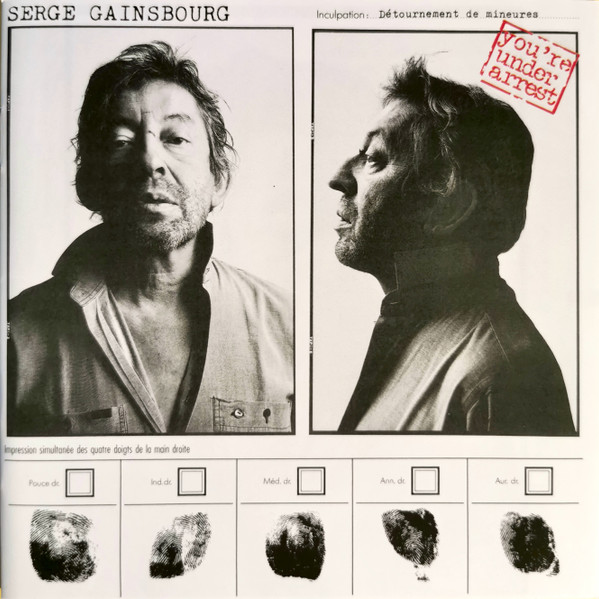
You're Under Arrest
1987

Serge Gainsbourg
1987
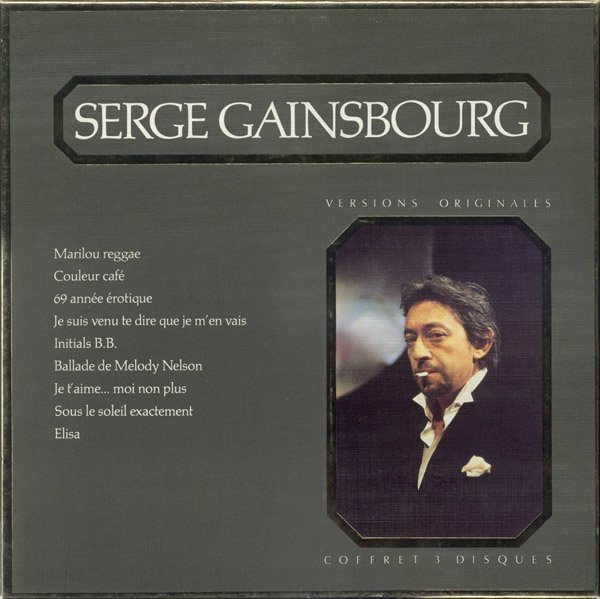
Versions Originales (Vol.1)
1986
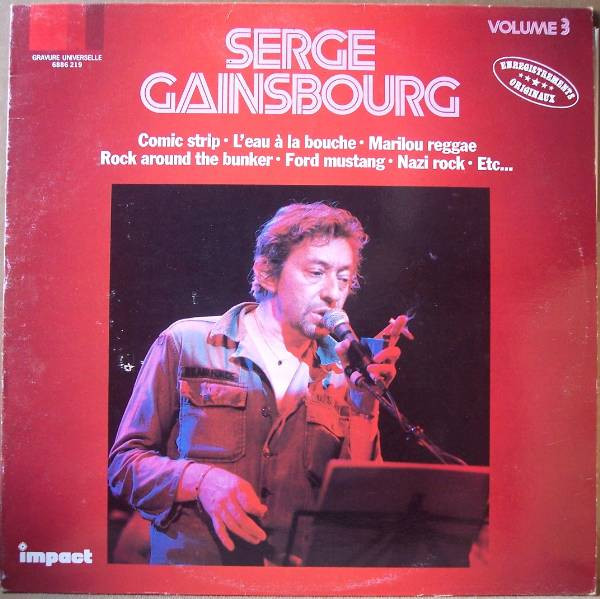
Serge Gainsbourg Volume 3
1981
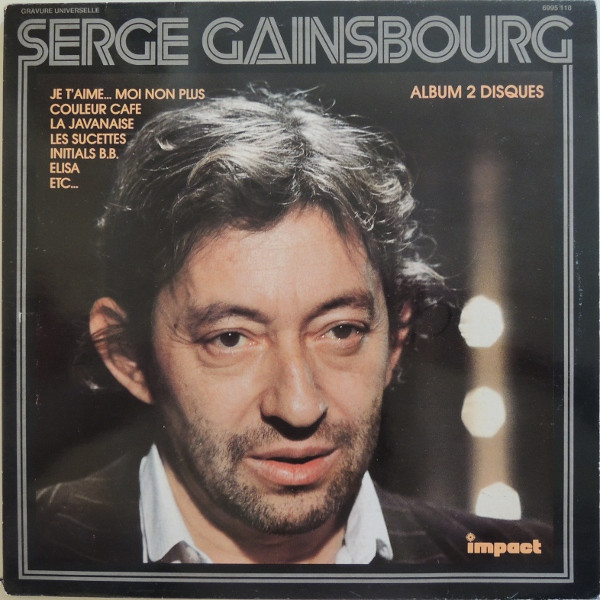
Album 2 Disques
1980
Related artists
Around the web
Follow every record they touch.
Start your shelf and Gatefold tracks Serge Gainsbourg's new pressings, tour dates, and the whole discography — automatically.
Start your shelf →Free forever. Works with 10 records or 10,000.