
Artist
Astrud Gilberto
Salvador, Brazil · 1940 – 2023
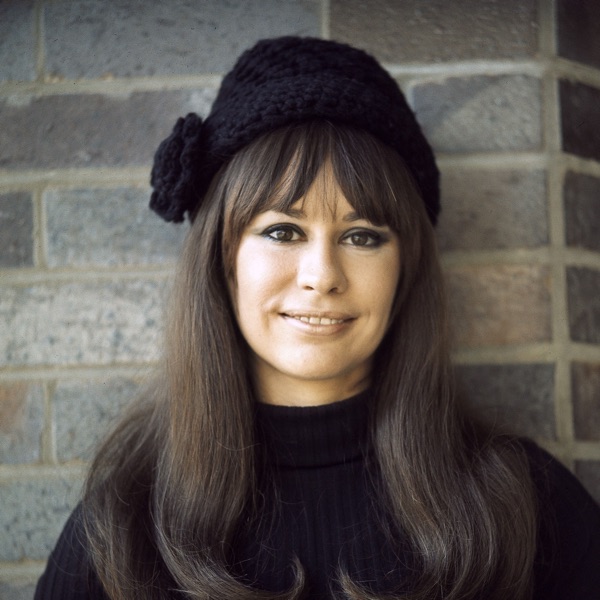
Astrud Gilberto is a musician from Salvador, Brazil, active 1940–2023. Their discography on Gatefold includes 24 records.
35
Albums tracked
55
In collections
1940
Since
Biography
Creed Taylor pulled a total non-pro into a New York studio in March 1963 because João Gilberto refused to sing in English and Stan Getz wanted a crossover hit. Astrud had never cut a studio vocal in her life. She stepped up to the mic, laid down "The Girl from Ipanema" in a flat, almost detached whisper without vibrato, and walked away with a session fee of roughly $120 while the record went multi-platinum. The suits made millions. Getz took the credit. She got treated like a lucky amateur who wandered in off the street, which ignored the reality that her cool, unvarnished phrasing was the exact anchor that sold bossa nova to the rest of the planet. She took that dismissal and built an absurdly durable solo career out of it. Verve threw her into orchestral rooms with Marty Paich and Gil Evans, hoping to milk the breezy exotica angle until it broke. It didn't break because she was smarter than the arrangements. When the US bossa craze ran out of steam, she leaned into soul grooves, Italian pop, and disco without blinking. The purists gave her shit for drifting away from pure Brazilian jazz. Let them whine behind their pristine import bins. She knew how to survive an industry that tried to treat her like a one-off novelty before she even had a solo contract.
Bio from The Clerk
The Arc of Astrud Gilberto
The pivots — what forced Astrud Gilberto to reinvent.
The Verve Solo Machine
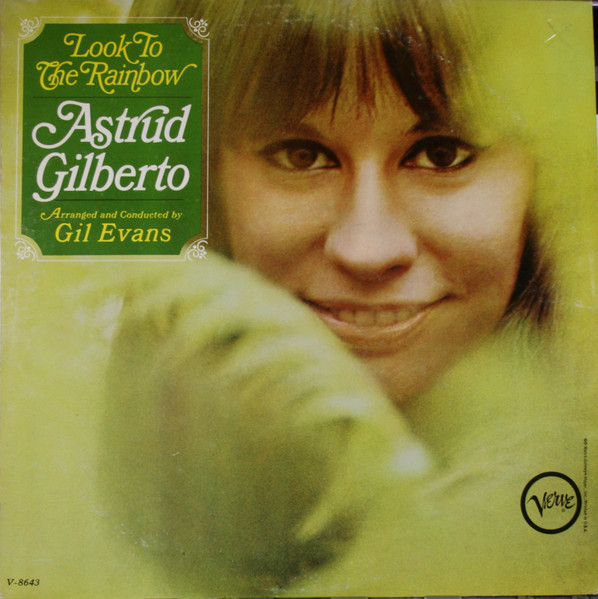
After the 1964 divorce from João and the runaway success of *Getz/Gilberto*, Creed Taylor immediately pushed her into solo headliner status at Verve. She dropped *The Astrud Gilberto Album* in 1965 with arrangements by Marty Paich and Antônio Carlos Jobim on guitar, instantly proving she could carry an entire LP on her own terms. The label squeezed the formula dry over the next two years, pairing her cool delivery with Gil Evans on *Look to the Rainbow* and Walter Wanderley on *A Certain Smile A Certain Sadness*. Her deadpan, zero-vibrato style became the default blueprint for how mid-century American pop treated Brazilian jazz.
The AM Pop and Melancholy Turn
By 1967, the initial bossa boom was cooling off, forcing a transition into expansive orchestrations and left-field pop covers. Records like *Beach Samba* and 1968's *Windy* threw sunshine pop, brass charts, and breezy radio hooks directly at her whispery delivery. The pivot reached its weird, beautiful peak on 1969's *I Haven’t Got Anything Better to Do*, a lush downer of an album bathed in heavy strings and genuine heartbreak. It was a massive departure from the beach-postcard aesthetic, trading tropical optimism for bleak, smoky chamber pop.
The CTI Funk and Jazz Crossover
Leaving Verve at the start of the decade, she reconnected with Creed Taylor on his newly independent CTI imprint. She teamed up with soul-jazz heavyweight Stanley Turrentine for 1971's *Gilberto with Turrentine*, dropping her airy vocals against fat electric basslines, Latin percussion, and deep blues sax hooks. The move gave her sound some necessary dirt and muscle, proving she could sit comfortably on top of heavy rhythm sections. She followed that momentum right into 1972's *Now*, cutting free from traditional bossa structures entirely.
The Disco Rebrand
By the late 1970s, the jazz circuit had dried up, so she took a hard left into contemporary club music. Signing with Audio Fidelity, she dropped 1977's *That Girl From Ipanema*, remaking her signature tune with four-on-the-floor kick drums, bubbling synthesizers, and heavy disco orchestration. Purists hated the move, but her deadpan, anti-diva vocal style sat surprisingly well against peak-era dance grooves. It was an unapologetic commercial survival play that kept her touring international rooms while American jazz critics looked the other way.
The Late Autonomy and Songwriting Era
Tired of being treated as a vehicle for other people's charts, she spent the 1990s and early 2000s taking total control of her output. She cultivated a massive, loyal following in Asia, cutting projects like 1997's *Temperance* for Pony Canyon before releasing her final studio statement, *Jungle*, in 2002. Instead of churning through the Great American Songbook or Jobim standards, *Jungle* featured Gilberto stepping up as the primary songwriter and producer. She finally closed out her career making music entirely on her own terms before stepping away from the business for good.
Influences
- João Gilberto — He brought her directly into the Rio music circle and pioneered the stuttering, percussive guitar groove that defined her rhythmic timing. You hear his understated, close-mic vocal approach echoed directly in her completely unadorned delivery on "The Girl from Ipanema." He showed her that a whisper could carry more weight than a belter.
- Antônio Carlos Jobim — Jobim wrote the foundational material she built her career on and played guitar alongside her on 1965's *The Astrud Gilberto Album*. His sparse piano voicings and harmonic shifts taught her how to navigate complex, chromatic melody lines without ever forcing her voice. She shaped her entire phrasing around his harmonic architecture.
- Chet Baker — His fragile, vibrato-free cool jazz vocal style predated the bossa nova explosion and was a massive touchstone for the Rio scene. You hear that exact breathy, melancholy restraint all over her delivery on *Look to the Rainbow*. They both understood that singing flat and cool made tragic lyrics hit twice as hard.
- Billie Holiday — Astrud regularly cited Lady Day's behind-the-beat phrasing and raw emotional honesty as an early vocal obsession. The influence cuts right through the smoky, slow-burn arrangements on 1969's *I Haven’t Got Anything Better to Do*. It is the sound of making do with a limited range by leaning entirely on timing and delivery.
- Dorival Caymmi — The legendary Bahian songwriter created the modern template for acoustic Brazilian coastal folk long before bossa nova became an international commodity. Astrud grew up in Salvador da Bahia surrounded by his sea songs and romantic rhythms, a foundation that surfaces on tracks like "Berimbau." Caymmi was the cultural taproot of the entire movement.
Discography
Their records — most-collected first.
Look To The Rainbow
1966

The Astrud Gilberto Album
1965
The Shadow Of Your Smile
1965
September 17, 1969
1970
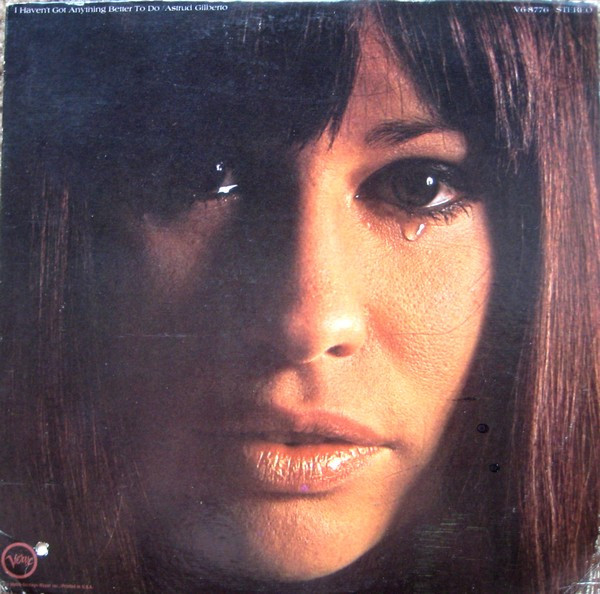
I Haven't Got Anything Better To Do
1969

Windy
1968

That Girl From Ipanema
1977

Now
1972

The Very Best Of Astrud Gilberto
1971
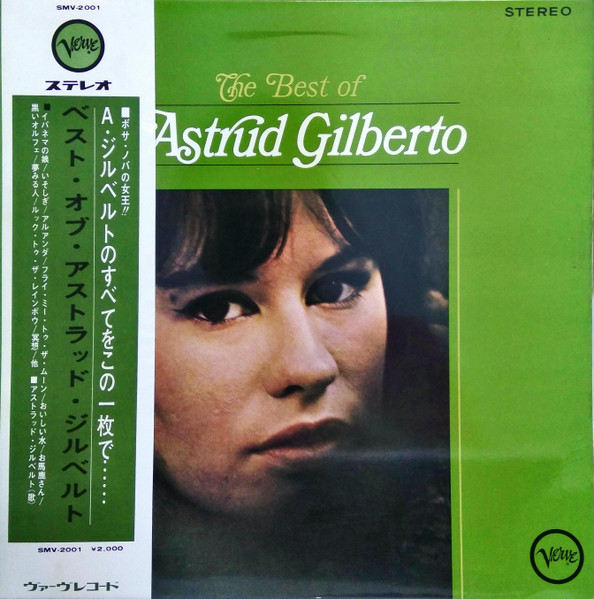
The Best Of Astrud Gilberto = ベスト・オブ・アストラッド・ジルベルト
1967

Great Women Of Song
2023
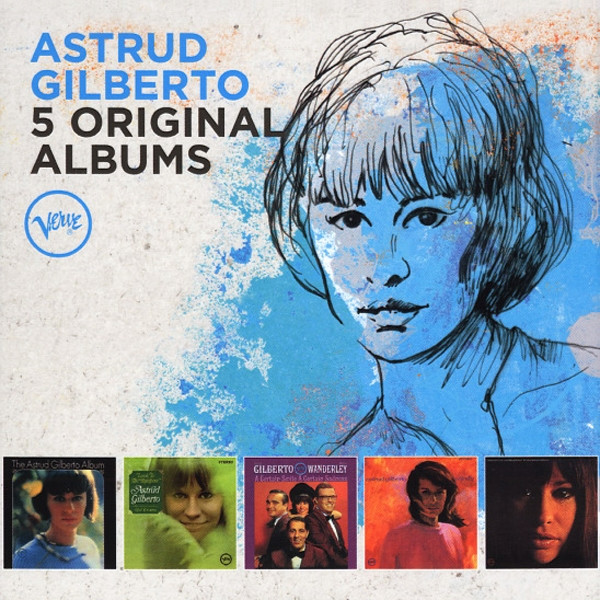
5 Original Albums
2016

Verve Jazz Masters 9
1993

This Is Astrud Gilberto
1984

Lo Mejor De Astrud Gilberto
1975

Acercandome A Ti / En Tu Piel
1972

Beach Samba
1967

A Certain Smile A Certain Sadness
1966

Non-Stop To Brazil
2006

Gold
2006

Astrud For Lovers
2004

Jungle
2002

Astrud Gilberto's Finest Hour
2001
Talkin' Verve
1998
Related artists
Frequent collaborators
Around the web
Follow every record they touch.
Start your shelf and Gatefold tracks Astrud Gilberto's new pressings, tour dates, and the whole discography — automatically.
Start your shelf →Free forever. Works with 10 records or 10,000.