
Artist
Giuni Russo
Palermo, Italy · 1951 – 2004
Giuni Russo is a musician from Palermo, Italy, active 1951–2004. Their discography on Gatefold includes 24 records.
26
Albums tracked
1
In collections
1951
Since
Biography
Enrico Rava blowing trumpet over an English-language debut on a German tape label was not how the Italian pop machine planned to sell Giuseppa Romeo. The industry wanted another polite festival crooner. What they got was a five-octave vocal weapon tied to lifelong artistic partner Maria Antonietta Sisini, completely unwilling to do what the suits demanded. Most folks know her as the woman who belted out summer anthems, but the beach pop was just a temporary hustle to buy creative rope. Meeting Franco Battiato detonated whatever commercial restraint she had left. Working alongside Battiato and violinist Giusto Pio, she cranked out art-pop that hit like a fist before picking a bloody fight with CGD label boss Caterina Caselli over artistic autonomy. That clash essentially blacklisted her from the mainstream gears, so she took her ridiculous vocal control somewhere commercial radio couldn't touch: 19th-century chamber arias, Mediterranean modal experiments, and theater stages. It was an uncompromising, deeply stubborn arc, and every dime she ever made was spent chasing sounds nobody else had the guts to sing.
Bio from The Clerk
The Arc of Giuni Russo
The pivots — what forced Giuni Russo to reinvent.
The Pseudonym Years
After winning Castrocaro and cutting early Italian sides as Giusy Romeo, she rebranded as Junie Russo and signed with BASF to break the local mold. The result was 1975's *Love Is a Woman*, a soulful, English-language effort featuring jazz titan Enrico Rava on trumpet alongside lifelong collaborator Maria Antonietta Sisini. It was a bizarre, moody opening gambit that bombed commercially because Italian distributors had no idea what shelf to stick it on. Her final single under that tag landed on Durium in 1976 before she stripped off the anglicized spelling for good.
The Battiato Avant-Pop Explosion
Teaming up with Franco Battiato and arranger Giusto Pio completely retooled her trajectory for 1981's *Energie* on CGD. Battiato injected dry new-wave rhythms, Alberto Radius layered biting guitars, and Russo unleashed extreme vocal acrobatics that sounded completely unhinged for Italian radio. That partnership delivered the massive 1982 hit 'Un'estate al mare', which proved Russo could manufacture chart gold anytime she wanted. Follow-up LPs *Vox* and *Mediterranea* pushed the sonic envelope even further into synth textures and Mediterranean folk, setting up a brutal standoff with CGD chief Caterina Caselli, who demanded another formulaic beach record.
The Chamber Art Songs
Instead of chasing radio trends, Russo went full classical avant-garde on 1988's *A casa di Ida Rubinstein*. She took chamber compositions by Bellini, Donizetti, and Rossini and tore them wide open with operatic control, jazz phrasing, and modern electronics. Labels hated the commercial risk, but it established her as a singular vocal powerhouse who operated outside the standard Italian songbook. Later projects like 1994's *Se fossi più simpatica sarei meno antipatica* hammered home her sharp, defiant attitude toward the industry that discarded her.
The Spiritual Theater and Final Bow
Facing severe illness, Russo dedicated her final chapters to sacred verse, acoustic performance, and pure vocal theater. Her stage command was captured raw on 2002's *Signorina Romeo (Live)* before she staged an uncompromising return to Sanremo with the sweeping orchestral title cut of 2003's *Morirò d’amore*. That same year saw the release of *Demo.De.Midi*, stripping away studio sheen to spotlight her raw, unadorned songwriting sketches. She closed her career on her own terms with the 2004 theatrical soundtrack project *Napoli che canta*, singing traditional Neapolitan songs against silent cinema just months before she passed.
Influences
- Maria Callas — Russo repeatedly cited Callas in interviews as the gold standard for dramatic vocal phrasing and technical rigor. You hear that operatic discipline and terrifying bel canto dynamic control all over 1988's *A casa di Ida Rubinstein*. She treated the human voice like an orchestral instrument rather than a microphone trick.
- Vincenzo Bellini — Bellini's 19th-century Sicilian bel canto melodies served as the structural foundation for Russo's formal vocal training and artistic heritage. She tackled his chamber compositions directly on *A casa di Ida Rubinstein*, modernizing his romantic phrasing with contemporary rhythm sections. It gave her pop work a distinct, soaring melodic arch nobody else in Italian new wave possessed.
- Aretha Franklin — During her early seventies club work and the sessions that led to *Love Is a Woman*, Russo immersed herself in American soul phrasing and chest-voice projection. You can hear that raw, full-throated R&B belt on early English tracks before she channeled it into avant-pop. It taught her how to push air without losing an ounce of pitch.
- Mina — Mina established the standard for extreme range and untouchable technical charisma in 1960s Italian pop. Russo cut her teeth winning Castrocaro in 1967 singing in that lineage, matching the explosive chest belting and high-register runs. You hear that commanding, effortless power across the vocal hooks on 1981's *Energie*.
- Giacomo Puccini — Puccini's dramatic verismo vocal textures shaped Russo's approach to tragic storytelling and theatrical weight. His influence directly informs the sweeping, dark dynamic shifts on her final major masterwork, 2003's *Morirò d’amore*. She sang pop songs with the devastating emotional stakes of an opera death scene.
Discography
Their records — most-collected first.
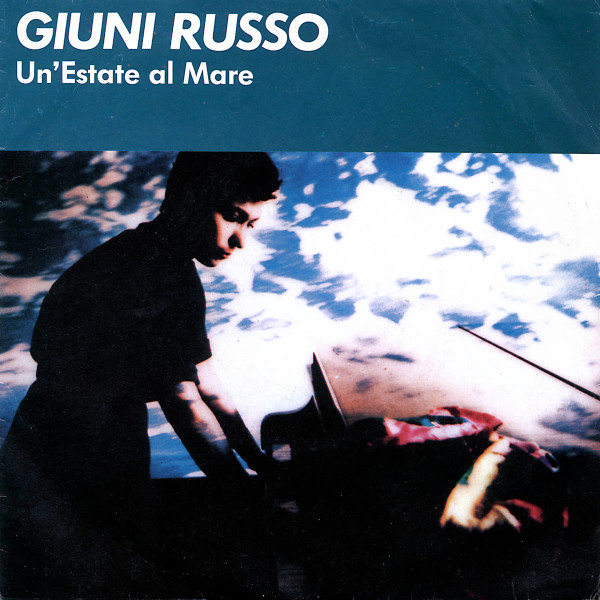
Un'Estate Al Mare
1982

Aliena (Giuni Dopo Giuni)
2021

Armstrong
2017

Il Ritorno Del Soldato Russo
2014

Unica
2013

Unusual
2006

Irradiazioni
2004

(Suite Musicale Per Il Film) Napoli Che Canta ((1926) Di Roberto Leone Roberti )
2004

Morirò D'Amore
2003

Demo . De . Midi
2003

Il Meglio
2000

Alghero
1998

Onde Leggere
1996

Se Fossi Più Simpatica Sarei Meno Antipatica
1994

Amala
1992

Le Più Belle Canzoni
1990

I Successi Di Giuni Russo
1989

A Casa Di Ida Rubinstein
1988

Album
1987

Sere D'Agosto
1987

Giuni
1986

Mediterranea
1984

Vox
1983

Un'Estate Al Mare
1983
Related artists
Frequent collaborators
Around the web
Follow every record they touch.
Start your shelf and Gatefold tracks Giuni Russo's new pressings, tour dates, and the whole discography — automatically.
Start your shelf →Free forever. Works with 10 records or 10,000.