
Artist
Jackie Shane
Nashville, United States · 1940 – 2019
Jackie Shane is a musician from Nashville, United States, active 1940–2019. Their discography on Gatefold includes 1 record.
1
Albums tracked
8
In collections
1940
Since
Biography
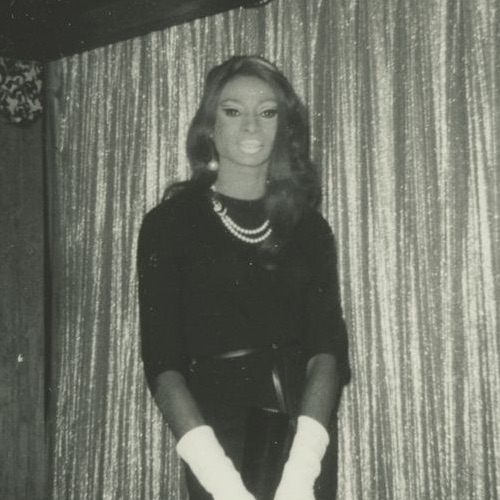
Recorded straight off the board at Toronto's Saphire Tavern in 1967, Jackie Shane walked up to the mic in a sequined suit, pointed shoes, and heavy eyeliner, owning a southern soul sound that tore the roof off a room full of Canadian white kids. She cut 'Any Other Way' at Bell Sound Studios in New York five years earlier, hijacking William Bell's Stax track and flipping the lyric into an open, unapologetic statement of trans survival in the Jim Crow era. Most singers in the early sixties buried their truths under double entendres. Shane put hers dead-center over a driving backbeat and dared anyone to try and stop her. She didn't stick around to cash in on the nostalgia circuits or let major labels file down her edges. By 1971, when Toronto's live scene started pivoting to arena bloat and the recording industry wanted easily packaged archetypes, she walked completely away from the stage to care for her mother in Los Angeles, leaving behind an impossibly rare run of 45s on labels like Sue and Caravan. For forty years people traded rumors that she was dead, all while bootlegs circulated among deep soul collectors who knew her phrasing could cut Otis Redding or Solomon Burke right down the middle. When the Numero Group tracked her down in Nashville for a complete anthology reissue, she didn't need a comeback tour or an apology from the music business. The tapes had already won the argument.
Bio from The Clerk
The Arc of Jackie Shane
The pivots — what forced Jackie Shane to reinvent.
The Nashville to Toronto Relocation
Fleeing Jim Crow Nashville in the late 1950s after touring the chitlin' circuit with Joe Tex, Shane moved north to Montreal and finally hit Toronto with Frank Motley and the Hitch-Hikers. Motown and Stax were breaking nationwide, but Shane built a ferocious local residency playing high-energy R&B that relied on real-time stage charisma rather than glossy studio backing. Her 1962 cover of William Bell's 'Any Other Way' became a regional top-ten smash on CFTR and CHUM, turning a southern exile into the biggest soul draw in Ontario.
The Saphire Tavern Era
By 1967, Shane was running the room at Toronto's Saphire Tavern, backing herself with tight session aces and treating live performance as raw, unedited theater. Caravan Records engineer George Semkiw brought portable recording gear into the club to capture *Jackie Shane Live*, documenting her mid-song monologues, blistering covers of Barrett Strong, and total command of an audience hanging on every breath. The resulting LP became an underground holy grail of raw sixties rhythm and blues, preserved with all the tape hiss, crowd yells, and unfiltered swagger intact.
The Total Disappearance
Following a final run of singles in 1969 including 'Cruel Cruel World' and 'New Way of Loving,' Shane cut ties with promoters, managers, and the Canadian nightclub circuit around 1971. She packed up, moved back south to Los Angeles and later Nashville to care for her ailing mother, refusing all interviews and studio offers while bootleggers profited off her back catalog. That four-decade silence finally broke when she approved the archival release *Any Other Way* in 2017, proving her work hadn't lost an ounce of grit or relevance.
Influences
- Little Richard — Shane openly cited Richard's high-octane theatricality and unapologetic androgyny on the 1950s touring circuit as the permission slip for her entire stage act. You hear it in her wild falsetto screams, the relentless tempo of her uptempo numbers, and her absolute refusal to tone down her visual presentation for conservative crowds. Richard laid the rock-and-roll dynamite, but Shane carried the flame into hard-nosed southern soul.
- Ruth Brown — Brown's commanding Atlantic 78s defined rhythm and blues vocal dominance throughout the early 1950s, establishing the brassy, direct delivery Shane absorbed while growing up in Nashville. The bite in Shane's lower register and the way she lands hard on the downbeats of 'In My Tenement' borrow directly from Brown's fierce vocal attack. Brown proved an R&B singer could take absolute ownership of a bandstand without yielding an inch.
- William Bell — Bell wrote and tracked the original version of 'Any Other Way' for Stax in 1962 with the Mar-Keys backing him up. Shane cut her own version months later, radically reinterpreting Bell's polite, heartbroken ballad into a defiant, strutting personal anthem. Without Bell's composition, Shane's defining signature record simply wouldn't exist.
- Amos Milburn — Milburn's jump blues and boogie-woogie records for Aladdin laid down the raw, barrelhouse rhythm that Frank Motley's band built their entire live sound around behind Shane. You can hear that heavy, piano-driven groove pounding through Shane's early cuts like 'Money (That's What I Want)' and 'Sticks and Stones.' Milburn taught that whole generation how to drive a rhythm section straight through the floorboards.
- Charles Brown — Brown's late-night West Coast club blues set the blueprint for the devastating, slow-burn torch ballads Shane dropped into her live sets. His influence bleeds heavily into Shane's phrasing on deep blues numbers like 'I've Grooved on You,' where she stretches out syllables and lets the space between notes carry the emotional weight. It was the sophisticated, bruised counterweight to her explosive uptempo shuffles.
Discography
Their records — most-collected first.
Around the web
Follow every record they touch.
Start your shelf and Gatefold tracks Jackie Shane's new pressings, tour dates, and the whole discography — automatically.
Start your shelf →Free forever. Works with 10 records or 10,000.