Artist
Mad River
Yellow Springs, United States · 1966 – 1969
Mad River is a music group from Yellow Springs, United States, active 1966–1969. Their discography on Gatefold includes 2 records.

2
Albums tracked
3
In collections
1966
Since
Biography
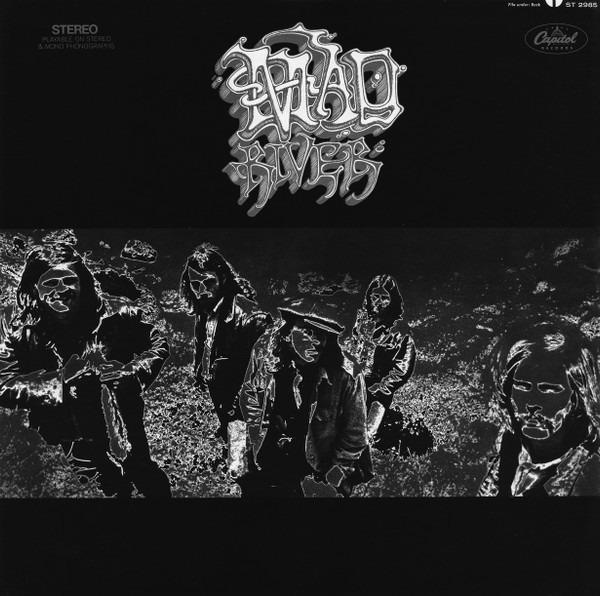
One of the oddest San Francisco Bay Area bands of the late '60s, Berkeley-based Mad River cut two albums that are highly regarded by psychedelic collectors. After releasing a rare EP on a tiny local label in 1967, the band signed with Capitol and released their self-titled debut the following year. Perhaps the most ominous San Francisco band of the time, the group often sounded like an extremely dark version of Quicksilver Messenger Service with a bit of Country Joe & the Fish's minor-key melodies thrown in.
The Arc of Mad River
The pivots — what forced Mad River to reinvent.
The Acid-Punk Freakouts
In 1968, the band recorded their self-titled debut for Capitol under the direction of Nik Venet, who had previously worked with the Beach Boys. Instead of sunny harmonies, the band delivered jagged, feedback-drenched epics like 'The War Games.' Lawrence Hammond screamed his vocals over Greg Dewey’s frantic, jazz-damaged drumming. It was a confrontational record that alienated folk-rock fans with its sheer volume and unpredictable structure.
The Country-Rock Retreat
Broke and exhausted by 1969, the band abandoned the heavy volume for their sophomore album, 'Paradise Bar and Grill.' Hammond took over with a acoustic, country-folk focus that mirrored the shift their peers in the Byrds were making. They brought in pedal steel player Red Rhodes to paint over the empty spaces left by their old feedback loops. The record was a gorgeous, dust-covered suicide note for a band that knew they were running out of road.
Influences
- The Paul Butterfield Blues Band — Mad River started out playing intense, electrified blues jams in Ohio after hearing Butterfield's self-titled debut and 'East-West.' You can hear it in David Robinson's relentless, biting lead guitar runs on 'Amphetamine Gazelle.' They took the Chicago blues template and pushed it past the breaking point.
- Country Joe & the Fish — Before cutting their own records, Mad River opened for Country Joe and the Fish in San Francisco and got an education in political, psychedelic freakouts. The structural shifts and heavy organ parts on their self-titled album directly mirror the arrangements on 'Electric Music for the Mind and Body.' It was the blueprint for how to sound dangerous in a ballroom.
- John Coltrane — Drummer Greg Dewey openly cited Coltrane's modal jazz sheets of sound as a major influence on how the band approached improvisation. You hear this in the modal, eastern-tinged guitar scales of 'Eastern Memory.' They weren't playing blues changes; they were trying to play free jazz with loud amplifiers.
- Bob Dylan — Lawrence Hammond was heavily influenced by Dylan's mid-sixties lyrical density and vocal delivery. You can hear the surrealist, stream-of-consciousness songwriting style all over 'Wind Chimes' on their debut. Hammond took Dylan's snarl and turned it into an operatic, trembling vibrato.
- Hank Williams — Hammond's deep love for traditional country music and Williams' tragic songwriting led directly to the band's shift on their second album. You hear this influence clearly on tracks like 'Leave Me Alone' and the title track of 'Paradise Bar and Grill.' It was the sound of Ohio boys returning to the country music they grew up on.
Discography
Their records — most-collected first.

Related artists
Around the web
Follow every record they touch.
Start your shelf and Gatefold tracks Mad River's new pressings, tour dates, and the whole discography — automatically.
Start your shelf →Free forever. Works with 10 records or 10,000.