Artist
Shirley Bassey
Welsh singer
Cardiff, United Kingdom · b. 1937
Shirley Bassey is a musician from Cardiff, United Kingdom, active since 1937. Their discography on Gatefold includes 24 records.

24
Albums tracked
50
In collections
1937
Since
Biography
Dame Shirley Veronica Bassey, (born January 8, 1937), is a Welsh singer, perhaps best-known for performing the theme songs to the James Bond films Goldfinger (1964), Diamonds Are Forever (1971), and Moonraker (1979). She is the only singer to have recorded more than one James Bond theme song. She now resides in Monaco and has recently sold her London apartment. Many of its furnishings were auctioned for charity. Two very popular 'Audiences With Shirley Bassey' have aired on British TV, the most recent being in March 2006.
The Arc of Shirley Bassey
The pivots — what forced Shirley Bassey to reinvent.
The Philips Cabaret Belter
Producer Johnny Franz cut her early singles for Philips like straight-ahead theatrical dynamite, backing her with Geoff Love's bombastic brass. Records like 'Born to Sing the Blues' and 'As I Love You' proved she wasn't an American jazz clone, but a raw music-hall powerhouse who could out-shout full big bands. The sound was stark, heavy on vibrato, and entirely built around her dynamic lung control.
The Bond & Barry High-Water Mark
Signing to EMI's Columbia imprint and teaming with arranger John Barry turned her into an international powerhouse. Barry weaponized her dynamic range for 'Goldfinger' and later 'Diamonds Are Forever', stacking aggressive brass attacks directly against her sustained upper register. This was her golden run: sweeping Nelson Riddle arrangements, massive studio budgets, and vocals cut with terrifying precision.
The Seventies MOR Reinvention
When traditional big-band pop collapsed under the weight of seventies arena rock, producer Noel Rogers pivoted Bassey straight toward contemporary pop covers at United Artists. Her 1970 LP 'Something' gave George Harrison's ballad a brass-soaked theatrical overhaul and became her biggest-selling studio record. The rest of the decade chased that formula through adult contemporary ballads, sometimes veering into schmaltz, but always saved by her refusal to sing anything softly.
The Big Beat Resurgence
By the late nineties, she looked permanently locked into the luxury cabaret circuit until Alex Gifford and Will White of Propellerheads put a breakbeat track in front of her. 'History Repeating' in 1997 didn't soften her delivery; it dropped her unmistakable, imperious belt directly onto blistering electronic drums. It proved her voice wasn't just a mid-century artifact—it was an acoustic blunt instrument that cut through modern compression like a knife.
Influences
- Lena Horne — Horne was Bassey's earliest idol, and Bassey openly cited Horne's theatrical intensity and glamour as the direct blueprint for her stage presence. You hear it in the clipped, dramatic diction and the way she uses facial expressions to drive vocal phrasing on early cuts like 'The Bewitching Miss Bassey'.
- Dinah Washington — Washington's razor-sharp attack and raw blues edge heavily informed Bassey's first studio sides. Listen to Bassey's 1957 debut 'Born to Sing the Blues' and you hear Washington's direct, punchy timing and blues phrasing driving every measure.
- Ella Fitzgerald — Fitzgerald's masterclass in breath support and big-band control set the technical ceiling Bassey chased throughout the late fifties. You hear Fitzgerald's effortless rhythmic placement when Bassey navigates up-tempo swing arrangements on 'Let's Face the Music'.
- Judy Garland — Garland set the standard for emotionally devastating, bleeding-on-the-mic vocal delivery that Bassey adopted for her dramatic showtunes. Bassey cut Garland's signature territory like 'The Man That Got Away', matching the same tragic, high-stakes vibrato at full volume.
- Billie Holiday — Holiday taught Bassey how to drag behind the beat for emotional tension rather than sticking rigidly to the rhythm section. Bassey covered 'Crazy He Calls Me' and 'Don't Explain', borrowing Holiday's bruised, vulnerable cadence before detonating into her own signature belt.
Discography
Their records — most-collected first.
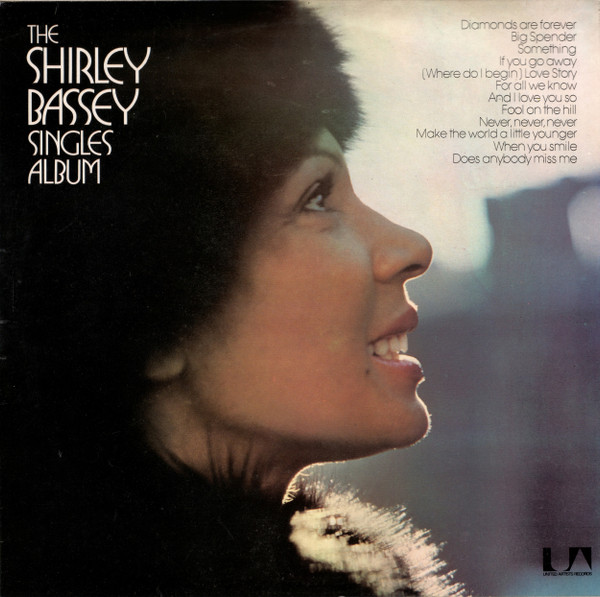
The Shirley Bassey Singles Album
1975

Never, Never, Never
1973

Something Else
1971

25th Anniversary Album
1978

Let's Face The Music
1962

I Am What I Am
1984
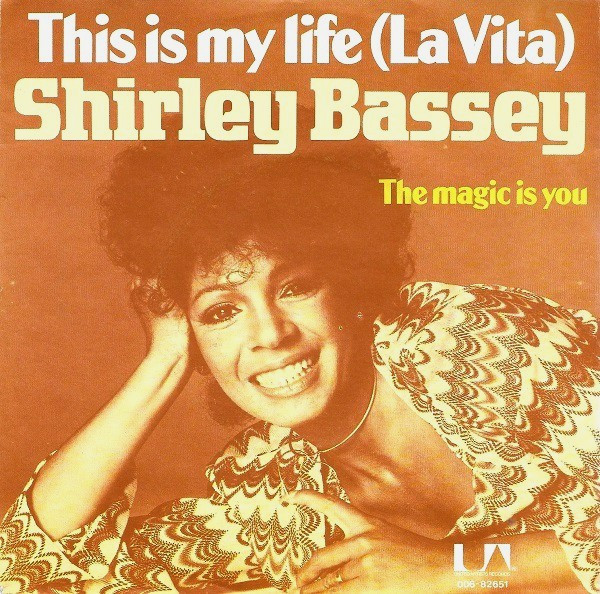
This Is My Life (La Vita)
1979

Thoughts Of Love
1976
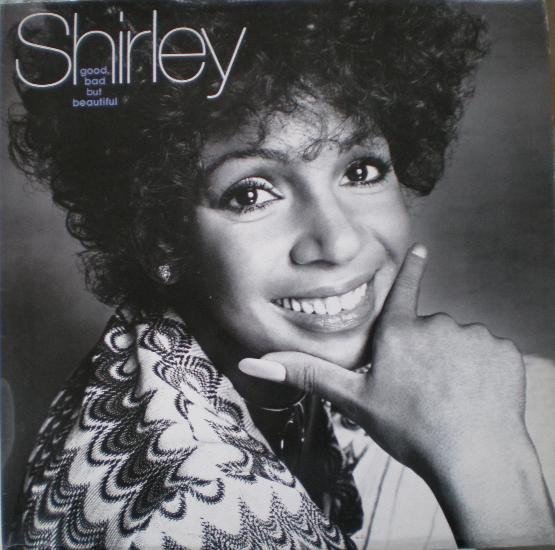
Good, Bad But Beautiful
1975
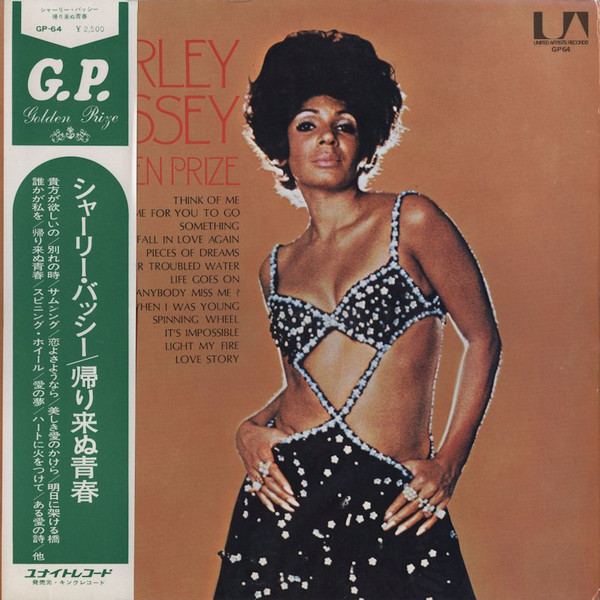
Golden Prize
1972

Live At Talk Of The Town
1971

And We Were Lovers
1967

I've Got A Song For You
1966
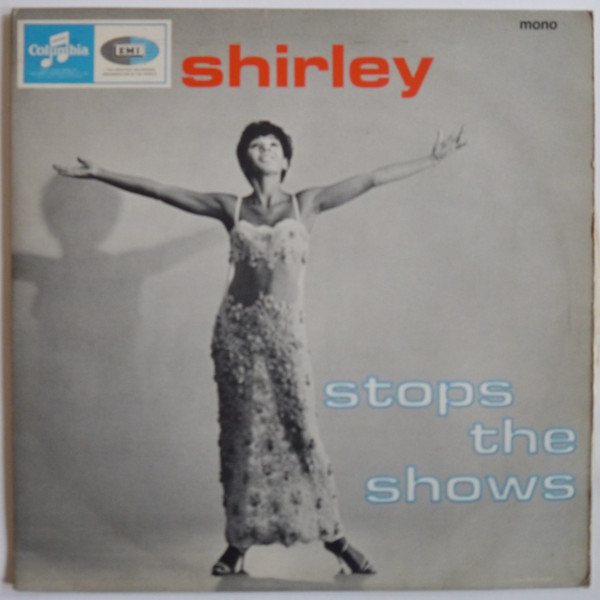
Shirley Stops The Shows
1965

Diamonds: The Best Of Shirley Bassey
1988

All By Myself
1982
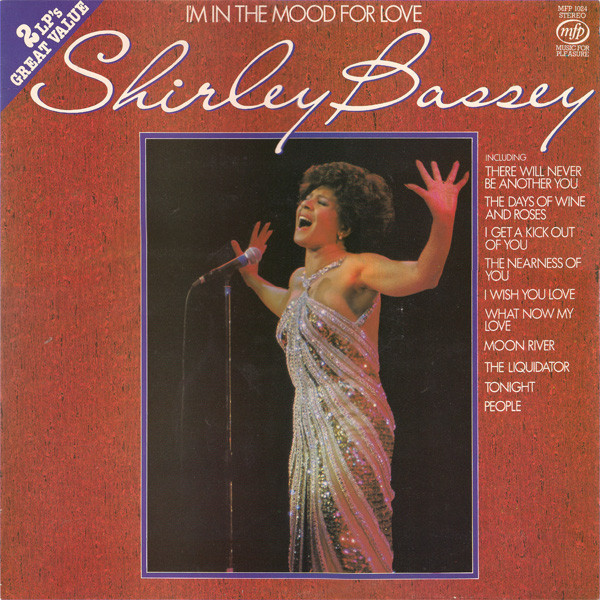
I'm In The Mood For Love
1981

Burn My Candle
1976

Shirley Bassey's Greatest Hits
1976
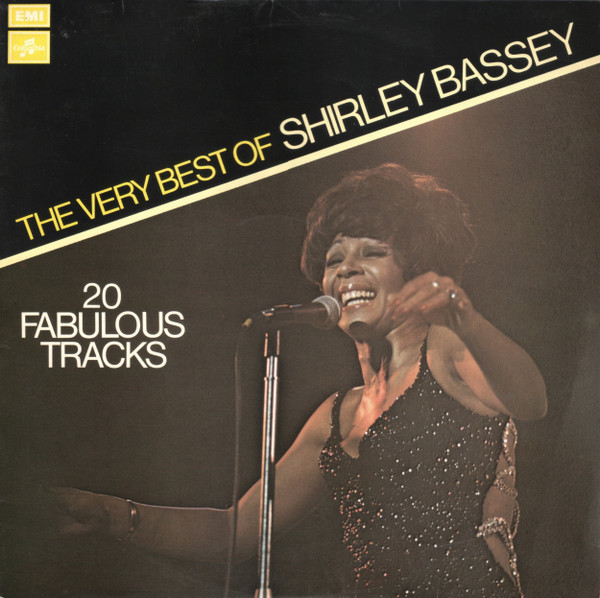
The Very Best Of Shirley Bassey
1974

Live At Carnegie Hall
1973
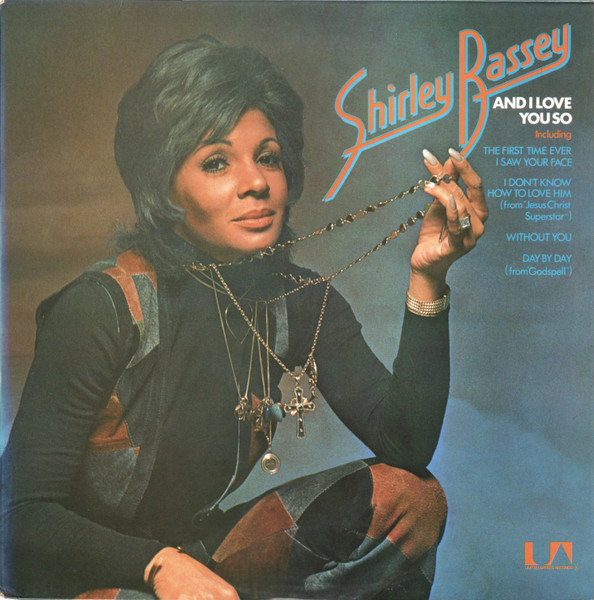
And I Love You So
1972

I, Capricorn
1972

Never, Never, Never / Day By Day
1972
Related artists
Frequent collaborators
Around the web
Follow every record they touch.
Start your shelf and Gatefold tracks Shirley Bassey's new pressings, tour dates, and the whole discography — automatically.
Start your shelf →Free forever. Works with 10 records or 10,000.