Artist
Nat King Cole
Montgomery, United States · 1919 – 1965
Nat King Cole is a musician from Montgomery, United States, active 1919–1965. Their discography on Gatefold includes 24 records. They also recorded with The Nat King Cole Trio.

97
Albums tracked
295
In collections
1919
Since
Biography
Before Capitol built a circular tower off his vocal cords, Cole was a monster behind eighty-eight keys. He ran a drumless trio with piano, guitar, and bass—Oscar Moore picking fire, Johnny Miller holding down the low end—and cut sessions with Lester Young and Buddy Rich that made other jazz outfits sound bloated. No trap kit cluttering the frequency spectrum. Just sheer rhythmic drive, lightning comping, and left-hand chord voicings that directly fed the early bop experiments happening across town. Then the golden throat took over. A string arrangement on an acoustic ballad showed the bean counters that soft baritone crooning moved ten times the units of a virtuoso piano run. The keys got abandoned for massive orchestral charts, big television lights, and easy listening paychecks. Purists cried sellout. But nobody else could lean into a microphone and sound like silk sliding over gravel without ever straining for a note.
Bio from The Clerk
The Arc of Nat King Cole
The pivots — what forced Nat King Cole to reinvent.
The Drumless Trio Wiretap
Before the giant orchestras took over, Cole defined modern small-group jazz with piano, upright bass, and archtop guitar. Releases like the 1949 King Cole at the Piano documented a technician who could trade dizzying, syncopated lines with Lester Young without breaking a sweat. The lack of a drummer forced his left hand to carry the groove, cutting through with sharp chord clusters instead of heavy stride bass. It proved that intimate swing could outplay full big bands on sheer dynamic control.
The Pop Balladeer Takeover
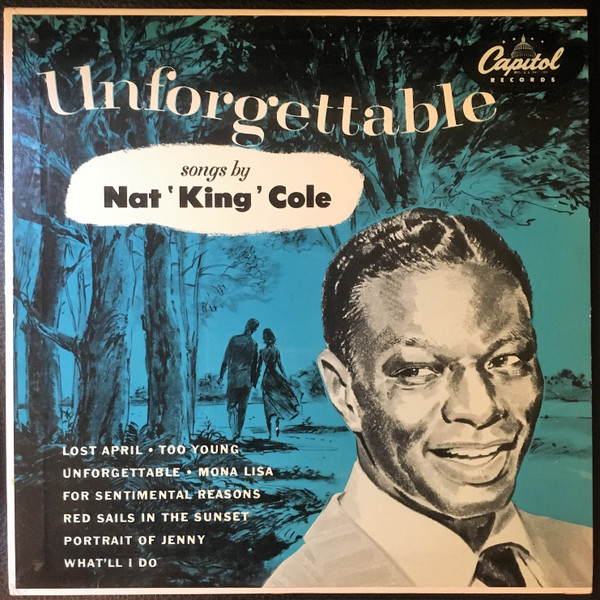
Capitol brass realized the real money lived in putting Cole's voice in front of lush, cinematic string sections instead of smoky club arrangements. The 1952 arrival of Unforgettable flipped the script, practically forcing him out from behind the grand piano to stand alone as a solo pop heavyweight. He followed up with Sings for Two in Love in 1953, fully embracing the role of the mid-century hearthside crooner. It sidelined his jaw-dropping piano chops, but the warm, effortless phrasing set the standard for vocal pop.
Big Band Fire and Mid-Century Swing
Cole pushed back against pure syrupy orchestral ballads by cutting loose on punchy, hard-swinging brass arrangements. His 1957 record Just One of Those Things matched his voice against blistering horn charts that demanded pure rhythmic authority. Releases like Welcome to the Club in 1959 showed he never forgot his jazz chops, locking into the pocket with absolute ease. He wasn't just serenading suburban couples anymore; he was driving a big band with grit.
The Pan-American Crossover
Chasing an international audience without speaking fluent Spanish, Cole learned lyrics phonetically to cut targeted records for Latin America. The 1958 LP Cole español kicked off a wildly lucrative streak, leaning heavy into boleros, cha-chas, and Cuban percussion. He doubled down the following year with A mis amigos, blending sleek American pop engineering with Havana-style arrangements. It was a calculated commercial move, but the laid-back vocal delivery fit the syncopated rhythms like a glove.
Country-Pop and Final Light
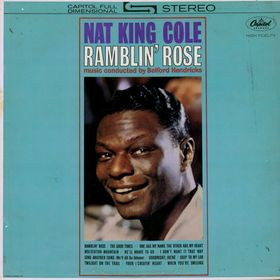
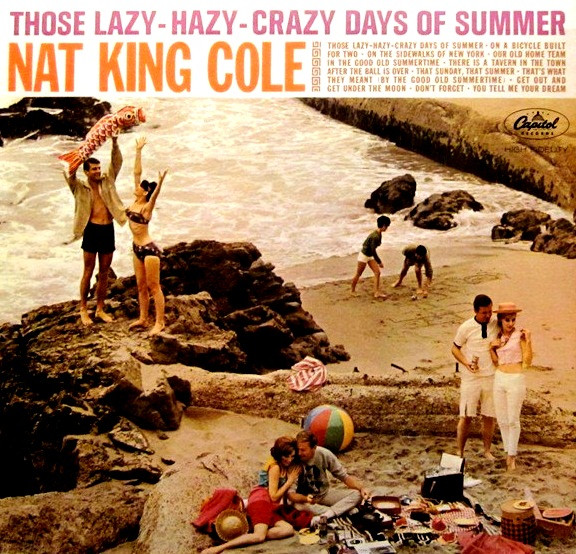
As rock and roll swallowed the radio dial, Cole pivoted to acoustic, down-home crossover material to keep moving records. The 1962 smash Ramblin’ Rose found him strumming through country-tinged pop, while 1963 brought the nostalgic singalong of Those Lazy-Hazy-Crazy Days of Summer. He closed out his run with 1964's L-O-V-E, returning to bright, brassy big-band pop mere months before lung cancer ended his life at forty-five. He went out working, never letting the vocal polish drop an inch.
Influences
- Earl Hines — Cole openly called Hines his primary hero, sneaking into the Chicago Savoy Ballroom as a kid just to study his hands. You hear Hines' signature 'trumpet-style' piano playing in Cole's sharp, single-note right-hand attack across early trio sides. Nobody runs octaves that clean without studying Earl.
- Fats Waller — Before cutting his own path, Cole was hired to play piano in a touring revival of Waller's revue Shuffle Along. Waller's influence bleeds through Cole's sly, conversational vocal cadence and humorous lyrical delivery on early King Cole Trio jump blues sides. Fats provided the blueprint for being a killer keyboardist and an effortless entertainer at once.
- Bing Crosby — Crosby invented the concept of whispering into a carbon ribbon microphone to project intimate warmth, and Cole adopted that exact conversational technique. The understated, low-effort breath control on 1952's Unforgettable is Crosby's radio style pushed into jazz territory. Cole stripped out Bing's Irish trills and replaced them with smooth, urban phrasing.
- Art Tatum — Cole spent his formative club years in the 1930s listening to Tatum's astonishing harmonic substitutions and reharmonizations. The intricate, rapid-fire chromatic runs on Cole's 1949 King Cole at the Piano show a direct debt to Tatum's virtuosic finger independence. Tatum pushed him to play far beyond standard dance-hall stride.
- Louis Armstrong — Armstrong's 1920s Hot Five and Hot Seven recordings established how a jazz soloist could step up to the vocal mic with the same rhythmic swing as their horn. Cole took Pops' timing and laid-back sense of beat delay, smoothing the gravel into velvet on records like 1958's St. Louis Blues. The vocal phrasing is pure Satchmo, just filed down to a whisper.
Nat King Cole — solo
Their records — most-collected first.

The Christmas Song
1962
Ramblin' Rose
1962
Unforgettable
1952

Love Is The Thing
1957

Love Is A Many Splendored Thing
1966
Those Lazy-Hazy-Crazy Days Of Summer
1963

Just One Of Those Things
1957
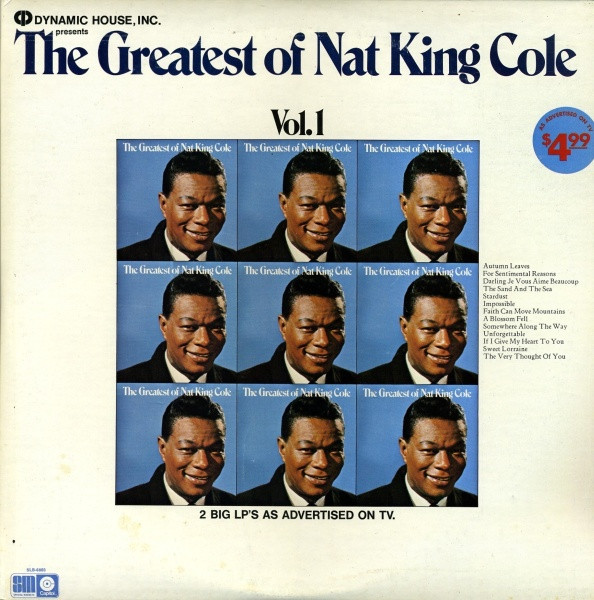
The Greatest Of Nat King Cole
1972
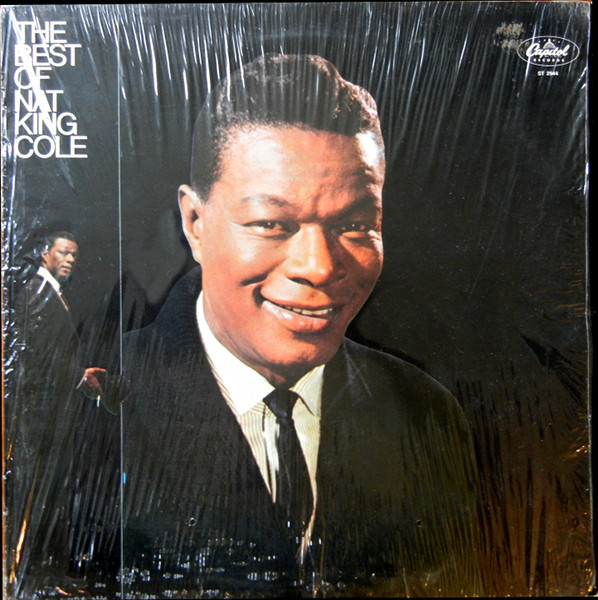
The Best Of Nat King Cole
1968
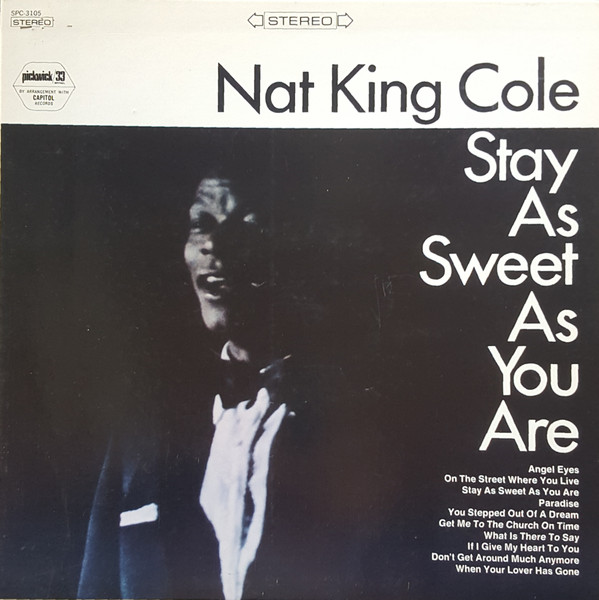
Stay As Sweet As You Are
1967
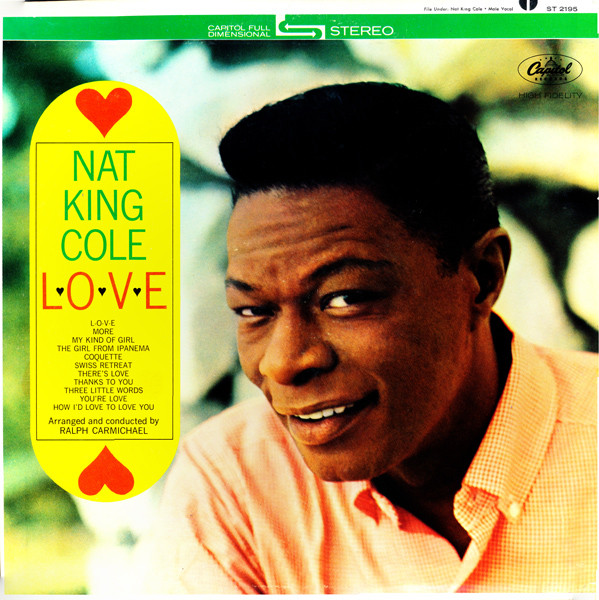
L-O-V-E
1965

Dear Lonely Hearts
1962
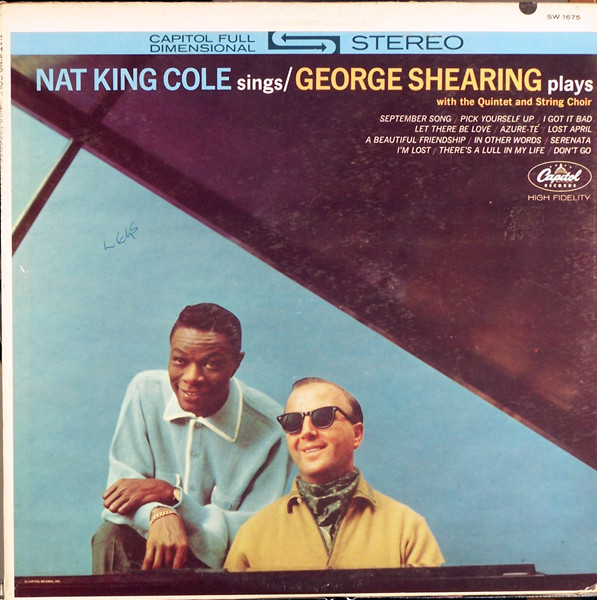
Nat King Cole Sings/George Shearing Plays
1962
Nat King Cole Golden Treasury "Unforgettable"
1966

Christmas With Nat King Cole And Fred Waring & The Pennsylvanians
1973
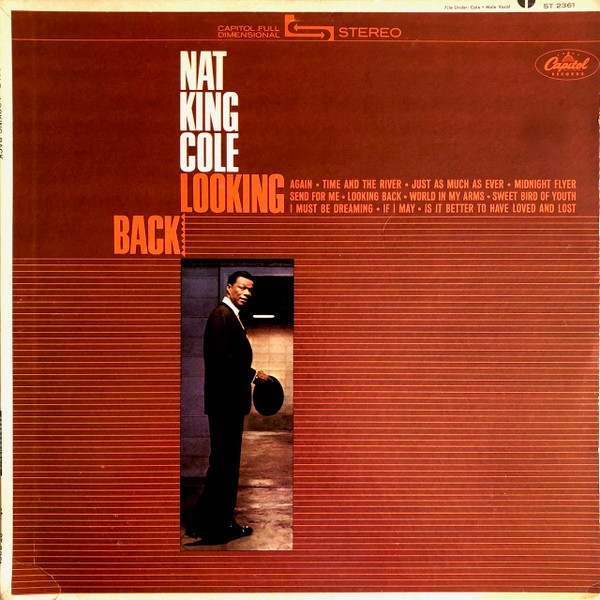
Looking Back
1965
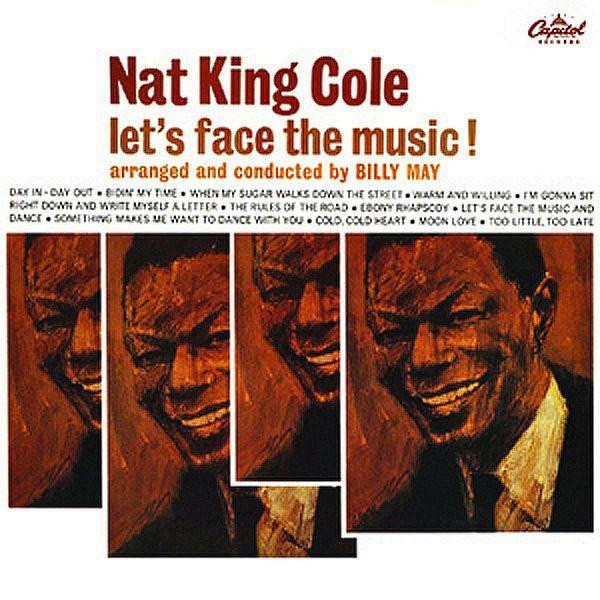
Let's Face The Music
1964
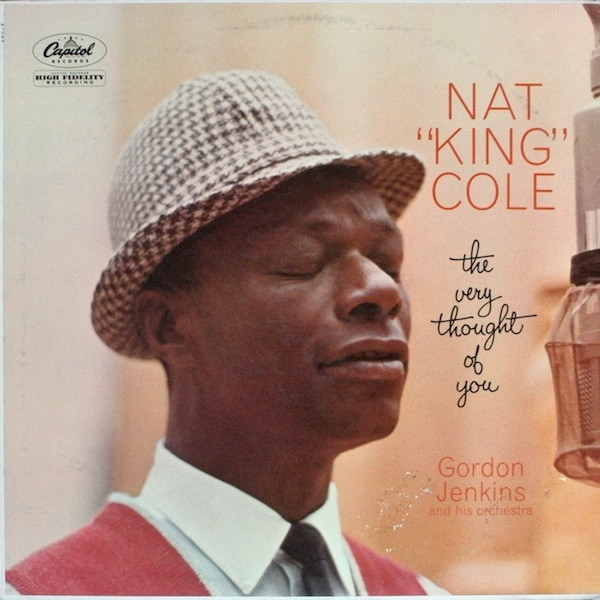
The Very Thought Of You
1958
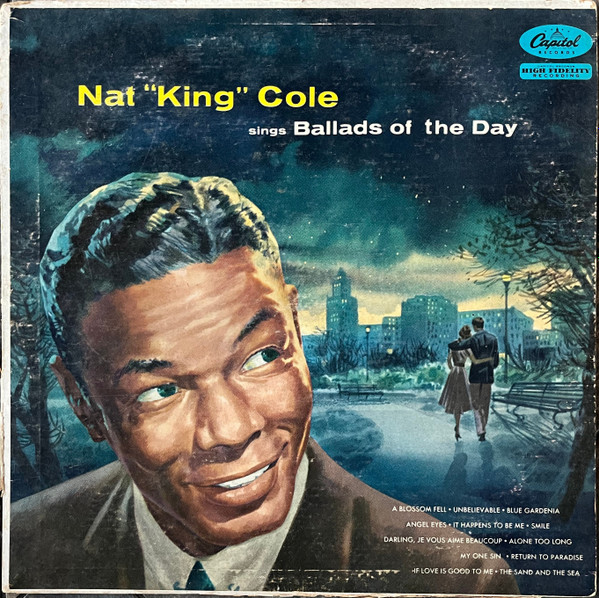
Ballads Of The Day
1956

20 Golden Greats
1978
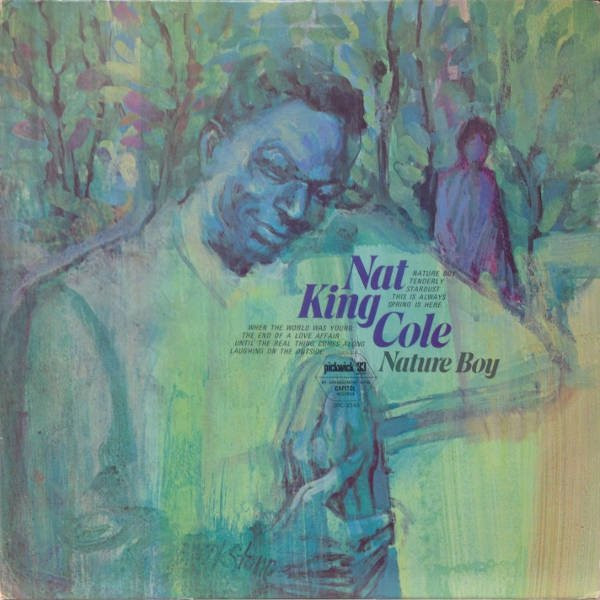
Nature Boy
1971
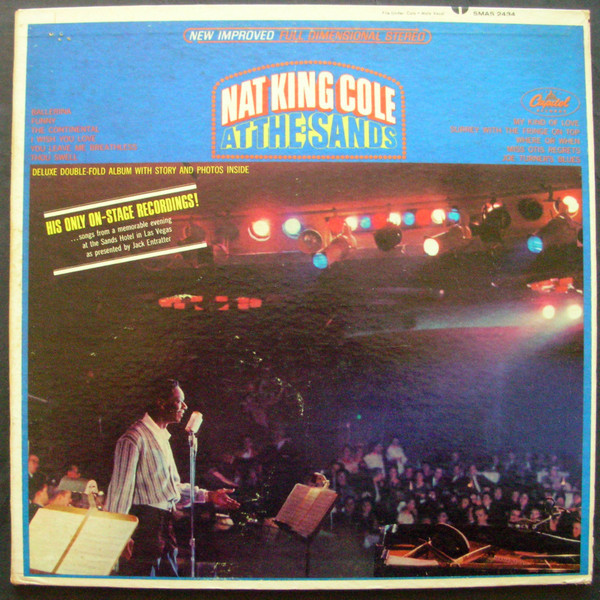
Nat King Cole At The Sands
1966
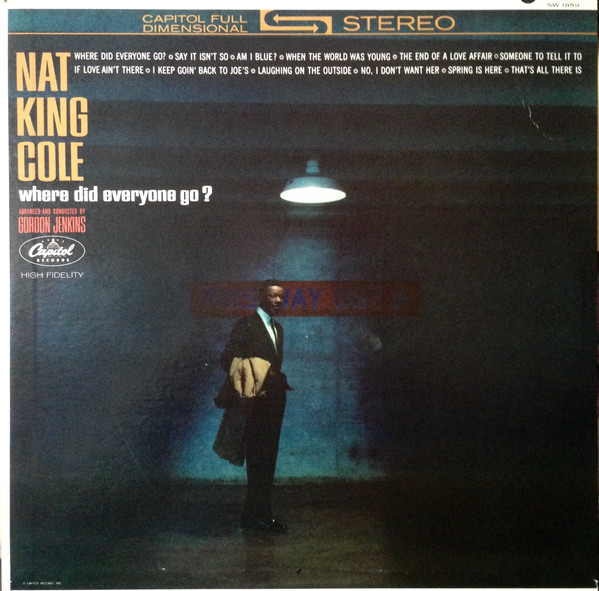
Where Did Everyone Go?
1963

Wild Is Love
1960
The Nat King Cole Trio
Nat King Cole under another name — MusicBrainz marks this project eponymous.
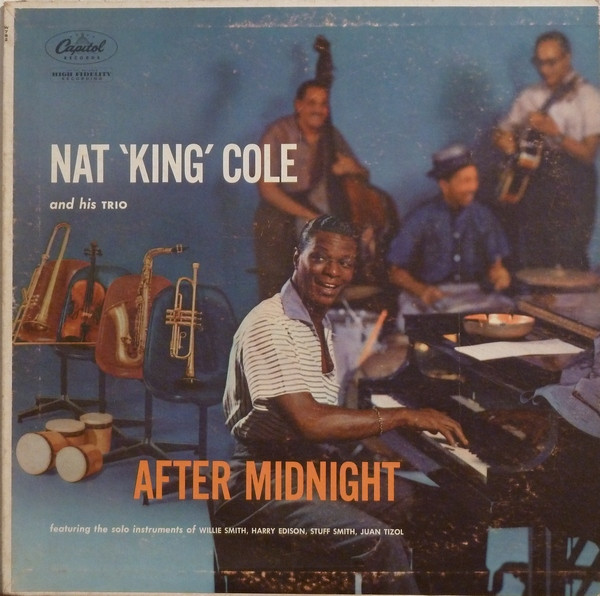
After Midnight
1957
The Complete Capitol Recordings Of The Nat King Cole Trio
1991

Too Marvellous For Words
1975

Honeysuckle Rose The Classic Recordings
2009

Live At The Circle Room
1999

The Best Of The Nat King Cole Trio
1998

The Very Best Of
1997
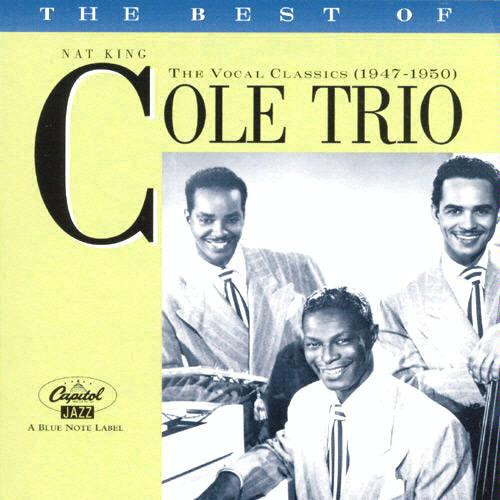
The Best Of The Nat King Cole Trio • The Vocal Classics (1947-1950)
1996

The Best Of The Nat King Cole Trio - The Instrumental Classics
1992

In The Cool Of The Evening
1989
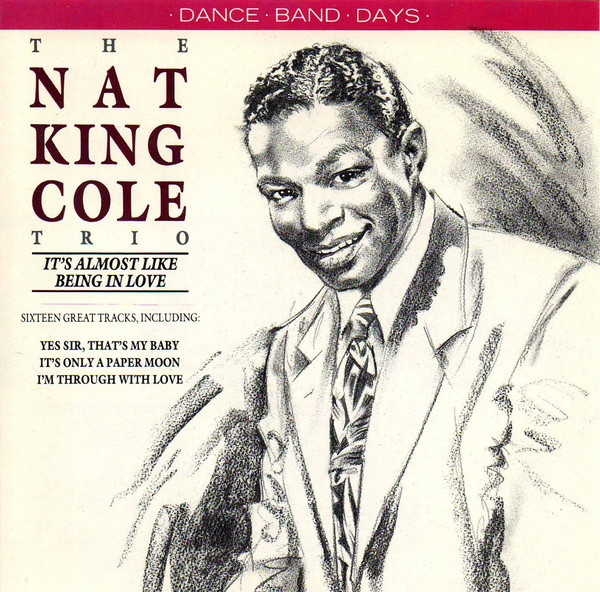
It's Almost Like Being In Love
1988

Any Old Time
1985
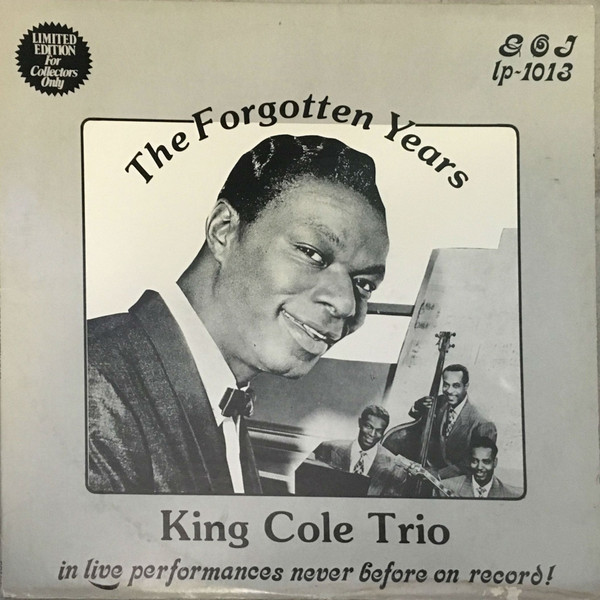
The Forgotten Years
1979

Nat King Cole Trio
1976

The King Cole Trio Vol. 2
1946

The King Cole Trio
1944
Related artists
Frequent collaborators
Around the web
Follow every record they touch.
Start your shelf and Gatefold tracks Nat King Cole's new pressings, tour dates, and the whole discography — automatically.
Start your shelf →Free forever. Works with 10 records or 10,000.