
Artist
The Peanut Butter Conspiracy
late '60s psychedelic rock group
Los Angeles, United States · 1966 – 1970
The Peanut Butter Conspiracy is a music group from Los Angeles, United States, active 1966–1970. Their discography on Gatefold includes 6 records.

6
Albums tracked
6
In collections
1966
Since
Biography
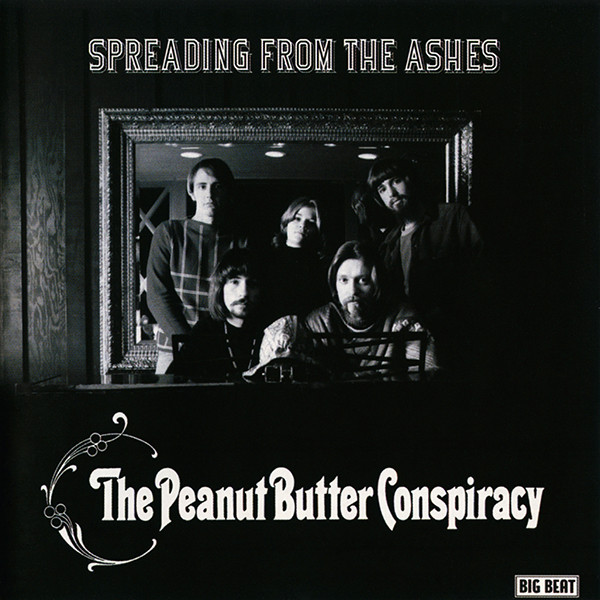
The Peanut Butter Conspiracy was a psychedelic folk rock band from Los Angeles in the 1960s. Several members had comprised the earlier band The Ashes, but with the addition of vocalist Barbara "Sandi" Robison, changed their name and adopted a somewhat cleaner, more sophisticated sound, rather like Jefferson Airplane crossed with Mamas & the papas. The band recorded three albums and a handful of demos before splitting up in 1969.
The Arc of The Peanut Butter Conspiracy
The pivots — what forced The Peanut Butter Conspiracy to reinvent.
The Columbia Polishing Machine
Columbia signed the band out of the Los Angeles club circuit to chase the runaway success of the San Francisco sound. Producer Gary Usher immediately steered their 1967 debut, The Peanut Butter Conspiracy Is Spreading, into tight, radio-ready psych-pop loaded with crisp studio harmonies. Robison's massive range drove the tracks, but the label's slick sheen smoothed out the heavier, weirder edges of Merrill's guitar fuzz. It was brilliant studio craft that ended up tethering them too closely to the Mamas and Papas lane.
The Heavy Head Trip
Later that same year, The Great Conspiracy pushed them away from straight sunshine pop toward genuine acid rock. Usher gave the rhythm section room to breathe, letting Brackett and drummer Spencer Dryden associate Jim Voigt drive longer, darker tracks like 'Too Many Do.' You hear real distortion fighting the studio gloss, capturing how the band actually sounded at the Ash Grove. It remains their sharpest record, balancing pure pop hooks with genuine Sunset Strip menace.
The Challenge Exodus
Dropped by Columbia after failing to chart massive numbers, the band jumped to Challenge Records for 1969's For Children of All Ages. The budget shrank, the studio trickery vanished, and they leaned hard into brass charts and blue-eyed soul. Robison carried the material through pure vocal grit, but the psych movement had moved past them and the lineup fell apart shortly after. A messy, soulful end before Robison's tragic death closed the door for good.
Influences
- The Byrds — Before forming the Conspiracy, John Merrill cut his teeth in The Ashes alongside future members while sharing the same Los Angeles folk-rock circuit that The Byrds minted. You hear it instantly in the crisp 12-string jangle and the tight, layered vocal stacking on their early singles. They basically built their entire melodic blueprint on the jangle-rock foundation Gene Clark and Roger McGuinn laid down.
- The Weavers — The core of the band came straight out of traditional coffeehouse folk ensembles before plugging in. The multi-part, male-female vocal arrangements on tracks like 'It's a Happening Thing' derive straight from traditional mid-century folk tradecraft. Robison's ability to anchor high vocal harmonies came directly from studying traditional folk frontwomen.
- The Beach Boys — Gary Usher, who co-wrote early hits with Brian Wilson, produced their major-label sessions and brought the exact same vocal block arrangements into the tracking room. Listen to the dense four-part vocal counterpoints on The Peanut Butter Conspiracy Is Spreading. Usher treated their voices like brass instruments, straight out of the Pet Sounds playbook.
- The Beau Brummels — As early pioneers of melding British Invasion energy with American folk lyricism, they established the template Merrill followed when writing his earliest chord progressions. That minor-key, moody melodic movement across their 1967 cuts traces directly back to 'Laugh, Laugh.' It gave their West Coast sunshine a distinctive, melancholy spine.
- Odetta — Barbara Robison's entire chest-voice delivery was shaped by the powerful, unadorned powerhouse singers of the American folk revival. You hear that raw, diaphragm-heavy power cutting right over the fuzz guitars on 'Time Is After You,' avoiding the delicate whisper common to late-'60s female pop singers. She sang like a solo blues-folk belter trapped inside a psych combo.
Discography
Their records — most-collected first.




Related artists
Around the web
Follow every record they touch.
Start your shelf and Gatefold tracks The Peanut Butter Conspiracy's new pressings, tour dates, and the whole discography — automatically.
Start your shelf →Free forever. Works with 10 records or 10,000.