
Artist
Rubin Steiner
France · b. 1974
Rubin Steiner is a musician from France, active since 1974. Their discography on Gatefold includes 10 records.
10
Albums tracked
0
In collections
1974
Since
Biography
Frédérick Landier built Rubin Steiner out of dusty secondhand vinyl, cheap samplers, and zero interest in Parisian club polish. While the rest of France was chasing pristine filter disco and selling out Madison Square Garden, Landier holed up in Tours cutting loop jazz on lo-fi gear with the Dance Hall Music Show crew. The early stuff slapped jazz horn stabs and cracked rhythms onto tape without buffering out the hiss. It sounded like an attic, not a VIP lounge. He refused to get trapped in the chillout bin. When the nu-jazz fad died the death it deserved, Landier did not panic or chase electro-clash trends; he plugged in cheap guitars, hired a live rhythm section, and went hard into noisy post-punk and mutant disco. The guy treats genre boundaries like bad advice from a suit. He can veer into motorik krautrock jams, pivot back into dark house, and then pull off a bizarre synth record without breaking stride.
Bio from The Clerk
The Arc of Rubin Steiner
The pivots — what forced Rubin Steiner to reinvent.
The Lo-Fi Sampler Years
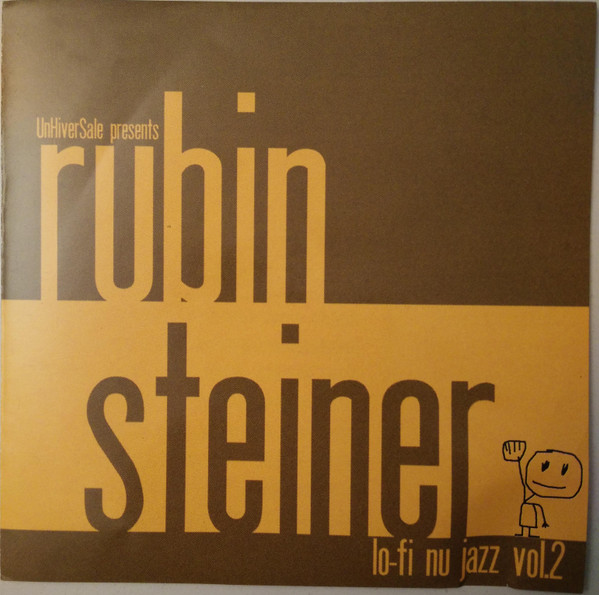
Operating far outside the French Touch elite, Landier launched his project by raiding jazz crates and stitching MPC routines with the Dance Hall Music Show collective. The breakthrough landed on 1999's Lo-Fi Nu Jazz and its 2000 follow-up, relying on scrappy turntable loops and bedroom samplers rather than sleek studio gloss. Partnering with Bordeaux indie label Platinum Records, he refined this collage approach on 2002's Wunderbar Drei. The sound is cracked, dusty, and full of off-kilter swing that irritated cafe-lounge purists in the best damn way.
The Neue Band Punk-Disco Shift
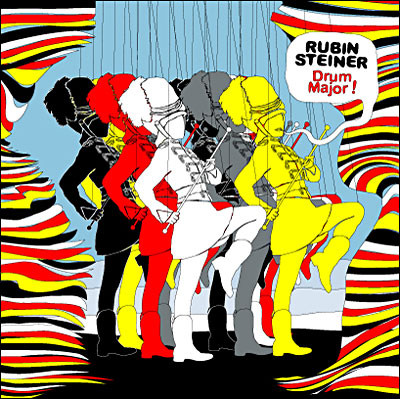
Tired of the laptop trap and crate-digger clichés, Landier recruited drummer Boogers and bassist Sylvestre Perrusson to form the Rubin Steiner Neue Band. The pivot threw sampler-based chillout directly into the incinerator in favor of live post-punk basslines, scratchy guitars, and furious disco-funk drums. That sweat-soaked transition peaked on the 2004 EP Your Life Is Like a Tony Conrad Concert and 2005's Drum Major!. It sounded like ESG and the Fall crashing a French art school basement, loud as hell and completely unconcerned with easy club rotation.
Krautrock and Weird Electrics
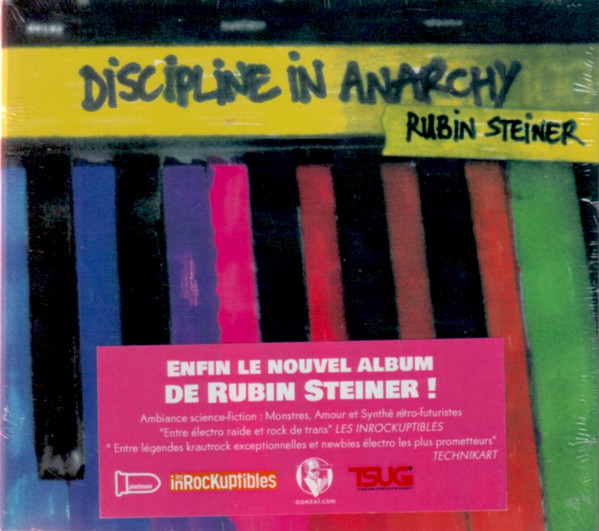
By the late 2000s, Landier began folding repetitive motorik grooves and modular synth noise into his live-band aggression. Albums like 2008's Weird Hits, Two Covers & A Love Song and 2012's Discipline in Anarchy stripped away the brass-heavy hooks for relentless four-on-the-floor propulsion and acid pulse. He dialed back the cartoonish party vibes to let raw repetition and jagged distortion do the heavy lifting. You can hear a producer realizing that a single hypnotic, blown-out synth line hits three times harder than a dozen clever horn samples.
Modular Analog Autonomy
Stepping back from the full ensemble road circus, Landier locked himself in his home studio surrounded by hardware synthesizers and analog drum machines. He handled tracking and mixing entirely solo, yielding the dark, late-night machine workouts of 2016's Vive L'Électricité De La Pensée Humaine and 2019's Say Hello to the Dawn of Paradox. Cut free from indie-rock band conventions, the grooves locked into deep techno pulses and raw deviant house. He followed that streak by dumping the self-released FÊTE right into the void in 2020 without waiting on a single label meeting.
Influences
- Tony Conrad — Landier put the receipt right on the sleeve by naming his 2004 EP Your Life Is Like a Tony Conrad Concert. Conrad's minimalist drone philosophy and stubborn refusal to play nice with academic conventions underpin Steiner's rawest repetitive loops. You hear that relentless, one-chord discipline cutting through the Neue Band era rhythm section.
- Can — Steiner leaned heavily on the Cologne crew's blueprint when he transitioned away from pure hip-hop chops into motorik band grooves. The hypnotic drum rhythms driving records like Weird Hits, Two Covers & A Love Song and Discipline in Anarchy trace straight back to Jaki Liebezeit's metronomic pulse. It is the art of repeating a groove until it stops being funk and turns into pure trance.
- ESG — The Bronx sisters provided the ultimate template for Landier's shift toward stripped-down mutant disco. On Drum Major!, the combination of dry, brittle percussion, hollow cowbells, and single-note bass walks lifts directly from ESG's 99 Records catalog. No fluff, no synthetic sweetening, just rhythm holding the entire room together.
- The Fall — Mark E. Smith's chaotic post-punk ethos directly informed the angular, shambolic energy of the Rubin Steiner Neue Band. That deliberate roughness cuts through the abrasive guitars and unpolished edges of Your Life Is Like a Tony Conrad Concert. It is dance music played with a garage band sneer rather than slick French club manners.
- Sun Ra — Before the punk pivots, Landier spent his early years deep in the outer-space catalog of free jazz and hard bop. You hear that irreverent, cosmic brass phrasing chopped up and rearranged across the sampler collages of Lo-Fi Nu Jazz and Wunderbar Drei. It gave his crate-digging days a chaotic, unhinged edge instead of sounding like toothless hotel elevator music.
Discography
Their records — most-collected first.






Around the web
Follow every record they touch.
Start your shelf and Gatefold tracks Rubin Steiner's new pressings, tour dates, and the whole discography — automatically.
Start your shelf →Free forever. Works with 10 records or 10,000.