Artist
Savage Grace
Los Angeles, United States · Formed 1981
Savage Grace is a music group from Los Angeles, United States, active since 1981. Their discography on Gatefold includes 10 records.
10
Albums tracked
13
In collections
1981
Since
Biography
Bill Metoyer dialed in the boards at Track Record with Brian Slagel breathing down their necks, trying to capture speed metal before anyone in Southern California quite knew how to tape it without the cymbals turning into trash-can lids. Savage Grace came out of the LA club circuit right when everyone else was busy either teasing their hair or mimicking British imports, but Christian Logue wanted to play faster than humanly reasonable. The 1983 EP *The Dominatress* was raw, feral, and caught between traditional power metal melodrama and pure thrash adrenaline, held together by Kenny Powell's slashing guitar work before he walked out to start Omen. What followed was a nonstop game of musical chairs around Logue's relentless ego and fretboard obsession. When singers quit or got kicked out, the bastard just stepped up to the microphone himself and kept the tape rolling. They spent the back half of the eighties putting out blistering, intricate speed metal on tight budgets for Black Dragon and Metal Blade while bigger scenes stole all the oxygen, eventually collapsing under endless lineup volatility. Decades later Logue rebuilt the engine with hired European and South American guns because the riffs simply refused to die in a storage locker.
Bio from The Clerk
The Arc of Savage Grace
The pivots — what forced Savage Grace to reinvent.
The Metal Blade Ignition
Slagel tossed them onto *Metal Massacre II* under their fresh moniker after ditching Marquis de Sade, shoving them straight into the burgeoning California speed pack. With John Birk shrieking up front and Kenny Powell matching Logue lick for lick, they tracked *The Dominatress* EP with Bill Metoyer engineering the chaos. It bridged the gap between Judas Priest gallop and hyper-accelerated American power metal. Powell bolted right after to form Omen, initiating the revolving door that defined the band's entire existence.
Master of Speed
Birk got the boot, Powell was gone, and Logue brought in singer Mike Smith along with guitarist Mark Marshall to capture lightning. Cutting *Master of Disguise* in 1985 on Important Record Distributors and Black Dragon, they delivered a relentless masterclass in razor-sharp, double-kick thrash velocity. Smith possessed the operatic grit to match Logue's manic tempo shifts without burying the hooks. The tracks sprinted flat-out, delivering some of the tightest guitar acrobatics of the mid-eighties underground before Smith abruptly vanished from the fold.
Logue Takes the Mic
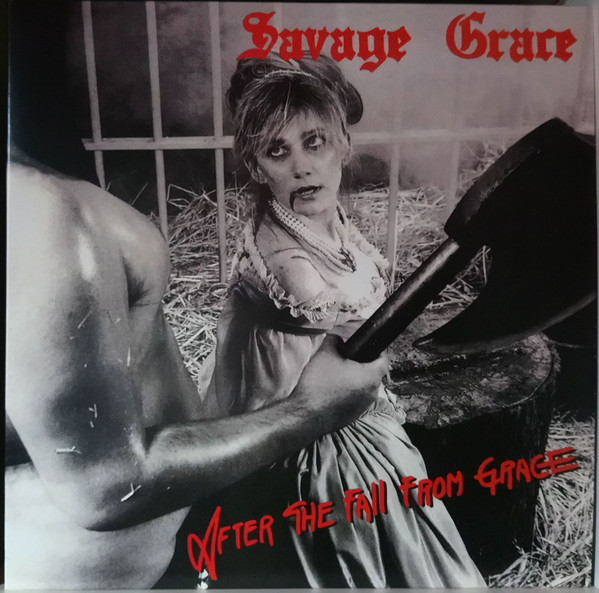
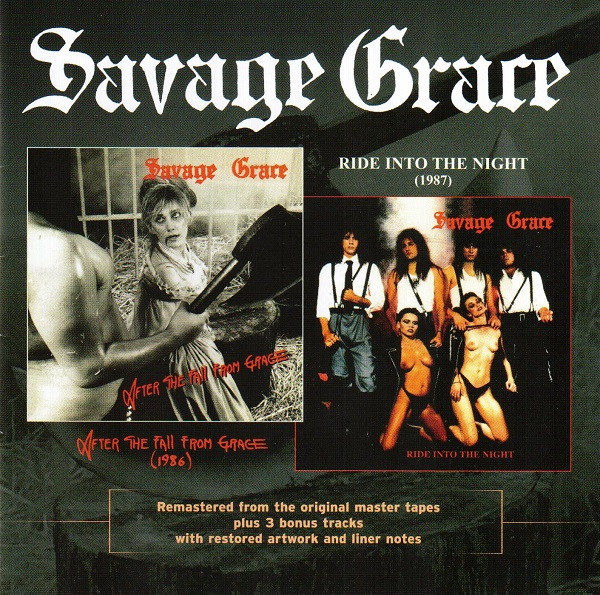
Tired of dealing with vanishing lead singers, Logue stepped up to the vocal mic himself while breaking in drummer Mark Marcum. The resulting 1986 record, *After the Fall from Grace*, traded some of the unhinged velocity for darker, more progressive arrangements and gritty street-level barking. Slapped onto Metal Blade and Restless in the States, it showed a band refusing to roll over even as co-founder Brian East headed for the exit right after tracking. The follow-up 1987 EP *Ride into the Night* doubled down on that road-dog grit before the original run ground out entirely by 1992.
The 2020s Resurrection
After a brief false start around 2010 that only kicked up festival dust and *The Lost Grace* EP, Logue fully resurrected the banner in 2020 with an international mercenary squad. He tapped vocalist Gabriel Colón and drummer Marcus Dotta, landing on Massacre Records to track *Sign of the Cross* in 2023 with Roland Grapow handling the board mix. It completely stripped off the eighties tape hiss for modern, punchy European power metal muscle. Logue proved the machine still ran at full throttle, immediately parlaying the momentum into cutting 2026's *Underworld* with vocalist Sebastian Hauser.
Influences
- Judas Priest — Priest's late-seventies twin-guitar blueprint and soaring vocal delivery were the holy scripture for every early LA speed metal outfit trying to escape glam rock. You hear it dead-center in the dueling lead harmonies and screaming falsettos throughout *The Dominatress*. Logue took Downing and Tipton's synchronized precision and pinned the speedometer to redline.
- Iron Maiden — Brian 'Beast' East built his entire early bass presence around Steve Harris's percussive, galloping fingerstyle runs. The hyperactive low-end drive beneath the title track of *Master of Disguise* practically mirrors Maiden's first two Paul Di'Anno-era records. It gave the band a European rhythmic spine that kept the songs bouncing instead of merely dragging into basic punk thrash.
- Deep Purple — Ritchie Blackmore's neoclassical shred patterns and relentless alternate picking formed the mechanical baseline of Logue's guitar mechanics. The blistering solo breaks and modal runs across *After the Fall from Grace* borrow heavily from the *Machine Head* and *Burn* playbook. Deep Purple wrote the original handbook for running classical scales through overdriven Marshall heads, and Logue studied every page.
- Accept — Before American thrash blew wide open, Accept was preaching Teutonic velocity and militant rhythm section discipline across the Atlantic. That rigid, tank-tread rhythm guitar work is cut directly into the rhythm tracks of 'Sons of Iniquity' and 'Betrayer'. Logue loved the raw, blunt-force Teutonic edge just as much as the slicker British harmonies.
- UFO — Michael Schenker's melodically charged, wah-inflected lead phrasing provided the architectural skeleton for American power metal leads before the scene went full speed. You hear that exact Schenker-style melodic hook construction anchoring the solo sections on the *Ride into the Night* EP. Logue always cared about melodic resolution no matter how fast he played, and Schenker was the king of that discipline.
Discography
Their records — most-collected first.




Related artists
Members
Around the web
Follow every record they touch.
Start your shelf and Gatefold tracks Savage Grace's new pressings, tour dates, and the whole discography — automatically.
Start your shelf →Free forever. Works with 10 records or 10,000.