
Artist
Savoy Brown
Battersea, United Kingdom · Formed 1966
Savoy Brown is a music group from Battersea, United Kingdom, active since 1966. Their discography on Gatefold includes 24 records.

37
Albums tracked
84
In collections
1966
Since
Biography
Mike Vernon booked Savoy Brown into Decca Studios in mid-1967 to track a pile of Chicago blues covers live off the floor. They cut Shake Down fast and raw, practically tripping over gear in West Hampstead. The band didn't have hit singles, a pinup frontman, or pop polish. Kim Simmonds just treated the outfit like a ruthless working blues university where players were entirely expendable so long as the groove stayed heavy. Simmonds went through rhythm sections like cheap guitar strings. He suffered massive defections—most famously losing his entire engine room when Lonesome Dave Peverett took the band's spine to go start Foghat. Most bandleaders fold after that kind of mutiny. Simmonds just raided Chicken Shack's lineup, pivoted straight into arena boogie, and stayed on the road across American sheds and dives for five straight decades until cancer finally took him down.
Bio from The Clerk
The Arc of Savoy Brown
The pivots — what forced Savoy Brown to reinvent.
The Chris Youlden Prime
Producer Mike Vernon oversaw the early blues-purist scrap on Shake Down before Simmonds brought in top-hatted singer Chris Youlden and rhythm guitarist Dave Peverett. That overhauled unit hooked up with producer Neil Slaven for records like 1969's Blue Matter and 1970's Raw Sienna, merging deep-pocket grooves with jazzy brass arrangements and slow-drag tempos. Youlden's raspy delivery gave them a genuine eccentric edge. It was their sharpest creative stretch, ending abruptly when Youlden walked away after Raw Sienna.
The Mutiny and the Foghat Exodus
Youlden's departure forced Simmonds and Peverett to share vocals on 1970's Looking In, a leaner, stripped-back riff record. Right as the album hit, Peverett, bassist Tony Stevens, and drummer Roger Earl walked out as a unit to form Foghat and chase American arena gold. Left completely stranded without a rhythm section, Simmonds didn't miss a beat. He immediately poached keyboardist Paul Raymond and bassist Andy Silvester from Chicken Shack, recruited Dave Walker to sing, and answered with 1971's Street Corner Talking.
The American Boogie Machine
Rebuilt with Walker on the mic, the band landed massive FM airplay in the States off the relentless title track of 1972's Hellbound Train. Lineup turmoil remained the baseline: Walker left for Fleetwood Mac, while Simmonds drafted Stan Webb and Andy Pyle for 1974's Boogie Brothers. Leaving primary Decca imprint territory behind, the unit transitioned to London Records for heavy roadburn slabs like 1975's Wire Fire and 1976's Skin 'n' Bone. Simmonds leaned unapologetically into relentless, no-nonsense touring boogie rock.
Hard Times and Indie Label Scraps
The late-seventies fallout saw the band hit a rut before Simmonds attempted an Americanized, polished hard rock attack with 1981's Rock 'n' Roll Warriors. With major label backing evaporating, Simmonds adapted by bouncing across independent imprints. He locked in with GNP Crescendo for 1988's Make Me Sweat and 1989's Kings of Boogie, proving the live market for straight-ahead barroom blues-rock was still paying bills. He followed with 1992's Let It Ride, simply refusing to quit the road.
The Power Trio and the Final Run
Simmonds took the absolute ultimate step on 2007's Steel by stepping up to handle every single lead vocal himself for the first time on record. He established a tough, reliable power trio format, finding a late-career creative home on Ruf Records for 2011's Voodoo Moon and 2014's Goin' to the Delta. Later signing with Quarto Valley for 2020's Ain't Done Yet, he tracked with a stinging slide tone that never rotted. The posthumous 2023 release Blues All Around closed out fifty-five continuous years of one man refusing to stop playing the blues.
Influences
- Bukka White — Savoy Brown cut Bukka White's 'Shake 'Em on Down' on their 1967 debut Shake Down, which Parrot released as their primary US calling card. You hear White's driving country-blues cadence in Simmonds's relentless open-tuning slide attack throughout the tune. It gave Simmonds his original blueprint for rhythmic, percussive blues playing.
- Willie Dixon — Simmonds pulled directly from Willie Dixon's Chess songwriting catalog on early dates, recording Dixon's 'I Ain't Superstitious' and 'You Need Love' on Shake Down. The heavy, riff-anchored tension of Dixon's Chicago arrangements formed the bedrock of Savoy Brown's low-end drive. It set the template for every heavy boogie Simmonds cut over the next fifty years.
- John Lee Hooker — Savoy Brown backed John Lee Hooker on British stages during the late-sixties blues-boom tour circuit. That endless, single-chord hypnotic drone directly powers tracks like 'Wang Dang Doodle' on Getting to the Point and the marathon grooves on A Step Further. Simmonds learned firsthand how to lock a band into a vamp and hold the room hostage.
- Muddy Waters — Muddy Waters' Chess recordings were the entire reason Kim Simmonds founded a blues outfit in southwest London instead of a pop group. You hear Muddy's stinging, deliberate slide voice echoed on Getting to the Point and throughout Simmonds's late-era work like Goin' to the Delta. Simmonds never strayed from that Chicago electric phrasing.
- B.B. King — Simmonds repeatedly cited King's biting vibrato and clean single-string attack as his primary lead guitar touchstone. Early cuts like 'Mr. Downchild' from Getting to the Point wear that stinging, voice-like phrasing right on the sleeve. While his contemporaries went for massive feedback fuzz, Simmonds prioritized King's razor-sharp note clarity.
Discography
Their records — most-collected first.
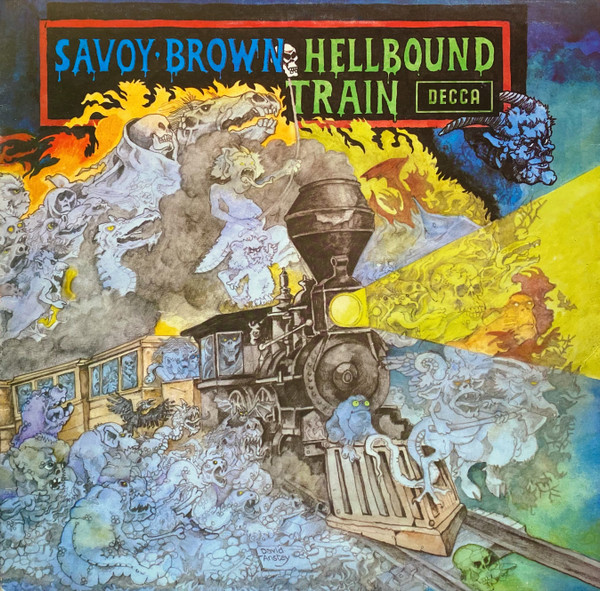
Hellbound Train
1972

Looking In
1970
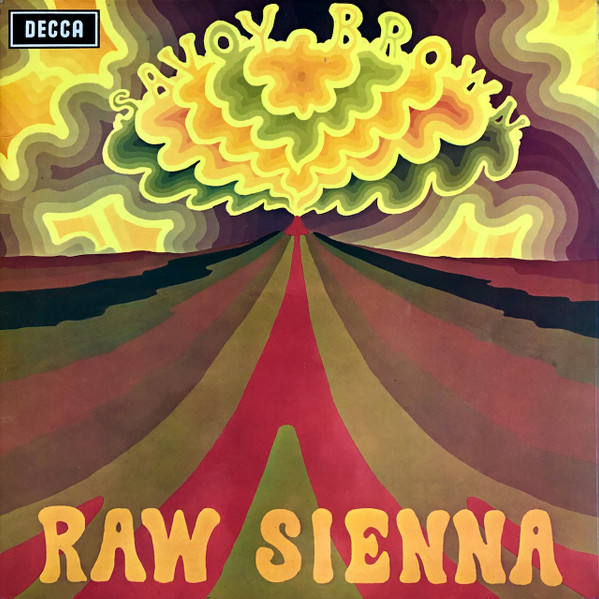
Raw Sienna
1970
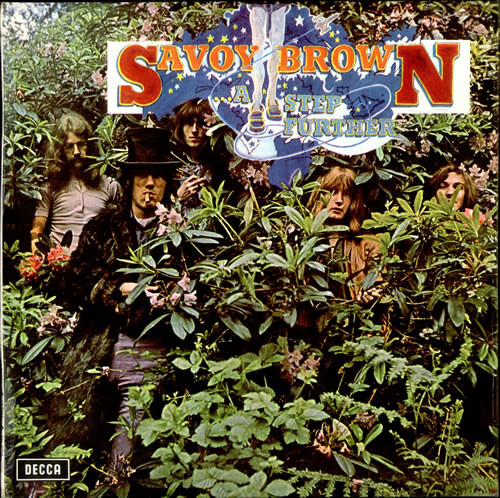
A Step Further
1969

Blue Matter
1969

Jack The Toad
1973
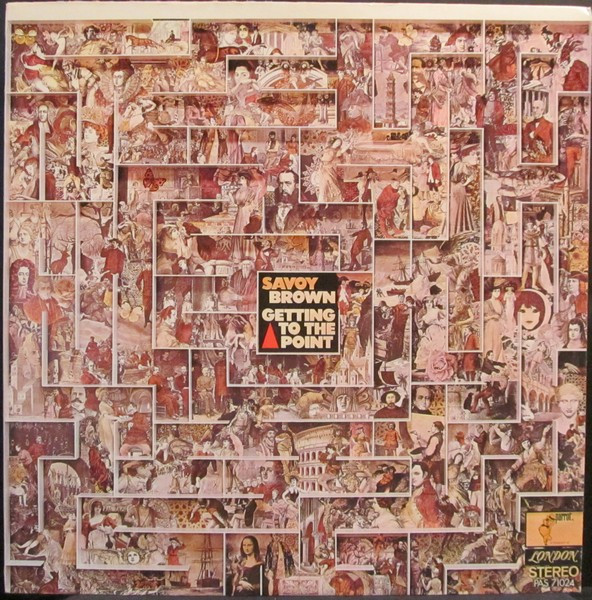
Getting To The Point
1968
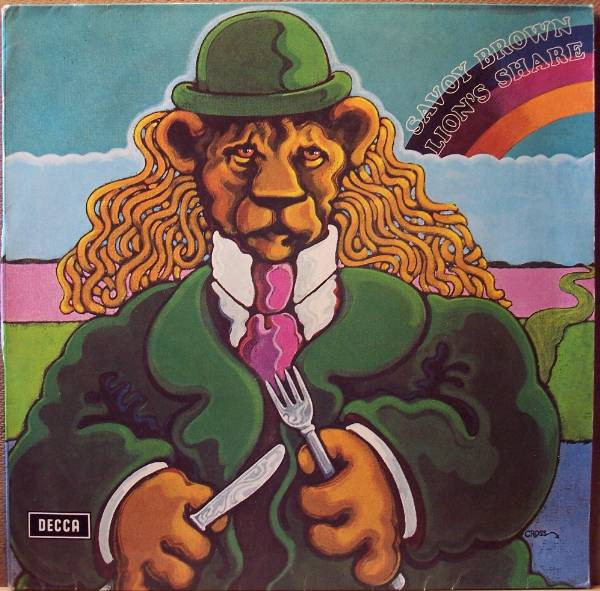
Lion's Share
1972
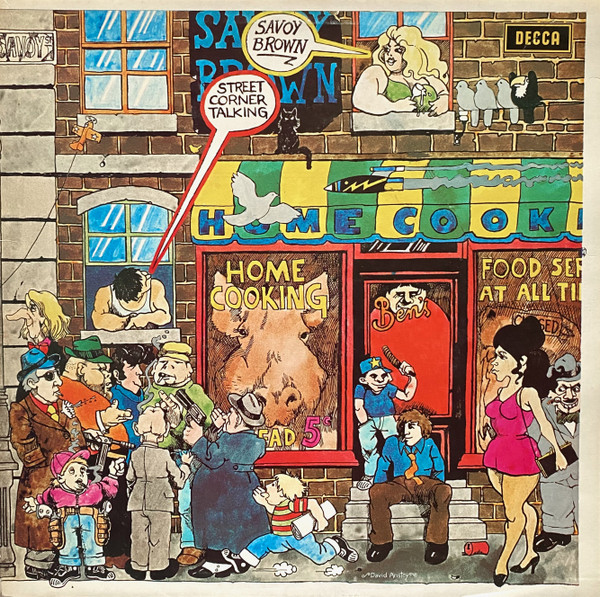
Street Corner Talking
1971

Skin 'N' Bone
1976
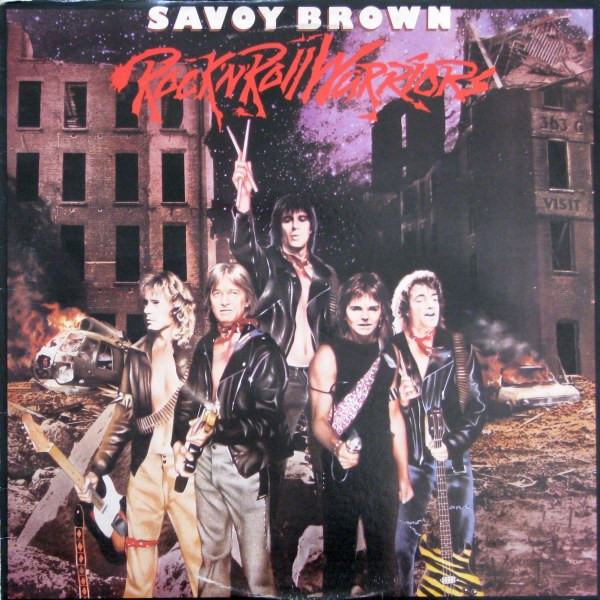
Rock 'N' Roll Warriors
1981

Savage Return
1978
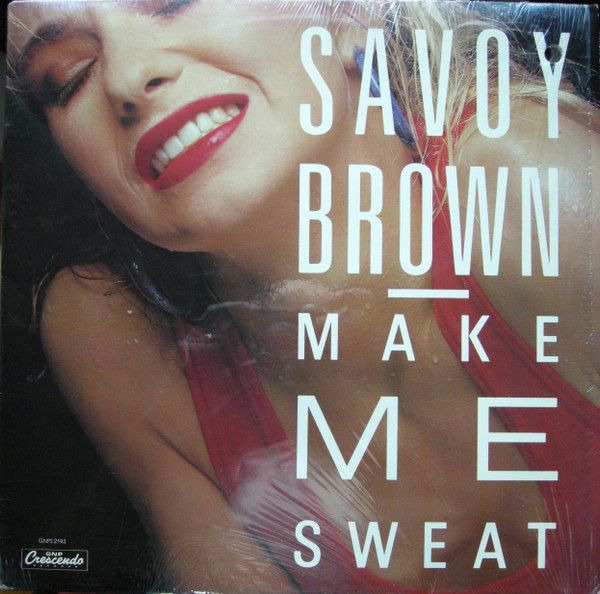
Make Me Sweat
1988

Wire Fire
1975

Boogie Brothers
1974

Shake Down
1967
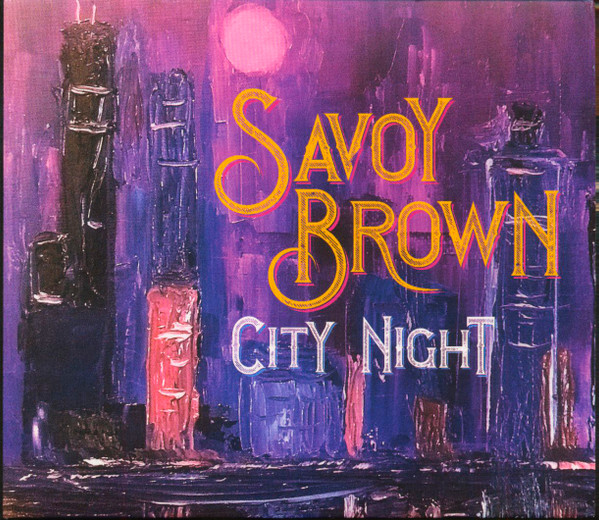
City Night
2019

Witchy Feelin'
2017

Songs From The Road
2013

Voodoo Moon
2011

Too Much Of A Good Thing The Savoy Brown Collection 1992 - 2007
2009

Raw Sienna / Looking In
2005

Hellbound Train, Live 1969-1972
2003
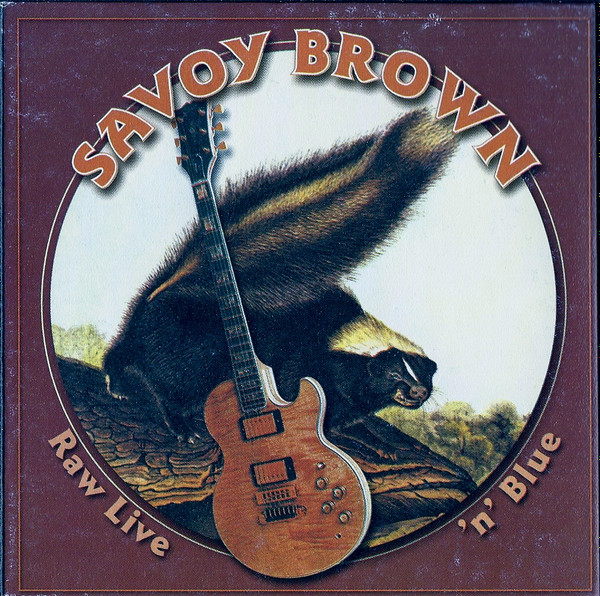
Raw Live 'n' Blue
2001
Related artists
Around the web
Follow every record they touch.
Start your shelf and Gatefold tracks Savoy Brown's new pressings, tour dates, and the whole discography — automatically.
Start your shelf →Free forever. Works with 10 records or 10,000.