
Artist
Sozo
Sozo is a music group. Their discography on Gatefold includes 2 records.

2
Albums tracked
0
In collections
—
Since
Biography
Corey Pryor walked out on the Newsboys right after Not Ashamed hit big, traded arena rock kits for sequencers, and banked entirely on Scott Blackwell's N*Soul Records to make Christian dance culture happen in the mid-nineties. That label was basically a rogue outpost trying to prove club beats could carry a sermon. Pryor and his wife Danielle set up shop with cheap synths, four-on-the-floor Euro-dance formulas, and an ungodly amount of reverb. It was unvarnished, deadline-driven, and completely alien to the Nashville establishment. They only stuck around for two records before the whole experiment ran out of road. Christian retail had zero idea what to do with drum programming built for raves, while actual club DJs were never going to spin church lyrics. Sozo ended up in that weird, forgotten bin between suburban youth group lock-ins and real electronic music. The beats hit hard, but the market was a damn ghost town, leaving the project dead in the water by the time the decade folded.
Bio from The Clerk
The Arc of Sozo
The pivots — what forced Sozo to reinvent.
The N*Soul Techno Rush
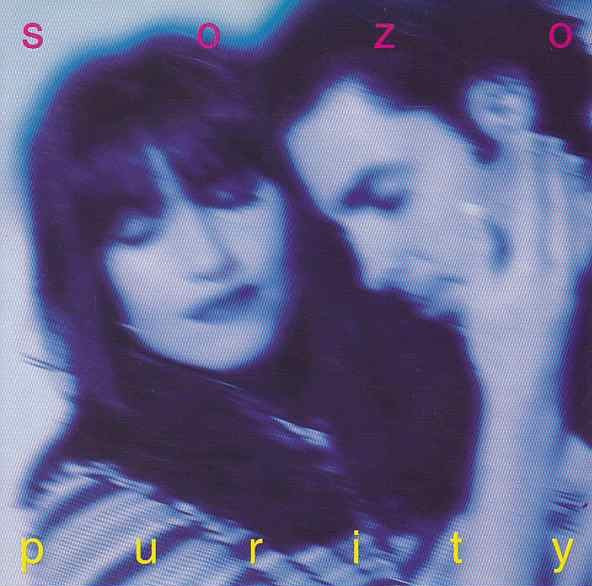
Corey Pryor cut ties with the Newsboys in 1993 and immediately dove into the West Coast Christian rave scene spearheaded by Scott Blackwell. Handling the production and keyboards himself, Pryor partnered with Danielle Pryor to track the 1994 debut album Purity for N*Soul. The record went straight for unapologetic Euro-dance and relentless techno rhythms, leaning on relentless synthesizers instead of live rock staples. You hear the raw ambition in every sequencer run, trying like hell to graft secular club stamina directly into youth group subwoofers.
The Studio Pop Realignment
By 1997, the rave rush had stalled out and Danielle's brother Aaron Julison was brought into the fold. Sozo cut The Walk, handing primary production duties over to Danny Duncan and hiring session pros like drummer Dan Needham and guitarist Paul Brittain. The shift pulled them away from high-BPM Euro-dance into standard mid-tempo radio pop and slick vocal dance tracks. The edge was softened, chasing BMG-backed club crossover appeal that never fully landed before the group pulled the plug entirely.
The Solo Dissolution
Right around 1998, the band quietly folded as the market for niche Christian electronic acts bottomed out. Corey and Danielle stopped recording under the Sozo moniker, pivoting all their creative focus toward Danielle's solo career instead. The club distribution experiment was dropped completely, closing the book on their short run as an electronic outfit.
Influences
- Newsboys — Corey Pryor spent years behind the keyboards for the band through 1993, absorbing their pop song structures and arena hooks before breaking off. You hear the same stadium-sized synth voicings buried right under Sozo's club arrangements. It was the training ground that convinced him he could program his own records.
- Scott Blackwell — Blackwell basically invented the Christian rave market and signed the duo to his boutique N*Soul imprint. His early nineties DJ remixes and pioneering club compilations provided the direct sonic blueprint for Sozo's drum machine patterns. Without his label infrastructure, this project never leaves the bedroom.
- 2 Unlimited — The Dutch outfit's aggressive synthesizer stabs and male-rap-versus-female-hook dynamic ruled mid-nineties Euro-dance charts. Sozo copied that exact formula all over Purity, right down to the rapid-fire high-BPM four-on-the-floor tempo. They lifted the club sonics wholesale and just swapped in clean lyrics.
- Snap! — Their 1990 hit 'The Power' set the standard for hard-edged commercial techno and rap-house crossover production across the globe. You can hear that punchy, compressed drum programming on Sozo's earliest N*Soul singles. It gave them an industrial-strength rhythm track they could anchor their vocal melodies to.
- Information Society — The Minneapolis synth-pop veterans proved that freestyle beats, heavy sampling, and keyboard wizardry could survive on mainstream airwaves. Corey Pryor's dense synth patches and sequencing on the first album reflect that late-eighties freestyle and digital pop lineage. It was the bridge between pure synth-pop craft and commercial dance music.
Discography
Their records — most-collected first.

Related artists
Members
Around the web
Follow every record they touch.
Start your shelf and Gatefold tracks Sozo's new pressings, tour dates, and the whole discography — automatically.
Start your shelf →Free forever. Works with 10 records or 10,000.