
Artist
The Sun Ra Arkestra
Chicago, United States · Formed 1952
The Sun Ra Arkestra is a music group from Chicago, United States, active since 1952. Their discography on Gatefold includes 24 records.

37
Albums tracked
51
In collections
1952
Since
Biography
Sun Ra spent the late 1940s playing piano for Fletcher Henderson at the Club DeLisa in Chicago. That gig wasn’t just a paycheck—it was a crash course in big band discipline that he eventually weaponized to launch a cosmic cult. By the time he formed the Arkestra in '52, he wasn't just lead pianist; he was a choreographer of a total reality, demanding his players live together, rehearse at three in the morning, and wear space-glitter robes that smelled like mothballs and incense. If you listen to the Saturn label pressings, half of them are barely listenable due to the sheer grit of the DIY recording process, but the music is surgical. People get distracted by the Saturn-born mythology and the tinfoil hats, but the Arkestra was a terrifyingly tight unit because of Sonny’s dictatorial rehearsal schedule. John Gilmore’s tenor sax work was so advanced that John Coltrane used to seek him out for lessons. The band flipped between hard bop, garage-fidelity synthesizers, and massive percussion freak-outs without dropping a beat. It wasn’t just 'outer space' theater—it was a black nationalist utopian project built on the back of the most disciplined avant-garde ensemble in history.
The Arc of The Sun Ra Arkestra
The pivots — what forced The Sun Ra Arkestra to reinvent.
The Chicago Big Band Blueprint
During the mid-50s, the Arkestra was essentially a precision-engineered hard bop machine operating out of Chicago's South Side. Sun Ra was obsessed with the arrangements of Fletcher Henderson, but he started injecting dissonant chords and odd time signatures into traditional swing structures. You hear it on records like Super-Sonic Jazz where the discipline of the swing era meets the first ripples of the cosmic redirection.
The New York Free-Form Blast
Moving to New York in 1961 changed the air, as the band hunkered down in a communal apartment known as Sun Palace. The sound turned aggressive and dense, ditching the danceable structures for the chaotic, sprawling improvisations found on The Magic City. This era is defined by the heavy use of the Clavioline and other early electronic keyboards that sounded like short-circuiting spaceships.
The Philadelphia House Years
By 1968, the Arkestra decamped to a row house in Germantown, Philadelphia, which became their permanent base of operations for decades. This pivot saw the band embracing a 'Space-Age Afro-Futurism' that incorporated more chanting, theater, and ritualistic elements. The music settled into a strange groove-heavy stage, blending ancient African rhythms with Moog synthesizers and massive, 20-person vocal ensembles.
Influences
- Fletcher Henderson — Sun Ra worked as Henderson's personal arranger and pianist at the Club DeLisa in 1946. You hear this DNA in the Arkestra’s ability to pivot from chaotic free jazz back into tight, swing-era section playing at the snap of a finger. It gave the cosmic madness a structural skeleton.
- Duke Ellington — Ra cited Ellington as his primary spiritual and musical predecessor, particularly regarding the concept of the 'Black Composer' as a visionary leader. The Arkestra’s use of specific tonal colors and the way Ra wrote parts for specific personalities like Marshall Allen mirrors Ellington’s method. It's the high-art sophistication of the Cotton Club moved to Jupiter.
- Thelonious Monk — Ra frequently acknowledged Monk’s use of space and dissonance as a direct influence on his own piano style. You can hear the 'cracked' piano chords and the percussive, angular attack on early Saturn releases. Both men shared a refusal to compromise their aesthetic for the mainstream bop scene.
- Count Basie — The Arkestra’s reliance on the 'riff' as a launchpad for improvisation comes straight from the Basie school of Kansas City swing. Even in their most avant-garde 70s sets, the band would often lock into a repetitive, blues-based horn figure that kept the audience grounded. It was the rhythm section’s job to keep that Basie-style pulse alive beneath the noise.
- Igor Stravinsky — Sun Ra was a vocal advocate for Stravinsky’s rhythmic innovations and his ability to create 'organized sound' out of dissonance. The Arkestra’s habit of using multiple, clashing rhythmic layers—polyrhythms—was a direct application of the techniques Ra studied in scores like The Rite of Spring. He wanted that same primitive-yet-modernist tension in his ensemble.
Discography
Their records — most-collected first.
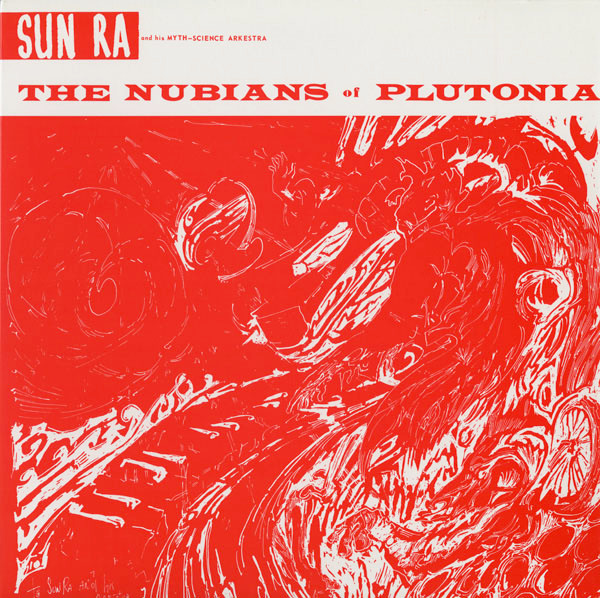
The Nubians Of Plutonia
1969

Angels And Demons At Play
1967

Pictures Of Infinity
1971
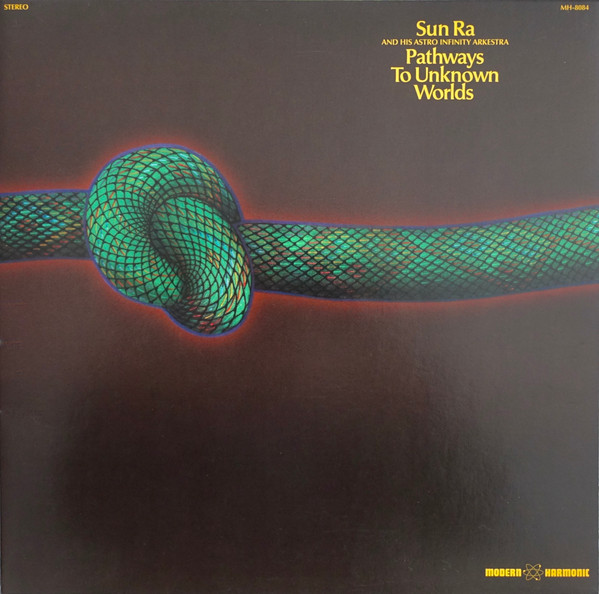
Pathways To Unknown Worlds
1975

We Travel The Space Ways
1967

A Fireside Chat With Lucifer
1983

The Other Side Of The Sun
1979

Universe In Blue
1972
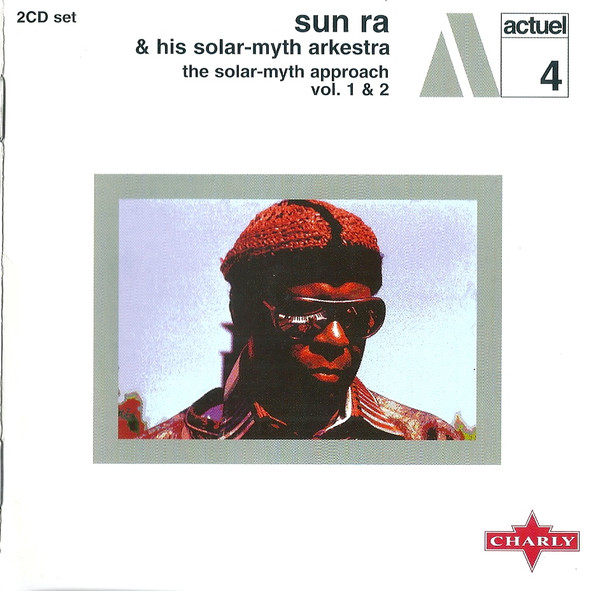
The Solar-Myth Approach Vol. 1 & 2
1971

Atlantis
1970

My Brother The Wind
1970

Other Planes Of There
1966

The Space Age Is Here To Stay
2016

Live At Babylon
2015

Rocket Ship Rock
2009

Music From Tomorrow's World
2002

Angels And Demons At Play / The Nubians Of Plutonia
1993

Destination Unknown
1993
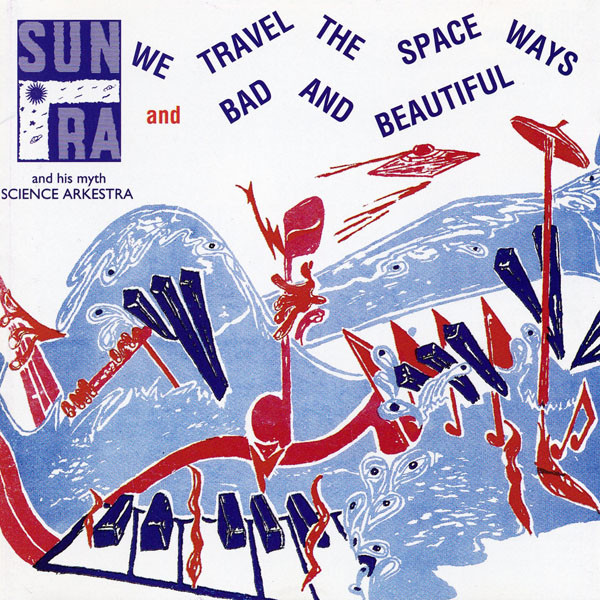
We Travel The Spaceways / Bad & Beautiful
1992

Cosmic Tones For Mental Therapy / Art Forms Of Dimensions Tomorrow
1992

Out There A Minute
1989

In Egypt
1983

Discipline 27-II
1973

The Solar-myth Approach, Vol. 2
1972
Related artists
Around the web
Follow every record they touch.
Start your shelf and Gatefold tracks The Sun Ra Arkestra's new pressings, tour dates, and the whole discography — automatically.
Start your shelf →Free forever. Works with 10 records or 10,000.