
Artist
Art Blakey & The Jazz Messengers
New York, United States · 1954 – 1990
Art Blakey & The Jazz Messengers is a music group from New York, United States, active 1954–1990. Their discography on Gatefold includes 24 records.

54
Albums tracked
412
In collections
1954
Since
Biography
Art Blakey did not play the drums; he assaulted them with the force of a steam engine. He developed a signature press roll that sounded like a freight train coming through the studio wall, a technique he used to whip his horn players into a frenzy. It was a survival tactic honed in the big bands of Billy Eckstine and Fletcher Henderson, where you had to cut through fifteen horn players without the benefit of a modern PA system. By the time Blue Note Records signed the Messengers in the mid-fifties, Blakey had turned his physical style into the very definition of hard bop. The Jazz Messengers operated as a revolving-door finishing school for young jazz giants. Blakey did not just hire musicians; he broke them. He paid them poorly, worked them to death on the road, and demanded they write new music weekly to keep the book fresh. The lineup rotated constantly, but the mandate never changed: play loud, play bluesy, and do not waste the crowd's time with intellectual navel-gazing. When the group suffered dry spells in the late sixties and seventies as electric fusion gutted the acoustic jazz market, Blakey simply dug in deeper, refusing to plug in his drums or chase radio play. The real magic of the Messengers was that Blakey knew when to let his youngsters run the show. He was the boss, but he let Bobby Timmons write the gospel-soaked riffs, let Wayne Shorter steer them into weird, modal territory, and let Lee Morgan blow with absolute arrogance. When Blakey stomped his hi-hat on beat two and four, every musician on that bandstand knew exactly who was driving the bus, even if they were the ones writing the charts.
Bio from The Clerk
The Arc of Art Blakey & The Jazz Messengers
The pivots — what forced Art Blakey & The Jazz Messengers to reinvent.
The Blue Note Hard Bop Blueprint
By 1958, co-founder Horace Silver had departed, leaving Blakey in sole control of the franchise. He recruited composer Benny Golson and a young, fiery Lee Morgan to reshape the band's identity around a heavy, church-influenced blues aesthetic. They cut the self-titled LP, later known as Moanin', with engineer Rudy Van Gelder at his Hackensack studio, capturing a raw, room-shaking drive that countered the cool jazz of the West Coast. You hear this pivot in Bobby Timmons' block chords on the title track and the razor-sharp trumpet lines of Morgan, establishing a dark, groove-heavy formula that would define the Blue Note label for a decade.
The Wayne Shorter Modal Shift
In 1959, tenor saxophonist Wayne Shorter joined the ranks, eventually becoming the band's musical director and pulling them out of straight-ahead blues forms. Shorter brought a cerebral, angular writing style that forced Blakey to play with a looser, more polyrhythmic swing. The 1961 sessions for Mosaic and the blistering 1964 album Free for All show a band playing at the absolute edge of control, abandoning polite structures for modal intensity and sheer volume. Shorter's compositions like 'Children of the Night' pushed the band's front line to blow with a desperate, post-bop urgency that matched Blakey's thunderous cymbal work.
The Fusion Era Holdout
As Miles Davis went electric and Columbia Records started dropping acoustic acts, Blakey refused to pivot to synthesizers or funk beats, leading to a decade of shifting labels and commercial neglect. He took the Messengers to smaller European and Japanese labels like Prestige, Catalyst, and SteepleChase, playing to audiences who still valued acoustic swing. The lineup shuffled constantly with players like Woody Shaw and David Schnitter trying to keep the hard bop flame alive in half-empty rooms. While the records from this period lack the production polish of the Blue Note years, Blakey's drumming remained relentlessly acoustic, acting as a stubborn, preservationist middle finger to the entire jazz-rock movement.
The Young Lions Renaissance
In 1980, a nineteen-year-old trumpeter named Wynton Marsalis joined the band, instantly revitalizing the Messengers franchise and sparking a massive acoustic jazz revival. With Marsalis and his brother Branford in the lineup, Blakey regained his status as the premier gatekeeper of jazz tradition, signing with the Concord Jazz label and touring major festivals again. The playing on albums like Album of the Year from 1981 was clean, technically virtuosic, and fiercely conservative, turning back the clock thirty years. Blakey spent his final decade in the spotlight, running a highly disciplined finishing school for the next generation of neo-traditionalists before his death in 1990.
Influences
- Chick Webb — Blakey spent his formative years in New York watching Chick Webb dominate the Savoy Ballroom with his explosive, driving swing style. You can hear Webb's physical power and aggressive rimshots directly in the way Blakey used his snare drum to puncture horn solos. Webb's role as a drummer-leader who ran a tight, disciplined big band set the exact structural template Blakey used for the Messengers.
- Fletcher Henderson — Before forming the Messengers, Blakey toured with Fletcher Henderson's big band in the early 1940s, learning how to drive a large ensemble from the drum stool. Henderson's rigorous arrangements taught Blakey how to structure dynamics, a skill that translated directly to the tight, horn-heavy call-and-response patterns of hard bop. The discipline required to anchor Henderson's band became the foundation for Blakey's strict leadership style.
- Billy Eckstine — Blakey played in Billy Eckstine's bebop big band from 1944 to 1947 alongside Charlie Parker and Dizzy Gillespie. This legendary, volatile laboratory is where Blakey learned to adapt traditional swing drumming to the faster, more complex rhythms of modern jazz. The relentless tempo shifts and aggressive horn lines on early Messengers records are a direct continuation of the lessons Blakey learned on the bandstand under Eckstine.
- Thelonious Monk — Blakey was Monk's preferred drummer, anchoring his historic late-forties Blue Note sessions and cultivating a deep, intuitive musical relationship. Monk's percussive, space-heavy piano style taught Blakey how to use silence and sudden accents rather than just keeping straight time. You hear this influence on their 1957 collaboration album, where Blakey drops massive, unexpected bass drum 'bombs' that mirror Monk's angular keyboard leaps.
- Klook (Kenny Clarke) — Kenny Clarke practically invented modern jazz drumming by moving the main timekeeping beat from the bass drum to the ride cymbal, a technique Blakey adopted and weaponized. Blakey took Clarke's top-end cymbal focus and added his own heavy, polyrhythmic African drum influences, which he studied firsthand during his trips to West Africa in the late forties. The resulting ride-cymbal hiss on every Messengers track is a direct descendant of Clarke's bebop revolution.
Discography
Their records — most-collected first.
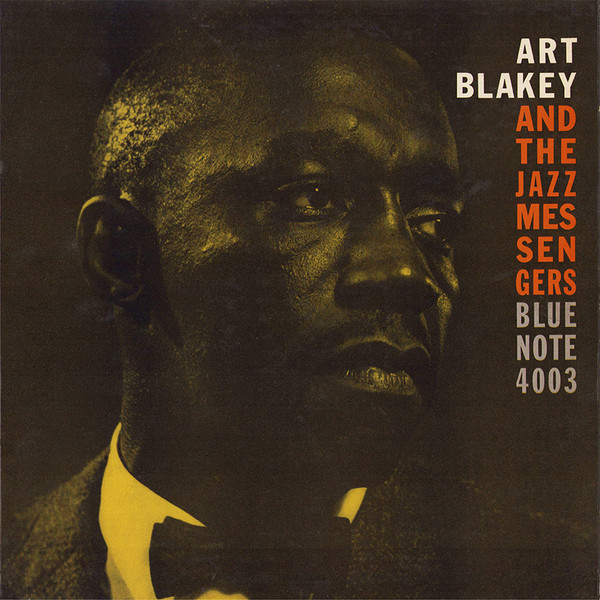
Art Blakey And The Jazz Messengers
1959
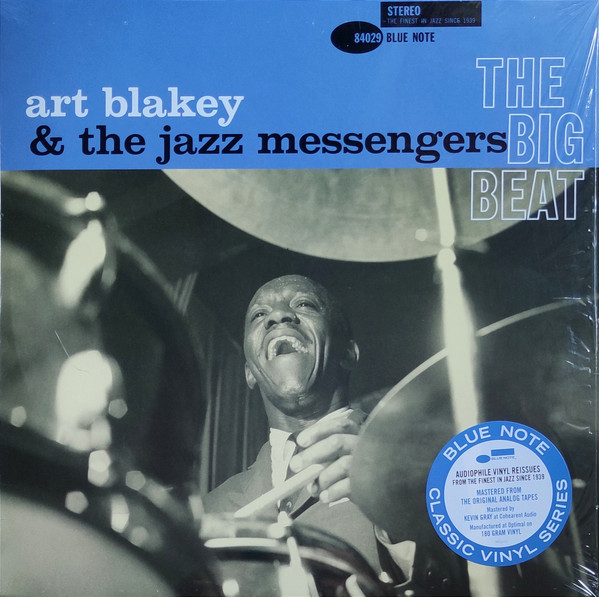
The Big Beat
1960

Caravan
1962

A Night In Tunisia
1961

Just Coolin'
2020

The Witch Doctor
1967

Free For All
1965

First Flight To Tokyo: The Lost 1961 Recordings
2021
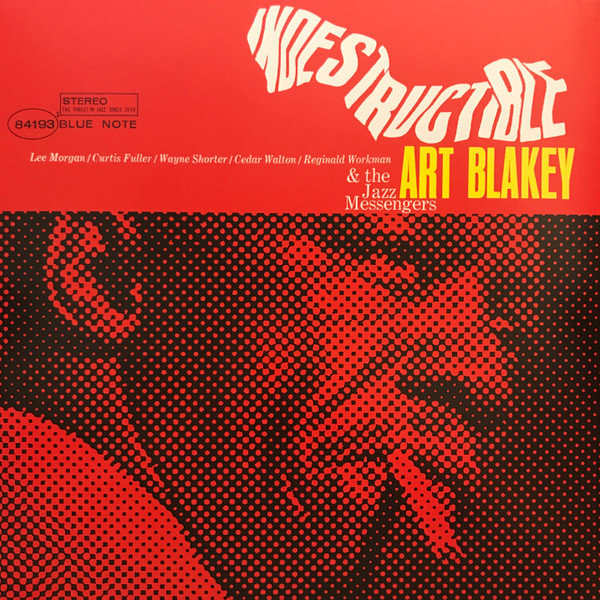
Indestructible
1966

Buhaina's Delight
1963

Mosaic
1961
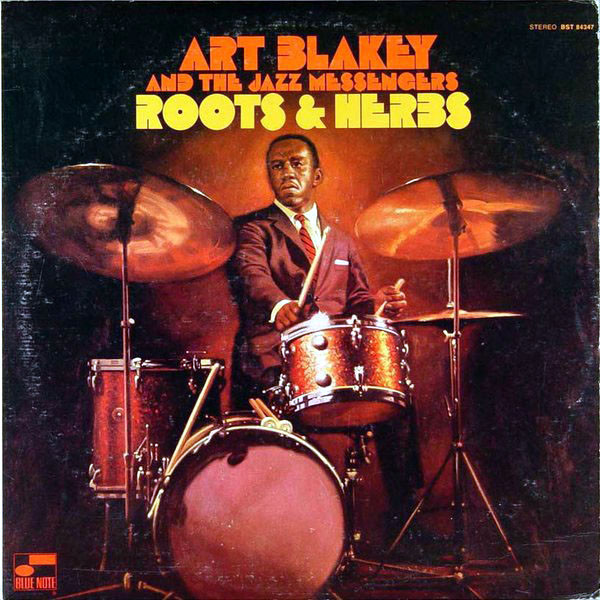
Roots & Herbs
1970
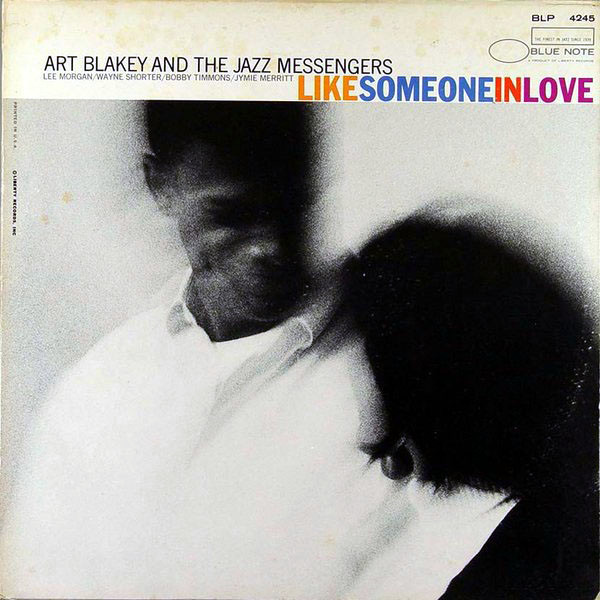
Like Someone In Love
1967
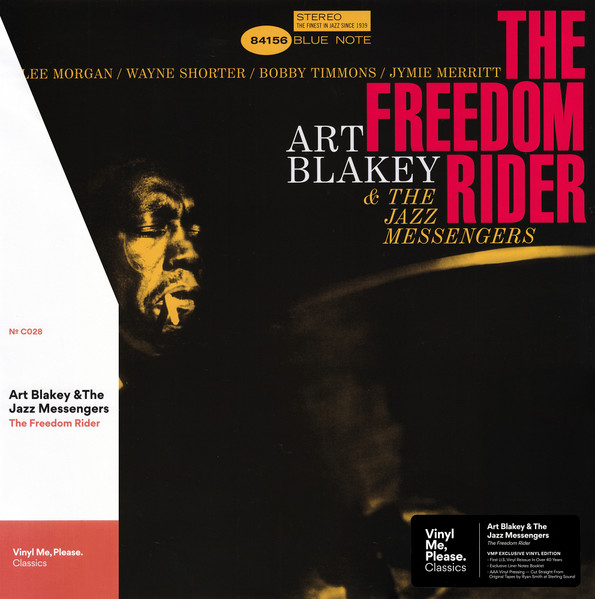
The Freedom Rider
1964

Meet You At The Jazz Corner Of The World (Volume 1)
1961

Art Blakey & The Jazz Messengers
1961
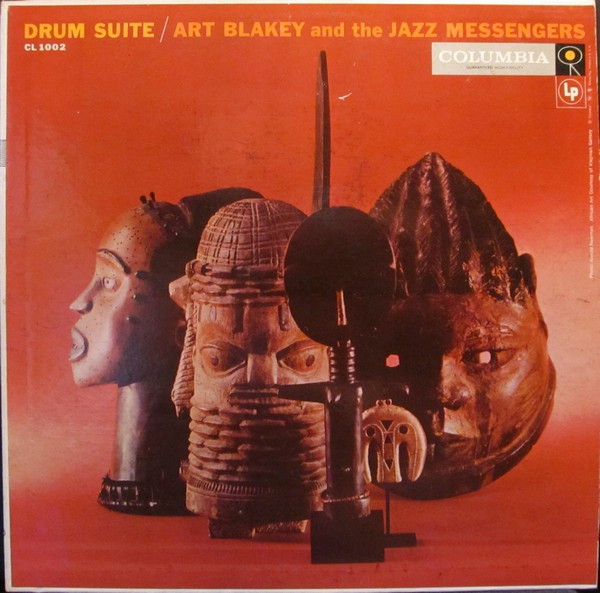
Drum Suite
1957
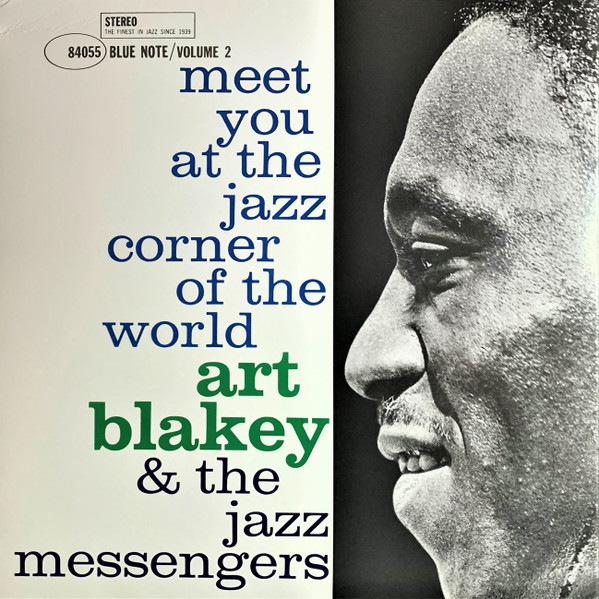
Meet You At The Jazz Corner Of The World (Volume 2)
1962

Kyoto
1966

3 Blind Mice
1962
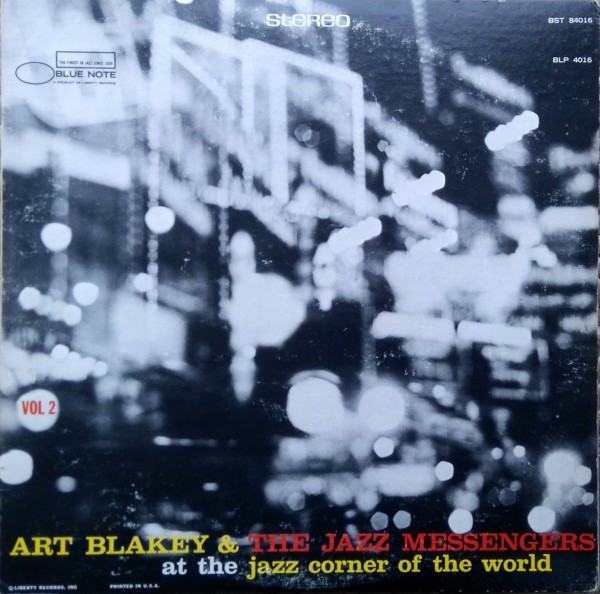
At The Jazz Corner Of The World Vol. 2
1960

Moanin'
1958

Soul Finger
1965

Au Club St. Germain Vol. 1
1959
Related artists
Members
Frequent collaborators
Around the web
Follow every record they touch.
Start your shelf and Gatefold tracks Art Blakey & The Jazz Messengers's new pressings, tour dates, and the whole discography — automatically.
Start your shelf →Free forever. Works with 10 records or 10,000.