
Artist
Timecop1983
Eindhoven, Netherlands
Timecop1983 is a musician from Eindhoven, Netherlands. Their discography on Gatefold includes 14 records.
14
Albums tracked
32
In collections
—
Since
Biography
Jordy Leenaerts wasn't some studio rat with a rack of vintage Roland Jupiters when he started out in Eindhoven. He was a guy with a day job in IT and a DAW, realizing that the '80s pop he grew up on was a lot more interesting when you stripped away the cocaine energy and slowed the BPM down to a sunset crawl. He took the name from a Jean-Claude Van Damme flick and started uploading tracks to Bandcamp when the synthwave scene was still mostly just dudes in the dark trying to sound like John Carpenter. Timecop1983 went the other way—he went for the heart, not the horror. He’s the king of the 'dreamwave' corner because he leans into the nostalgia without the irony. Most of this scene is just a pastiche of neon grids and Ferraris, but Leenaerts captures that specific, melancholic feeling of being a kid in 1986 watching the credits roll on a VHS tape. He doesn't bury the melodies in bitcrushed distortion. He lets them breathe. It’s clean, it’s polished, and yeah, some of the later stuff gets a little too safe, but when he hits that perfect balance of a drifting sawtooth lead and a gated reverb snare, it’s fucking undefeated.
Bio from The Clerk
The Arc of Timecop1983
The pivots — what forced Timecop1983 to reinvent.
The Bandcamp Gold Rush
From 2013 to 2014, Leenaerts dumped a massive amount of material onto the internet, including the Childhood Memories and Journeys albums. He was working almost exclusively with software emulations of the Juno-60, focusing on instrumentals that felt like incidental music for a movie that never existed. This era defined the 'dreamwave' aesthetic by ditching the aggressive, distorted 'Outrun' sound for something closer to a soft-focus memory. You hear it in the simplicity of the arrangements, where the mood relies entirely on a single, soaring lead synth and a steady, 4/4 drum machine pulse.
The Vocal Expansion
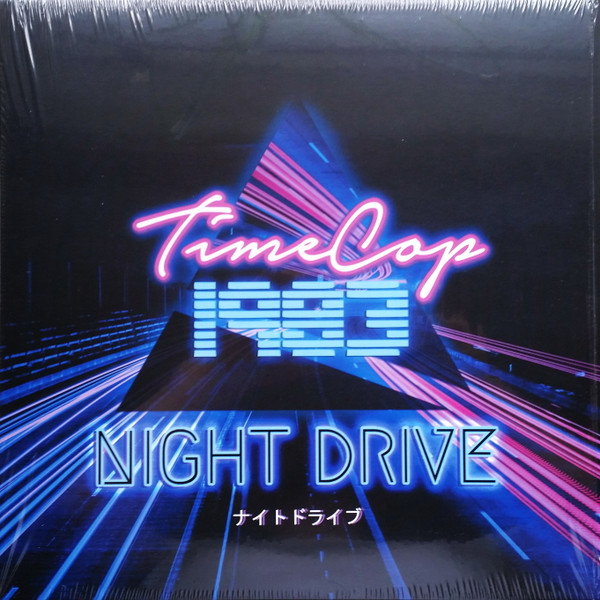
Everything changed when he started collaborating with vocalists like Josh Dally and The Midnight on tracks for the 2018 record Night Drive. Suddenly, the project wasn't just background music for bedroom coders; it was aiming for the pop charts of an alternate 1985. Bringing in actual singers forced Leenaerts to structure his songs around choruses and hooks rather than just vibes and textures. The result was a much higher production value that bridged the gap between niche internet micro-genre and something you could actually imagine hearing on FM radio next to Mr. Mister.
The Hardware Shift
After years of being a 'laptop producer,' Leenaerts started integrating more physical outboard gear into his Eindhoven setup to find a warmer, less predictable sound. This pivot was about fighting the digital sterility that started to plague the synthwave scene as it got crowded with imitators. By using actual hardware like the Prophet-6, he brought back the subtle tuning instabilities and organic hiss that the early plugins were only faking. This move kept his sound from turning into a plastic caricature, maintaining a sense of depth and weight in the low end that his early digital-only releases lacked.
Influences
- Tangerine Dream — Leenaerts has explicitly cited their '80s soundtracks, specifically Firestarter and Risky Business, as the blueprint for his atmospheric layering. You hear it in his use of arpeggiated sequences that provide the rhythmic backbone while chords wash over the top. It’s that precise Teutonic sequencing used to create emotional resonance.
- Vangelis — The Blade Runner score is the undisputed DNA for the entire project’s sense of urban loneliness. Leenaerts mimics the slow-attack brassy leads and massive reverbs that Vangelis used to make a synthesizer sound like a grieving orchestra. Without the CS-80 textures Vangelis pioneered, Timecop1983 doesn't exist.
- Tears for Fears — He’s gone on record saying Songs from the Big Chair was a massive influence on how he approaches pop songwriting and production. The lush, widescreen production of tracks like 'The Working Hour' informs his use of big, gated drums and melodic basslines. It’s the bridge between high-tech studio polish and genuine emotional vulnerability.
- Toto — You hear the influence of Steve Porcaro’s synth work and the band's immaculate session-player precision all over his more upbeat tracks. Leenaerts has pointed to their 1982 hit 'Africa' as a masterclass in how to layer multiple synth parts without the track becoming a muddy mess. It’s where he got the idea for those shimmering, percussive synth bells.
- Phil Collins — The entire drum sound of Timecop1983 is a direct descendant of the 'In the Air Tonight' gated reverb pioneered by Collins and engineer Hugh Padgham at Townhouse Studios. Every heavy, non-decaying snare hit on Night Drive is an homage to that specific 1981 studio accident. It provides the physical punch that grounds his otherwise airy synth pads.
Discography
Their records — most-collected first.





Around the web
Follow every record they touch.
Start your shelf and Gatefold tracks Timecop1983's new pressings, tour dates, and the whole discography — automatically.
Start your shelf →Free forever. Works with 10 records or 10,000.