
Artist
Underground Resistance
Detroit techno collective
Detroit, United States · Formed 1989
Underground Resistance is a music group from Detroit, United States, active since 1989. Their discography on Gatefold includes 8 records.

8
Albums tracked
5
In collections
1989
Since
Biography
A Roland TR-909 running hot through a battered mixer, ski masks over their faces, and a total refusal to play the European rave circuit game. Mike Banks and Jeff Mills didn't start Underground Resistance to sell singles to tourists. They built it out of Detroit in 1989 as a direct tactical assault on corporate radio, predatory record contracts, and the major labels trying to sanitize Black electronic music. If a track didn't have teeth, it didn't get pressed. They etched political manifestos straight into the vinyl runout grooves and ran the operation like an urban militia. When Mills and Robert Hood walked out in the early nineties to chase minimal techno and solo paths, the suits assumed UR would fold. Instead, Banks dug in his heels, bought the Submerge building on East Grand Boulevard, and morphed the outfit into a rotating collective of producers, session cats, and keyboard assassins. They survived by cutting out distributors, pressing short runs, and treating the 12-inch single as heavy artillery. It's unapologetic, militant machine soul made on analog hardware that sounded like it was ready to punch through the speakers.
Bio from The Clerk
The Arc of Underground Resistance
The pivots — what forced Underground Resistance to reinvent.
The Militant Assault
Between 1990 and 1992, Mike Banks, Jeff Mills, and Robert Hood treated techno like guerrilla warfare. They stripped away the cheerful gloss of the UK rave explosion and replaced it with punishing tempos, distorted 909 kicks, and direct political agitation on tracks like 'Riot EP' and 'The Punisher'. The room smelled of overdriven analog gear and pure fury at the music industry machine. It was fast, claustrophobic, and designed to purge casual listeners from the dancefloor.
The Post-Exodus Realignment
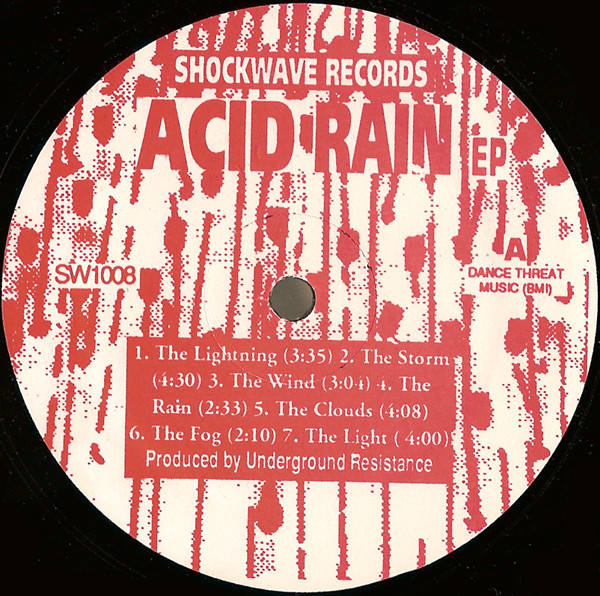
When Mills and Hood peeled off around 1992, Banks took absolute command of the mothership and refused to compromise the mission. Releases like 'Acid Rain' and 'Electronic Warfare' slowed the tempo just enough to inject crushing electro funk, science-fiction lore, and sprawling synthesizers into the catalog. Rolando and Gerald Donald cycled into the orbit, expanding the sonic footprint without softening the edge. The sound mutated from blunt-force trauma into a sophisticated, defensive technical blueprint.
The Interstellar Collective
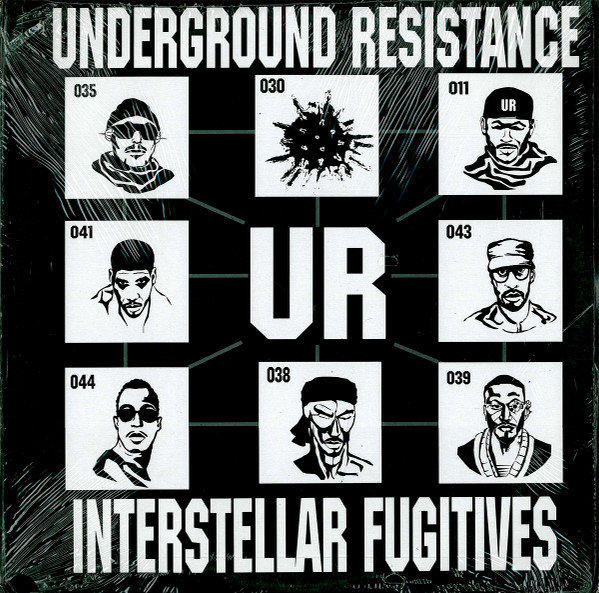
By the late nineties, Banks reorganized the label into a sprawling syndicate of shadowy alter egos and live players, codified on 1998's 'Interstellar Fugitives'. Live instruments, jazz chord changes, and hip-hop cadences bled into the drum machine programming through contributors like Mark Flash and Gerald Mitchell. Tracks like 'Knights of the Jaguar' proved they could conquer global clubs without giving an inch of publishing to a major label. They transitioned from isolated underground snipers into an enduring, self-sufficient global institution.
Influences
- Kraftwerk — Banks and Mills grew up on Detroit radio legend The Electrifying Mojo playing Kraftwerk cuts like 'Numbers' and 'Trans-Europe Express' to Black working-class teens. That cold European sequencing gave UR the mechanical skeleton for tracks like 'The Final Frontier'. They took the German robots and weaponized them for the rust belt.
- Parliament-Funkadelic — George Clinton laid out the mythology of the mothership and outer-space liberation right in Detroit, which Banks directly lifted for UR's militant concept art. You hear the deep, slippery Moog basslines on cuts like 'Nation 2 Nation' fighting the rigid machine sync. It's uncut P-Funk logic translated entirely through synthesizers.
- Cybotron — Juan Atkins and Richard Davis proved in the early eighties that Detroit could build its own independent electro records on zero budget. Cybotron's dystopian single 'Clear' is the direct ancestor of UR's 'Sonic EP' and 'Electronic Warfare'. Atkins gave them the industrial roadmap and the anti-corporate DIY ethos.
- Public Enemy — The Bomb Squad's abrasive, noise-as-rhythm production and Chuck D's Black nationalist framing directly sparked Underground Resistance's political posture. You hear PE's chaotic sirens and militant samples echoed across the sirens of 'Riot EP' and the liner notes of 'Message to the Majors'. Mills and Banks basically set out to be the techno wing of the Black Panthers.
- Model 500 — Juan Atkins' solo alias set the gold standard for Detroit techno sequencing on Metroplex releases like 'No UFO's' and 'Night Drive'. Underground Resistance took Atkins' spatial synth pads and jacked up the tempo into full-blown panic mode. Without Model 500 showing how an 808 could carry emotional gravity, UR would have just been making industrial noise.
Discography
Their records — most-collected first.




Related artists
Members
Around the web
Follow every record they touch.
Start your shelf and Gatefold tracks Underground Resistance's new pressings, tour dates, and the whole discography — automatically.
Start your shelf →Free forever. Works with 10 records or 10,000.