
Alexander Scriabin
Biography
Alexander Nikolayevich Scriabin (6 January 1872 [O.S. 25 December 1871] – 27 April [O.S. 14 April] 1915) was a Russian composer and pianist. Initially influenced by Frédéric Chopin, he composed in a relatively tonal, late-Romantic idiom. Later, independently of his contemporary Arnold Schoenberg, Scriabin developed a highly dissonant musical language that transcended traditional tonality without being strictly atonal, aligning with his personal brand of metaphysics. He embraced the concepts of Gesamtkunstwerk and synesthesia, creating a colour-coded circle of fifths inspired by theosophy to associate colours with harmonies. Scriabin is widely considered the primary Russian symbolist composer and a major figure of the Silver Age of Russian Poetry. Scriabin was an innovator and one of the most controversial composer-pianists of the early 20th century. The Great Soviet Encyclopedia said of him, "no composer has had more scorn heaped on him or greater love bestowed." Leo Tolstoy described Scriabin's music as "a sincere expression of genius." Scriabin's oeuvre exerted a salient influence on the music world over time, and inspired many composers, such as Nikolai Roslavets and Karol Szymanowski. His musical aesthetics have been reevaluated since the 1970s, and his ten published sonatas for piano and other works have been increasingly championed, garnering significant acclaim.
Bio from Wikipedia
Discography
Records they worked on — most-collected first.
Trio 64
1964

The Phosphorescent Blues
2015

Behind The Counter With
2017
Trio Music, Live In Europe
1986
Horowitz Encores
1978

Chick Corea Plays (Special Tour Edition)
2018

Beethoven • Chopin • Debussy • Horowitz-Bizet • Liszt • Rachmaninoff • Scarlatti • Schubert • Schumann • Scriabin
1977

Sing Me A Song Of Songmy (A Fantasy For Electromagnetic Tape)
1971

The Sound Of Horowitz
1963
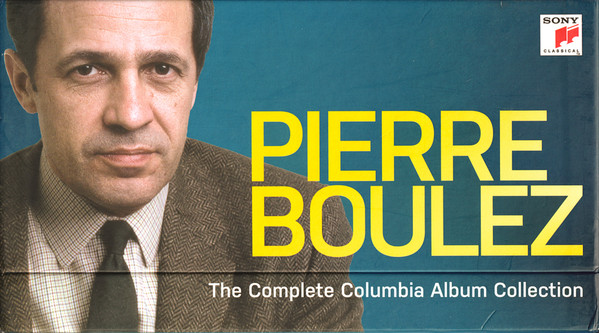
The Complete Columbia Album Collection
2014
Credited work
4,123 releases · 598 albums · active 1950–2026
- Performance · 6,421
- Other credits · 61
Studios: Carnegie Hall · Grand Hall Of The Moscow Conservatoire · Kingsway Hall · Columbia 30th Street Studio
Frequent collaborators
- Scriabin
- Various
- Vladimir Horowitz
- Horowitz
- Glenn Gould
- A. Scriabin
- Vladimir Sofronitsky
- Scriabine