
Performance · Other credits
Gabriele D'Annunzio
Gabriele D'Annunzio is credited on 360 releases across 105 albums tracked on Gatefold, active 1952–2026 — the collector-built map of who actually made the music.

360
Pressings credited
105
Albums
8
Decades active
7
In collections
Biography
General Gabriele D'Annunzio, Prince of Montenevoso (12 March 1863 – 1 March 1938), sometimes written d'Annunzio as he used to sign himself, was an Italian poet, playwright, orator, journalist, aristocrat, and Royal Italian Army officer during World War I. He occupied a prominent place in Italian literature from 1889 to 1910 and in its political life from 1914 to 1924. He had the epithets il Profeta (The Prophet) and il Vate (The Poet): vate stems from the Latin vates, meaning a prophetic, divinatory, or inspirational poet. D'Annunzio was associated with the Decadent movement in his literary works, which interplayed closely with French symbolism and British aestheticism. Such works represented a turn against the naturalism of the preceding romantics and was both sensuous and mystical. He came under the influence of Friedrich Nietzsche, which would find outlets in his literary and later political contributions. His affairs with several women, including Eleonora Duse and Luisa Casati, received public attention. In his politics, which evolved many times, he associated himself with socialism and the progressivist views of the political left, responding to the illiberal and reactionary policies of Luigi Pelloux, as well as with the Historical Far Left. During World War I, D'Annunzio's image in Italy transformed from literary figure to national war hero. He was associated with the elite Arditi storm troops of the Italian Army and took part in actions such as the Flight over Vienna. As part of an Italian nationalist reaction against the Paris Peace Conference of 1919, he set up the short-lived Italian Regency of Carnaro in Fiume with himself as Duce. The Charter of Carnaro made music the fundamental principle of the state, which was corporatist in nature. Although D'Annunzio later preached nationalism and never called himself a fascist, he has been credited with partially inventing Italian fascism, as both his ideas and his aesthetics were an influence upon Benito Mussolini
Bio from Wikipedia
Credited work
360 releases · 105 albums · active 1952–2026
- Performance · 363
- Other credits · 47
Studios: Carnegie Hall · Victoria Hall, Geneva · Royal Albert Hall · Kingsway Hall
Discography
Records they worked on — most-collected first.




Frequent collaborators
- Mario Lanza
- Luciano Pavarotti
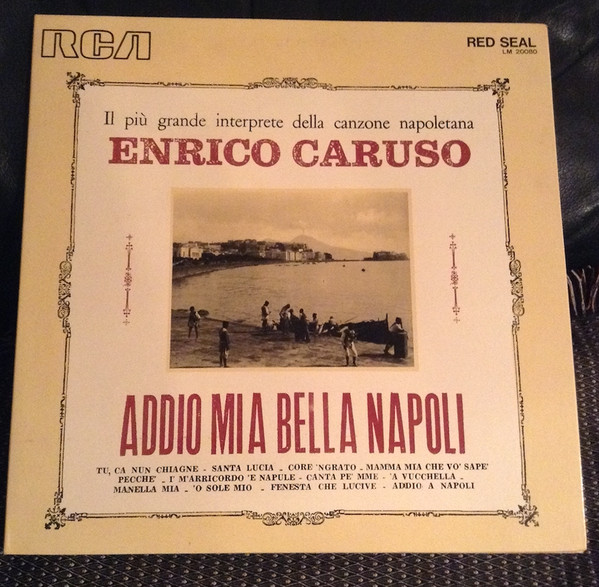
- Enrico Caruso
- Debussy
- Various
- José Carreras
- Claude Debussy
- Jussi Björling
Around the web
See who really made the music.
Gatefold maps every producer, engineer, and player across your shelf — the credits no one else surfaces.
Start your shelf →Free forever. Works with 10 records or 10,000.