
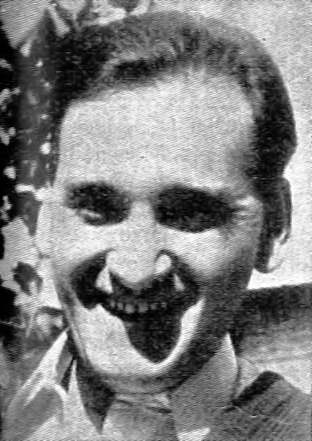
ĐOrđE Jovanović
Biography
Đorđe Jovanović (Serbian Cyrillic: Ђорђе Јовановић; 27 October 1909 – 23 July 1943) was a Serbian writer and literary critic, and a surrealist poet, active in Yugoslavia during the interwar period. Along with his two high school classmates, Oskar Davičo and Đorđe Kostić, he represented the younger generation of the Yugoslav surrealist movement. Jovanović was often referred to by his childhood nickname and later nom de guerre Jarac (lit. billy goat). In the late 1920s and early 1930s, Jovanović helped shape Belgrade surrealism through small-circulation magazines and group publications, and he became a central participant in its internal debates about the group's aims and politics. He served as editor-in-chief of the review Nadrealizam danas i ovde (NDIO; 1931–1932), and contributed to the group's programmatic statements as it moved from avant-garde experimentation toward more explicit Marxist commitments. After leaving poetry, Jovanović devoted himself mainly to polemical and programmatic criticism. Following imprisonment for communist activity in the mid-1930s, he emerged as a prominent Popular Front-era critic associated with "new realism", a local variant of socialist realism, writing essays and literary-historical interpretations that recast Serbian literature through Marxist and sociological approaches. His critical method in this period was shaped especially by György Lukács and Louis Aragon, and later commentators have sometimes dubbed him a "Marxist Skerlić", for his Marxist reinterpretation of Serbian literary history in dialogue with Jovan Skerlić's critical project. During World War II he joined the Yugoslav Partisans and served as political commissar of the Kosmaj Partisan Detachment. Between periods of field service he lived illegally in occupied Belgrade, writing for the underground paper Glas Narodnooslobodilačkog fronta Srbije. In his 1943 article "Štuka kultura" (Stuka culture), Jovanović denounced occupation-era cultural life as propagandistic colla
Bio from Wikipedia
Discography
Records they worked on — most-collected first.

Credited work
7 releases · 5 albums · active 1983–1998
- Performance · 6
- Other credits · 5
Studios: Studio Tivoli, Ljubljana · Studio Jatagan · Meta Sound
Frequent collaborators
- Griva
- Various
- Филип I Жмахер