Artist
Aphex Twin
Limerick, Ireland · b. 1971
Aphex Twin is a musician from Limerick, Ireland, active since 1971. Their discography on Gatefold includes 24 records.

29
Albums tracked
436
In collections
1971
Since
Biography
Richard D. James built his own synthesizers and modified circuit boards because the retail gear in Cornwall simply couldn't do what was rattling around in his skull. By the time Apollo released Selected Ambient Works 85–92, he was already sitting on piles of cassette tapes recorded on hacked Roland gear and customized drum machines. He lied relentlessly to the press about sleeping in bank vaults and buying a tank, but the music never required the mythology. He dragged Detroit techno, acid house, and classical counterpoint through a meat grinder of micro-edited breakbeats. The catalog is a messy, brilliant sprawl split across aliases like AFX, Polygon Window, and The Tuss. For every landmark full-length, there are hours of abrasive studio tests, screeching tinnitus frequencies like Ventolin, and massive Soundcloud dumps of unmastered cassette rips. He never cared about catering to the dance floor or the ambient chillout rooms that claimed him. He just weaponized rhythm, mastered microtonal tuning, and made the rest of electronic music spend thirty years playing catch-up.
Bio from The Clerk
The Arc of Aphex Twin
The pivots — what forced Aphex Twin to reinvent.
The Ambient Architect
Between 1992 and 1994, James broke out via R&S and Warp by taking the pulse of acid house and slowing it down into eerie, melodic terrain. Selected Ambient Works Volume II ditched beat structures almost entirely, leaning into textural dread and microtonal loops recorded on custom hardware. It alienated the warehouse rave crowds while resetting the rules for what UK electronic music could do outside the club.
Drill 'n' Bass and the Chris Cunningham Era
By the mid-nineties, James moved away from lush synth pads and embraced surgical breakbeat manipulation alongside director Chris Cunningham's nightmare visuals. The Richard D. James Album and Come to Daddy relied on blistering Roland TB-303 modifications and insane tracker sequencing that shredded traditional jungle tempos into pure digital noise. It made him a bizarre MTV fixture without giving up an ounce of studio hostility.
The Drukqs Overload and Hardware Purism
In 2001, James dropped the massive double-album Drukqs to fulfill his Warp contract after allegedly leaving an MP3 player full of unreleased tracks on an airplane. The record smashed lightning-fast tracker programming against delicate, John Cage-inspired prepared piano pieces cut on customized acoustic instruments. It baffled critics at the time, prompting him to retreat into the all-analog, gear-fetishist Analord vinyl series under his AFX moniker.
The Return and The Vault Dumps
After a thirteen-year studio silence under the main moniker, James resurfaced in 2014 with Syro, tracked across dozens of vintage modular rigs and modern digital workstations. The release kicked open the floodgates, followed by hundreds of archival tracks anonymously dumped directly to SoundCloud and sporadic, rhythmically dense EPs like Collapse. It proved that despite decades of imitators, nobody else could engineer that specific blend of melodic beauty and surgical rhythmic violence.
Influences
- John Cage — James explicitly cited Cage's prepared piano compositions as the blueprint for his acoustic experiments. You hear the direct lineage on Drukqs tracks like 'Jynweythek' and 'Avril 14th,' where James inserted bolts, rubber, and felt between the piano strings to warp the acoustic decay. It anchored his chaotic electronics to twentieth-century avant-garde classical technique.
- Kraftwerk — The rigid, synthetic drum programming of early Kraftwerk records gave James his foundational understanding of mechanized rhythm. You hear their cold, clinical vocoder treatments and clean electro pulses running straight through early tracks like 'Polynomial-C' and the Polygon Window material on Warp. They proved that fully synthetic pop structures could feel deeply alien yet profoundly melodic.
- Brian Eno — Eno defined the modern language of ambient music with Music for Airports, setting the parameters James would openly adopt and then dismantle. The tape-loop textures and generative stillness of Selected Ambient Works Volume II exist as a direct, dark response to Eno's minimalist philosophy. Eno even publicly praised the record upon release, recognizing James as his logical, corrupted successor.
- 808 State — Manchester's 808 State broke UK acid house wide open in 1989 by using the Roland TB-303 and complex polyphony rather than simple 4/4 rave tropes. James took their chaotic synth layering and expanded it into the dizzying, hyperactive melodies of the Richard D. James Album. They showed him how to make dance hardware sound completely unhinged.
- Tod Dockstader — Dockstader's tape-manipulation and musique concrète pieces from the 1960s were a documented fixation for James, who loved the raw mechanical manipulation of physical sound sources. You can hear that tape-splice approach directly across abrasive tracks like 'Ventolin' and the dense micro-sampling on the Come to Daddy EP. It gave his digital edits the physical violence of razor-blade tape editing.
Discography
Their records — most-collected first.
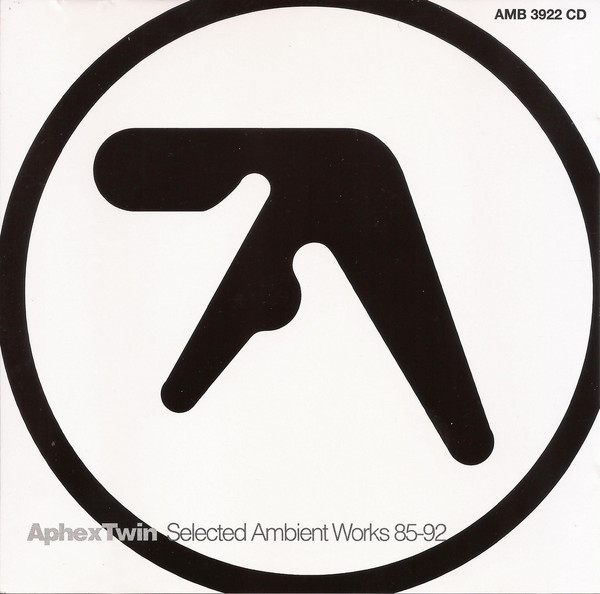
Selected Ambient Works 85-92
1992
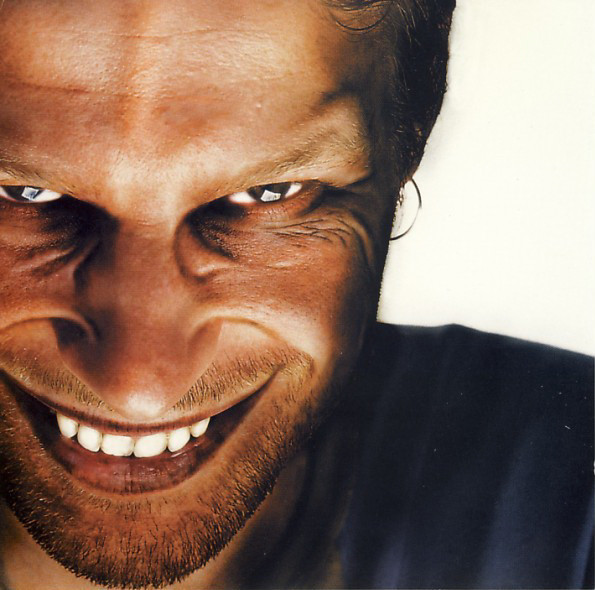
Richard D. James Album
1996
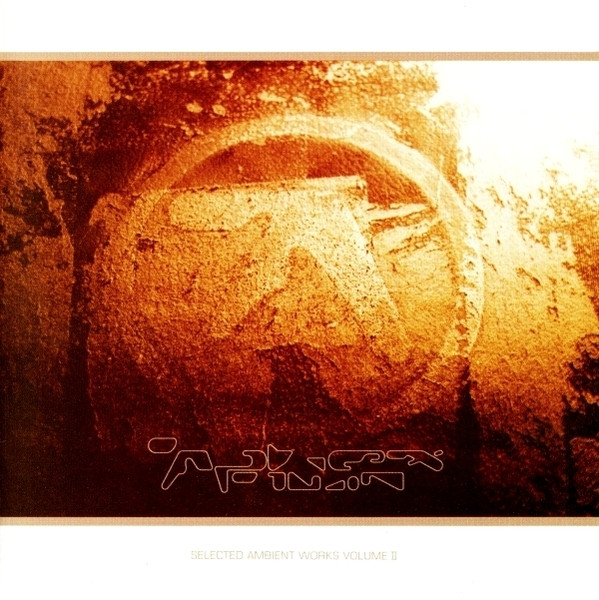
Selected Ambient Works Volume II
1994
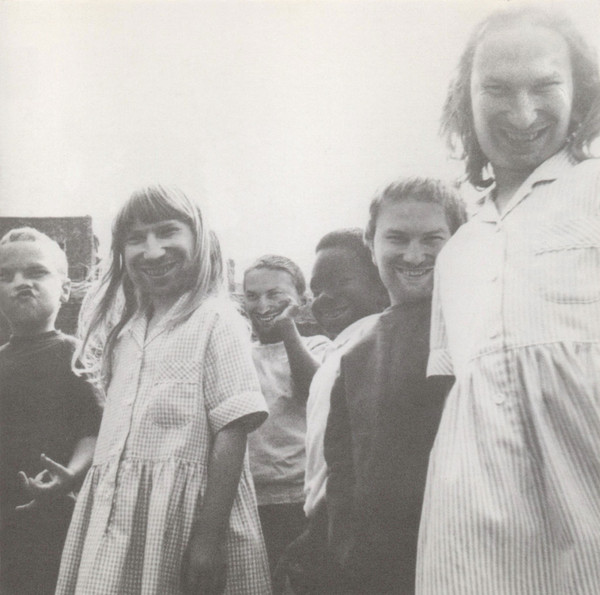
Come To Daddy
1997
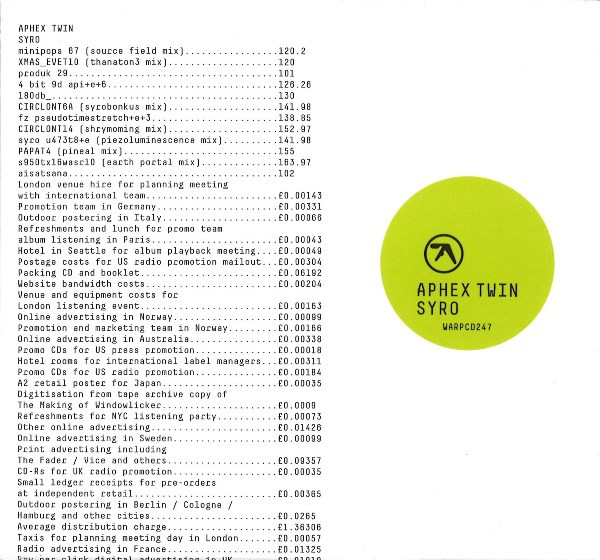
Syro
2014
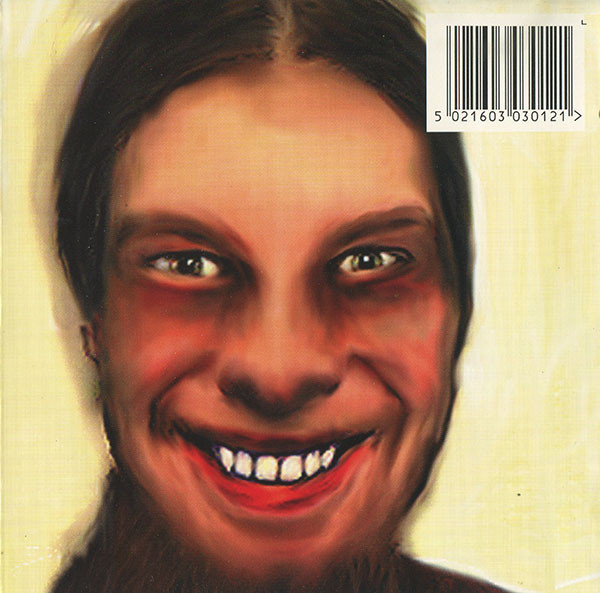
...I Care Because You Do
1995
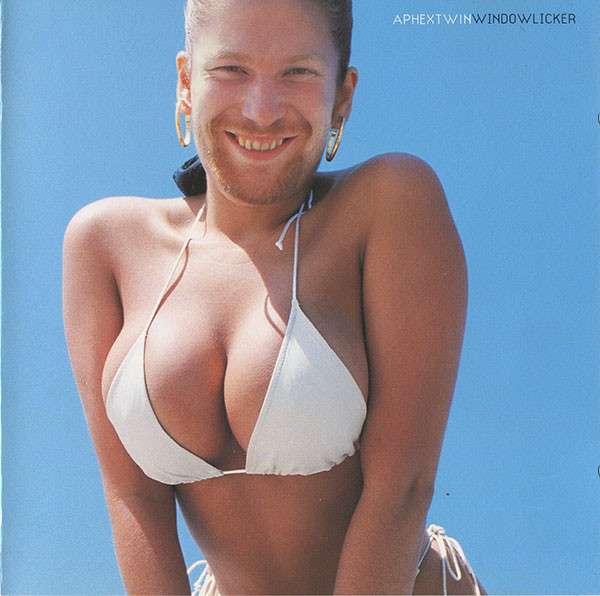
Windowlicker
1999

Drukqs
2001

Classics
1995
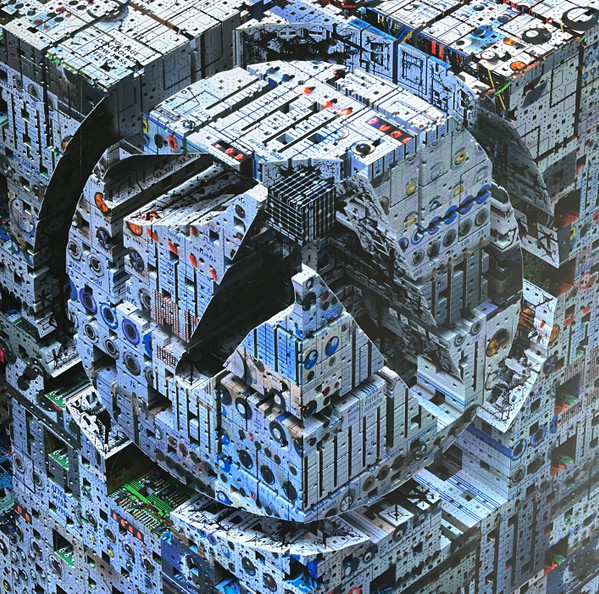
Blackbox Life Recorder 21f / In A Room7 F760
2023
Computer Controlled Acoustic Instruments Pt2 (EP)
2015
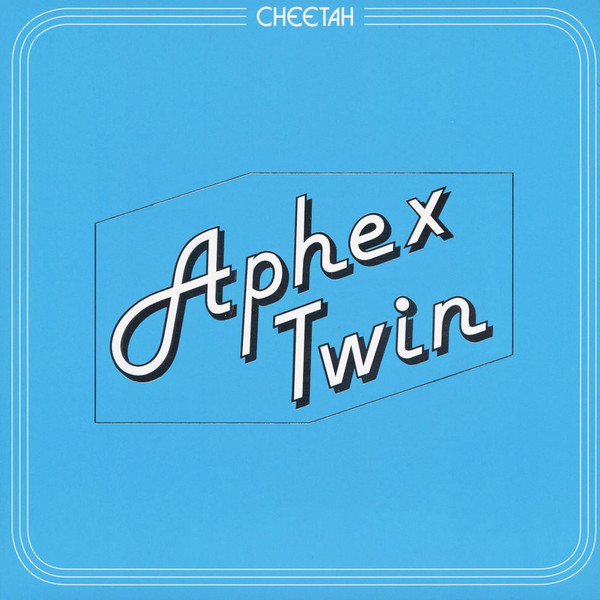
Cheetah EP
2016
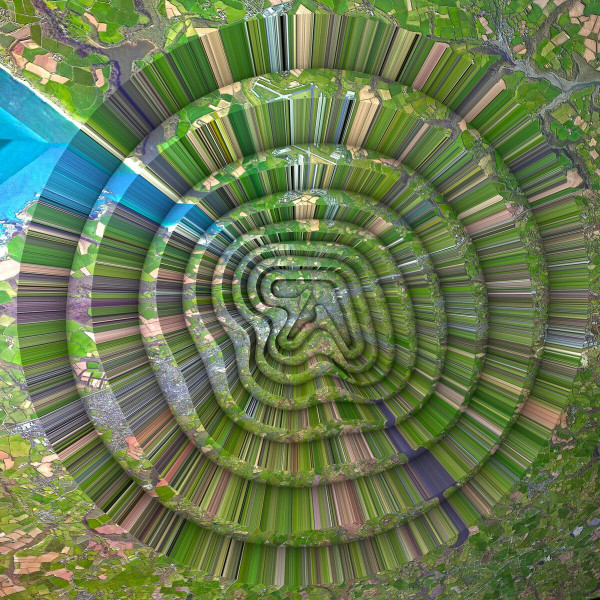
Collapse EP
2018
26 Mixes For Cash
2003

Donkey Rhubarb
1995

Digeridoo
1992
Peel Session 2 TX 10/04/95
2019
Ventolin E.P
1995

London 19.08.2023
2023
MARCHROMT30a Edit 2b 96
2015

"Girl/Boy" E.P.
1996
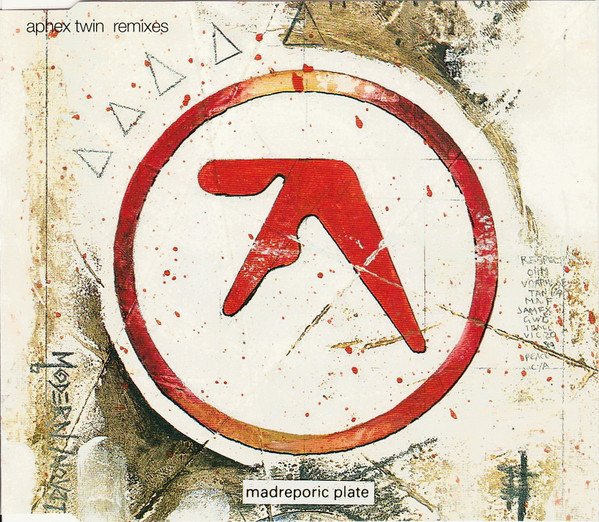
On
1993
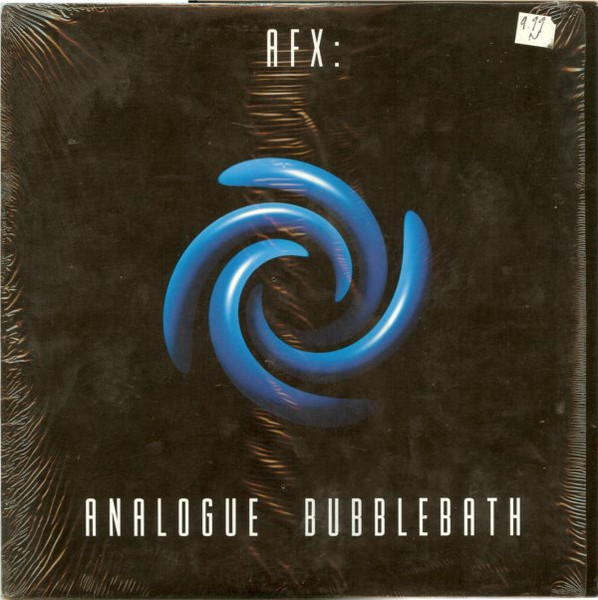
Analogue Bubblebath
1991

Music From The Merch Desk (2016 - 2023)
2024
Related artists
Frequent collaborators
Around the web
Follow every record they touch.
Start your shelf and Gatefold tracks Aphex Twin's new pressings, tour dates, and the whole discography — automatically.
Start your shelf →Free forever. Works with 10 records or 10,000.